
Share this @internewscast.com

In a symbolic gesture, Mayor Mamdani was sworn into office at the long-abandoned City Hall subway station. This station, adorned with brass chandeliers and Guastavino tiles named after a Spanish immigrant, serves as a testament to a bygone era of architectural grandeur dedicated to the city’s workers. Although it was decommissioned 80 years ago due to safety issues—its elegant curves incompatible with modern, faster trains—it remains a reminder of a time when New York prioritized public safety while embracing progress. Today, however, the city’s vision seems clouded.
Tragically, in March, Luis Cruz’s life was cut short as he attempted to cross a street in Brooklyn. He was fatally struck by an e-bike operated by a delivery worker, who faced no repercussions. The incident highlights the ongoing crisis of unregulated e-bike use, where laws fall short of holding operators accountable, leaving victims like Cruz as mere statistics in a growing epidemic.
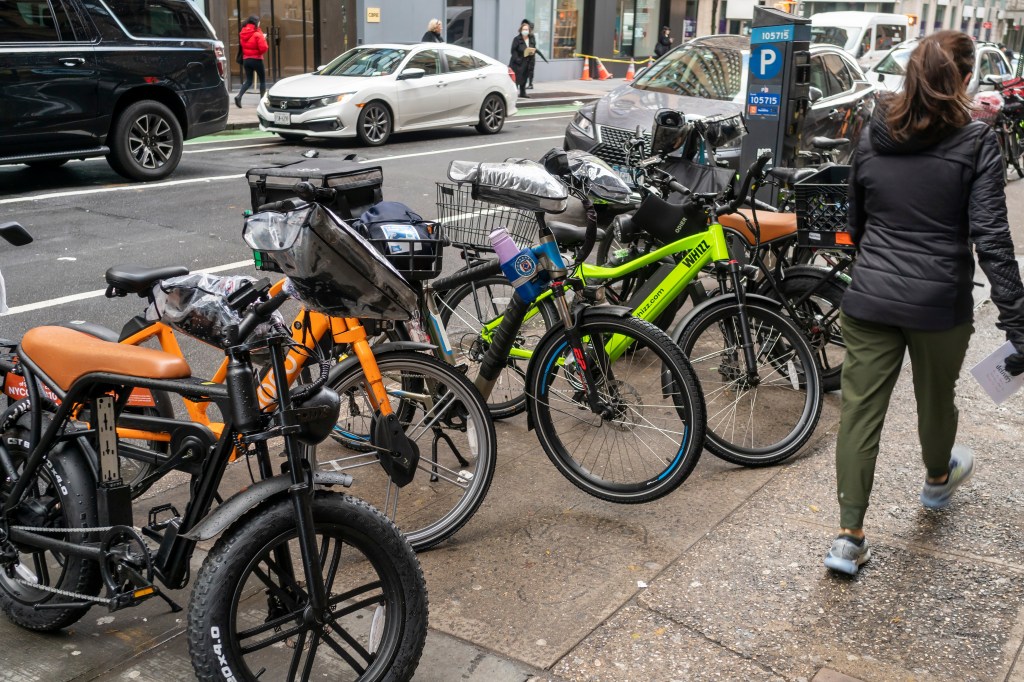
The alarming rise in cyclist fatalities, now at a 25-year peak, underscores the impact of e-bikes, which are central to this troubling trend. These vehicles have transformed our streets, often seen speeding along sidewalks, ignoring traffic signals, and going against traffic flow. When accidents occur, the culprits can easily disappear, as there are no registration plates or insurance policies to track them down and provide solace to grieving families.
Turning our gaze to the Netherlands, a nation synonymous with cycling, we find a model worth emulating. In Amsterdam, the Fietsersbond cycling union has championed regulations that require high-speed e-bikes to be licensed and insured as mopeds. Their approach, which balances safety with cyclist infrastructure, demonstrates that these goals aren’t mutually exclusive. Meanwhile, New York permits high-speed e-bikes to roam free, as regulated as a child’s tricycle.
This regulatory neglect endangers the “15-minute city” vision, a concept where all daily necessities are within a short walk, fostering community and reducing reliance on cars. The success of this urban model hinges on “walk appeal,” ensuring that pedestrians, especially the young and elderly, feel safe navigating sidewalks. Allowing unchecked motorized vehicles in these spaces turns them into perilous zones reminiscent of a real-life “Squid Game.”
Clarity is crucial in addressing this crisis, particularly regarding the “throttle” e-bike. Unlike pedal-assist bikes, where motors supplement human effort, throttle-powered e-bikes, often used for deliveries, weigh around 70 pounds and can zoom down sidewalks at 25 mph with a mere twist of the grip, mimicking motorcycles more than bicycles. By categorizing them as bicycles, manufacturers sidestep stringent safety standards necessary for other motorized vehicles, perpetuating the problem.
Yet, advocacy group Transportation Alternatives opposes Priscilla’s Law — named after Priscilla Loke, a teacher killed by an e-bike — which would require them to be registered with license plates. They dismiss the bill as a pretext for discriminatory policing, arguing that registration is merely a tool for the NYPD to target the working-class immigrants who power the delivery economy. In their effort to protect riders from the police, however, they have reached a fundamentally insulting conclusion.
As a progressive immigrant and cyclist, I find this argument patronizing. It assumes newcomers are uniquely incapable of meeting the same safety standards that NYC’s immigrant taxi and Uber drivers have navigated for decades. Using immigrants as a shield against public safety is a classic example of the soft bigotry of low expectations. It suggests we cannot be expected to respect the social contract because of where we were born.
Mamdani argues we should instead regulate delivery apps. He is only half right. Cars deliver food using the same apps, but because they are registered and insured — with explicit laws providing recourse for victims — they cannot drive on sidewalks or down one-way streets with total impunity. Because e-bikes lack these mandates, they do.
There is a strange irony here: progressives rightly demand registration for guns to ensure accountability, yet for e-bikes, the logic flips. By shielding the vehicle from oversight, advocates are taking a page out of the NRA playbook — blaming the “system” while shielding the hardware.
The fear of biased policing is real, but it is no excuse for lawlessness. There is a modern fix: automated enforcement using camera technology. No police stops, no face-to-face interaction — just consequences in the owner’s mailbox.
Mamdani, an immigrant himself, now wields the power of the highest office in the world’s greatest city as the leader of the many New Yorkers who voted for him because they desperately want the beautiful things he promised. Let’s start by making our sidewalks safe.
If it speeds like a moped, weighs as much as a moped, and can run you over like a moped, it is time we licensed it like one.
Butt is an award-winning filmmaker and screenwriter.