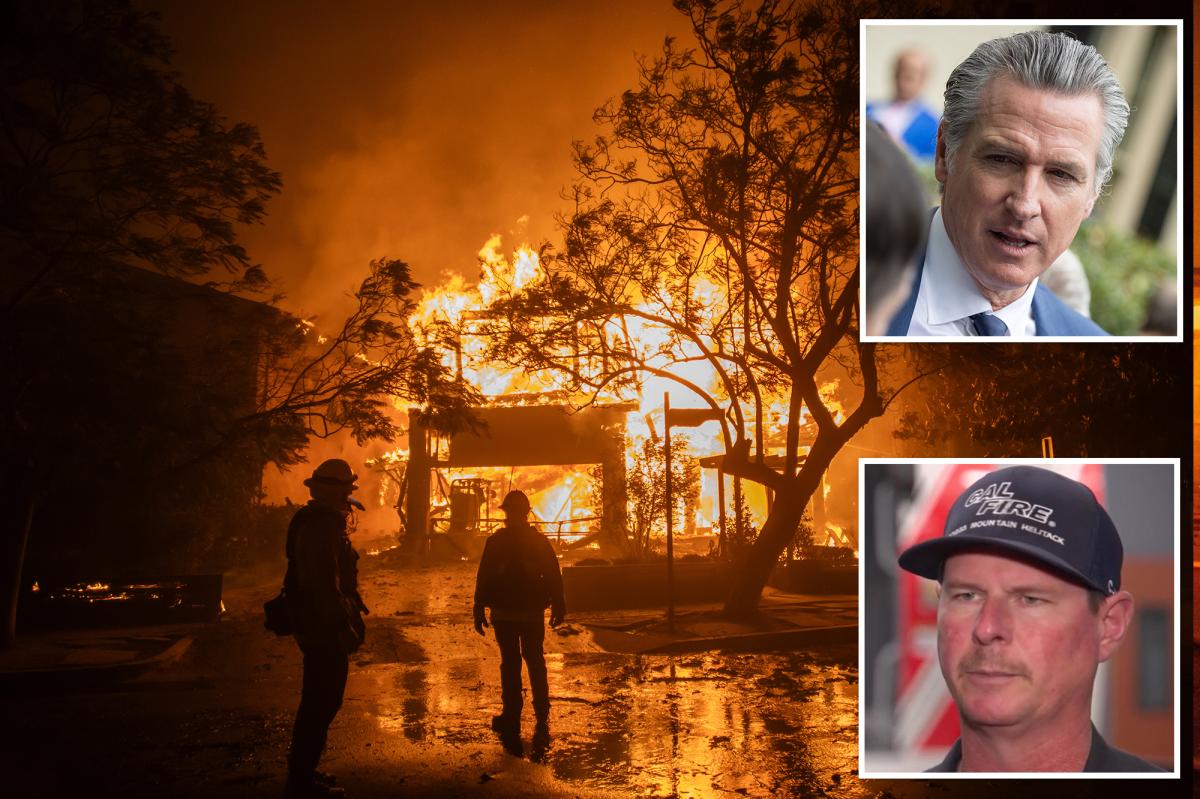


California is facing a dual crisis: escalating fuel prices and an increased risk of wildfires. Despite these challenges, state officials are committed to maintaining an ambitious and costly approach to wildfire management.
Over the past three months, the cost of jet fuel has skyrocketed, rising between 82% and 110%. This dramatic increase is putting pressure on industries dependent on aviation.
Nevertheless, Cal Fire has announced that it will not scale back its extensive aerial firefighting operations as the wildfire season approaches.
This commitment comes with a substantial financial obligation.
Governor Gavin Newsom’s proposed budget for 2026–27 allocates $457 million for wildfire prevention and forest resilience initiatives, adding to the nearly $4 billion the state has already invested since 2021.
Newsom is expected to present an updated budget, known as the “May Revision,” by May 14.
The plan relies on a mix of funding sources, including $315 million from a climate bond for large-scale forest and community projects and $142 million from the Greenhouse Gas Reduction Fund for prescribed fire crews and other fire prevention tactics.
Another $120 million in forest health grants was released early in 2026 to reduce fire risk and strengthen ecosystems.
At the same time, California is committing $770.4 million each year to its firefighting workforce.
Download The California Post App, follow us on social, and subscribe to our newsletters
California Post News: Facebook, Instagram, TikTok, X, YouTube, WhatsApp, LinkedIn
California Post Sports Facebook, Instagram, TikTok, YouTube, X
California Post Opinion
California Post Newsletters: Sign up here!
California Post App: Download here!
Home delivery: Sign up here!
Page Six Hollywood: Sign up here!
The funding supports a 66-hour workweek and a plan to add more than 2,000 firefighters by 2028–29.
The state has also spent about $380 million on its aerial fleet, which now includes 16 advanced helicopters.
Officials say it is the largest aerial firefighting force in the world.
Technology spending continues to climb as well, with $3.5 million annually for fire detection cameras and satellite mapping, plus $37.1 million for AI-powered intelligence systems.
All of this is unfolding as more Californians are being pulled into high-risk fire zones.
Following destructive fires in the Palisades and Altadena areas, officials expanded high-severity fire maps across Los Angeles County.
The updated boundaries add roughly 15,000 to 20,000 properties, including neighborhoods north of Ventura Boulevard that had not previously faced strict brush rules.
Thousands of homeowners are now being told to comply with new requirements.
Grass and brush must be kept under three inches, trees must be trimmed away from structures, and branches must remain at least 10 feet from chimneys.
Inspections in the newly designated zones were expected to begin Friday, May 1.
Even with fuel costs climbing fast, Cal Fire insists it will not pull back its aerial response.
Instead, the agency is looking for ways to cut costs behind the scenes.
One approach is shifting more training into flight simulators to reduce fuel use and limit wear on aircraft.
“They pay for themselves in a lot of different ways, whether it’s the safety — we’re not exposing our flight crews to environmental hazards,” Philip Mateer, Cal Fire Battalion Chief of Training told KCRA. “Flying aircraft is safe, but it’s very unforgiving if there is a mishap. So being able to do it in a controlled environment is worth its weight in gold for what we do with them.”
Crews still train in real aircraft, but the simulator strategy is meant to stretch resources as expenses rise.