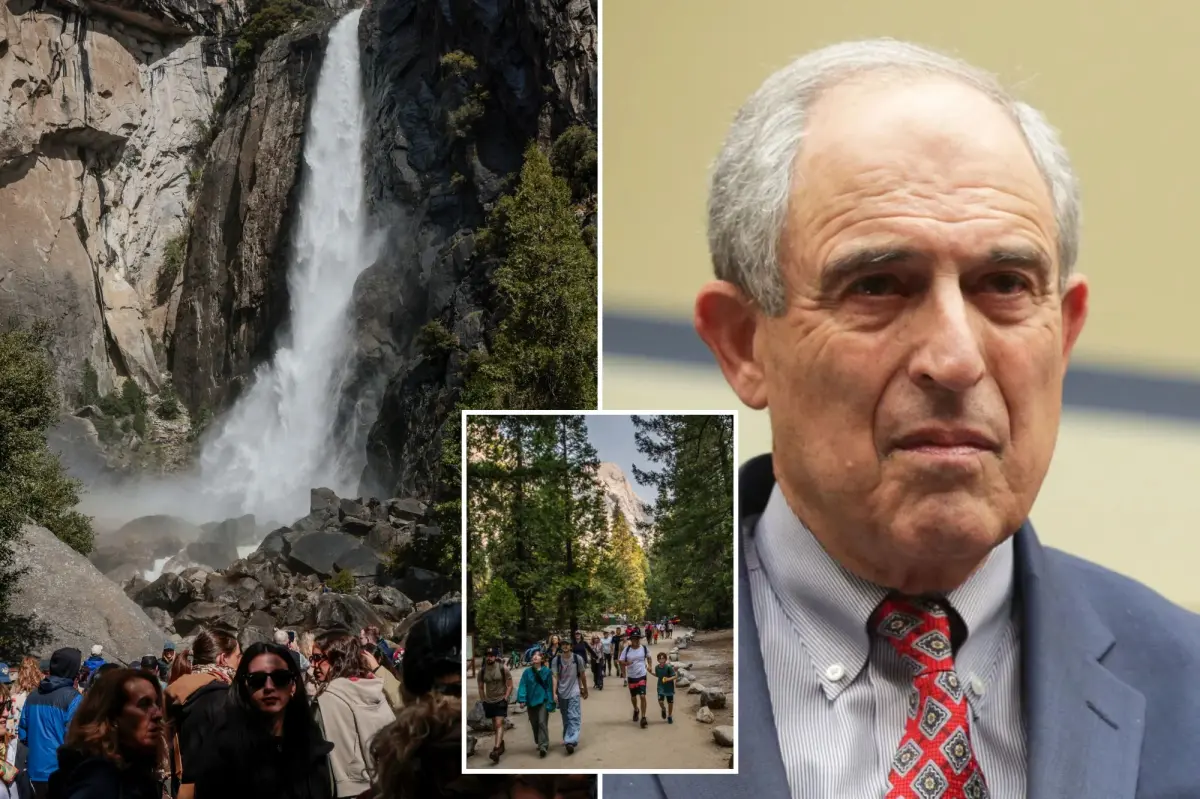

A proposal to build a road of less than half a mile into Yosemite has sparked a political fight in California, with state lawmakers moving to block a project backers argue would reduce emissions, improve traffic flow and create a safer route into the area.
The short access road is tied to a reported federal land exchange involving Kingsbarn Realty Capital, a Nevada-based real estate firm.
According to reports, the Trump administration is weighing a deal that would transfer 1.1 acres of federal land inside Yosemite to Kingsbarn in return for a similarly sized property elsewhere in California.
If approved, the exchange would let the developer link its 83-acre Hazel Green property, located just beyond Yosemite’s western edge, directly to the park’s existing highway system through a road shorter than half a mile.
Lanny J. Davis, the prominent attorney representing Kingsbarn, told Newsweek that without a direct route, drivers traveling from the Hazel Green area must take a far longer path—at least twice the distance—over unpaved forest roads, increasing both travel time and air pollution. He said the proposed Yosemite access road would be safer for motorists and would meaningfully reduce vehicle emissions.
Davis said Kingsbarn spent six months coordinating with National Park Service employees to develop an access plan designed with environmental concerns in mind.
He said that, in collaboration with Yosemite park professionals and with the goal of reaching a pro-environment and community-backed solution, the company identified a land swap that would make the sub-half-mile access road possible.
But even after that planning, 61 California lawmakers are pressing the Trump administration to turn down the proposed Yosemite land-swap deal.
“61 of California’s 118 legislators joined my call to urge Interior Secretary Doug Burgum to halt and reject the proposed Yosemite land exchange benefiting a private developer,” Coachella Valley Republican Assemblymember Greg Wallis said in a letter Wednesday.
The proposal comes as Yosemite is already buckling under its own popularity.
More than 4 million people visit the park each year, flocking to sights including El Capitan, one of the world’s largest exposed granite monoliths, and Yosemite Falls, one of North America’s highest waterfalls.
Visitors can spend hours waiting to get through the entrance, only to face another traffic nightmare once inside.
“We have people already waiting for hours just to get inside the park, and then they get inside the park and they spend another hour circling around looking for parking. Yosemite right now is in complete chaos,” Neal Desai, the senior program director for the National Parks Conservation Association told The Washington Post.
The Hazel Green project could also give visitors another lodging option away from Yosemite’s overcrowded areas.
Kingsbarn hopes to build short-term rental accommodations and a tourist lodge on the property, although those plans have yet to be designed
Kingsbarn purchased the property Feb. 1, 2024. It sits in the Stanislaus National Forest, roughly five miles from one of Yosemite’s giant sequoia groves, and is surrounded by public land that makes access difficult.
But lawmakers and environmental groups argue the land exchange would benefit a private developer at the expense of public land, and could create a troubling precedent for development near protected areas.
Any formal agreement would still have to undergo comprehensive environmental reviews and public comment.