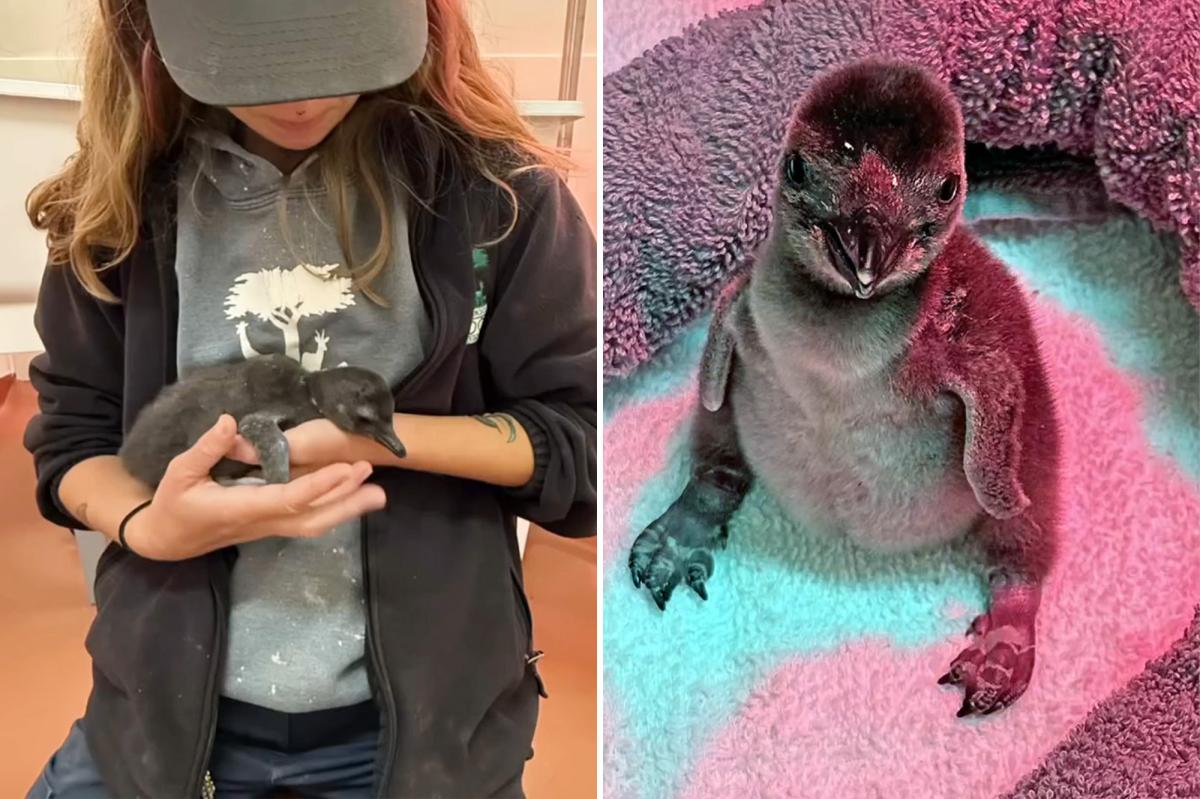


A Bay Area zoo is welcoming a rare new addition: a trio of baby South American penguins, marking the first such arrival there in several years. Zoo officials say the chicks will be raised by hand to give them the best chance of thriving.
The San Francisco Zoo announced that three Magellanic penguin chicks have hatched successfully and are now “growing steadily” behind the scenes, according to a recent press release.
In a video shared on the zoo’s Facebook page, the fluffy newcomers can be seen settling into their nursery, with the squeaks and peeps of the 4-week-old chicks filling the space.
Officials also addressed the reddish light visible in the footage, explaining that it comes from heat lamps used to keep the young penguins warm as they grow feathers and build the insulation they need.
As the chicks get older, zoo staff will slowly raise the lamps to lower the nursery temperature, a step designed to help the birds adjust for outdoor living and the warmer weather expected later this summer.
The video further shows the nursery setup, where the chicks rest among rolled towels and oversized stuffed penguins as part of their gradual preparation for life beyond the indoor enclosure.
Members of the zoo’s staff have been “hand-rearing them nearly 24-hours a day since they hatched in mid-May,” the release noted.
Download The California Post App, follow us on social, and subscribe to our newsletters
The reason the zoo said it opted for hand rearing over parent reared, is because “some of the potential parents were not considered experienced.”
“One of the key reasons is that it had been a few years since we’ve had chicks and some of the potential parents were not at the experience level we prefer,” Brice Smith, the zoo’s assistant curator of birds said in a statement to CBS News.
“So basically, we decided to hand-rear them, which entails nearly 24-hour care in the beginning.”
Prior to the recent arrival of the trio, the zoo had been hatching two to five chicks every year since the 1980s, per the report.
Zoo curator Quinn Brown said for a few years the zoo wasn’t allowed to do any breeding, but the death of a few older ones meant they could resume.
“Breeding is highly strategic,” Brown said in a statement to the SF Chronicle. “Some of our pairs have been very successful, and some are not approved to breed as their genetics may be overrepresented in accredited facilities.”
Zoo officials said that the SF Zoo’s Magellanic penguins are considered the “most successful breeding colony” in an Association of Zoos and Aquariums facility, per the release.
While visitors are dying to see the baby chicks, the zoo said, for now, they will remain behind the scenes as they continue to grow.
“When they’ve matured a bit more, we will start teaching them how to swim,” Smith told the Chronicle.
Later this summer, zoo officials said guests will get their first chance to see them in action when they take part in the zoo’s annual ceremonial “March” to Penguin Island, the outdoor habitat in the zoo which features one of the largest gatherings of the flightless penguins in North America.