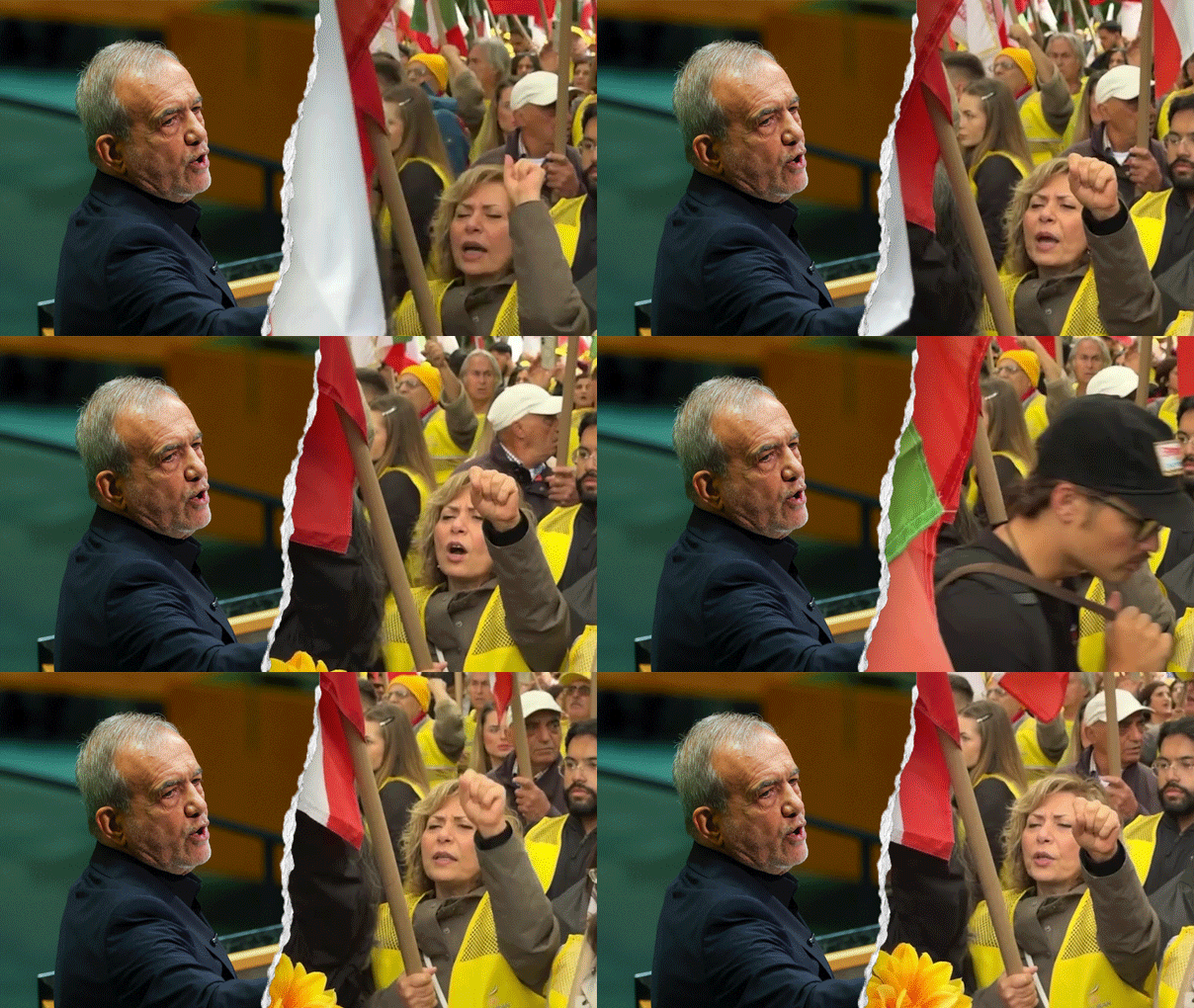

UNITED NATIONS, N.Y. — In his address to the United Nations General Assembly, Iranian President Masoud Pezeshkian cast Iran as the target of terrorism carried out by the United States and Israel.
Just beyond the chamber, however, thousands of demonstrators were calling for Pezeshkian’s arrest, accusing him of terrorism.
“They are terrorists. They must go!” protesters shouted repeatedly as they waved the green, white and red flags associated with the resistance.
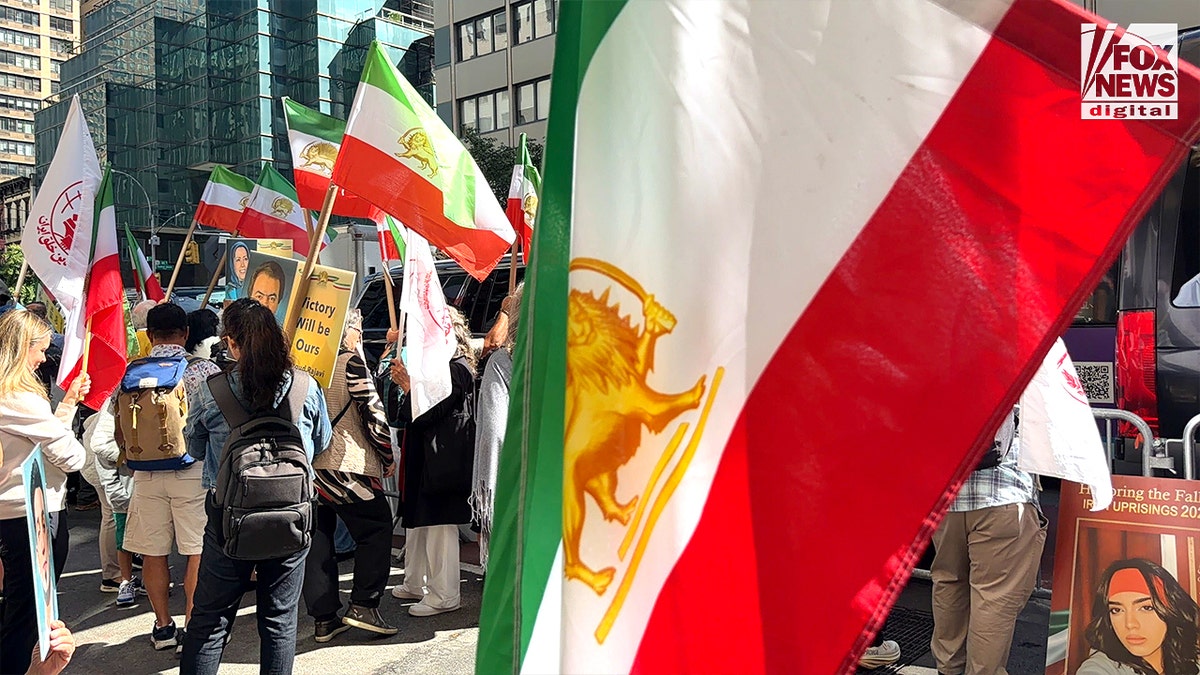
Protesters gathered outside the United Nations General Assembly on Monday, Sept. 21, carrying flags and signs. (Brooke Curto/News Outlet)
Former New York City Mayor Rudy Giuliani told the crowd that the Iranian president repeatedly deceives the public and should be held responsible for violence.
“It is useless to negotiate with them because they are terrorists, murderers, possibly in some ways insane religious maniacs. This would be like trying to reach an agreement with Hitler,” Giuliani said.
A number of former senior government officials echoed that criticism, condemning Iran’s Islamic regime over what they described as decades of brutal repression and killings. Estimates indicate that more than 20,000 people who joined freedom protests across Iran earlier this year were killed by government forces. Reports of political prisoners being executed have continued to emerge on a weekly basis.
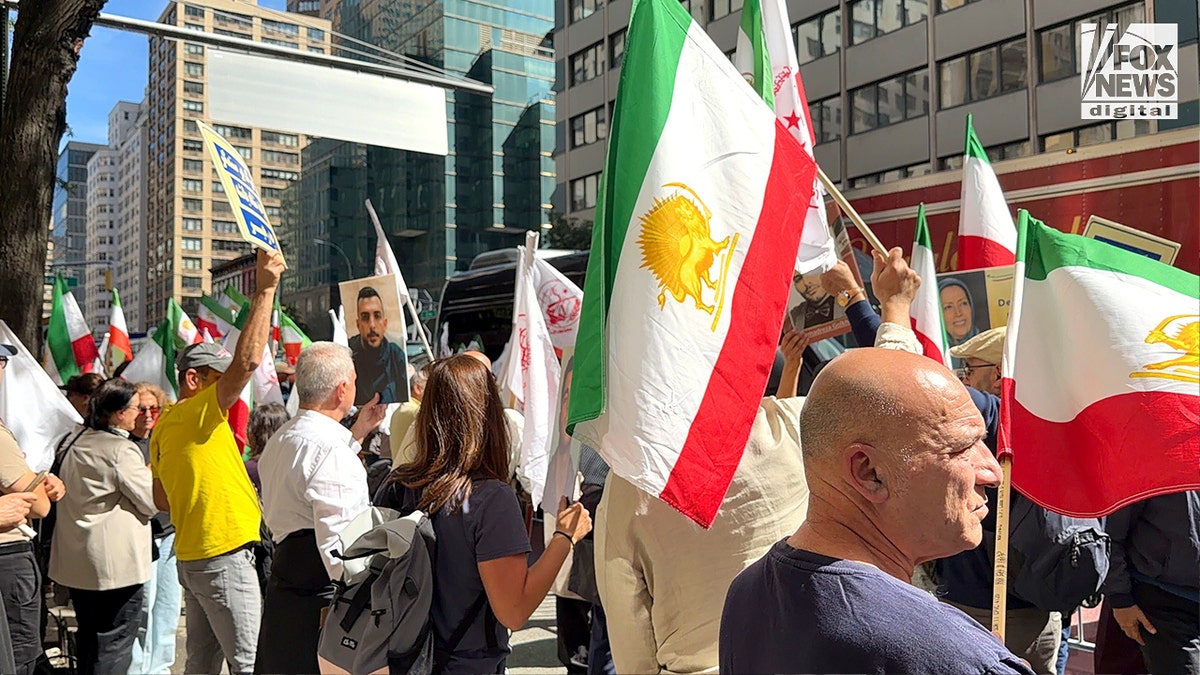
Protesters gathered outside the United Nations General Assembly on Monday, Sept. 21, carrying flags and signs. (Brooke Curto/News Outlet)
Retired Lt. Gen. Keith Kellogg, who served in both Trump administrations, told the rally that the time had come to liberate Iran from its clerical rulers. He called for a secular, non-nuclear Iranian republic that could return to the free world as an ally.
Former U.S. Ambassador Marc Ginsberg called on Congress to approve the Maximum Support Act. The proposed legislation would target Iran’s financial resources, seize government assets and expand internet access so Iranians could organize and make their voices heard.
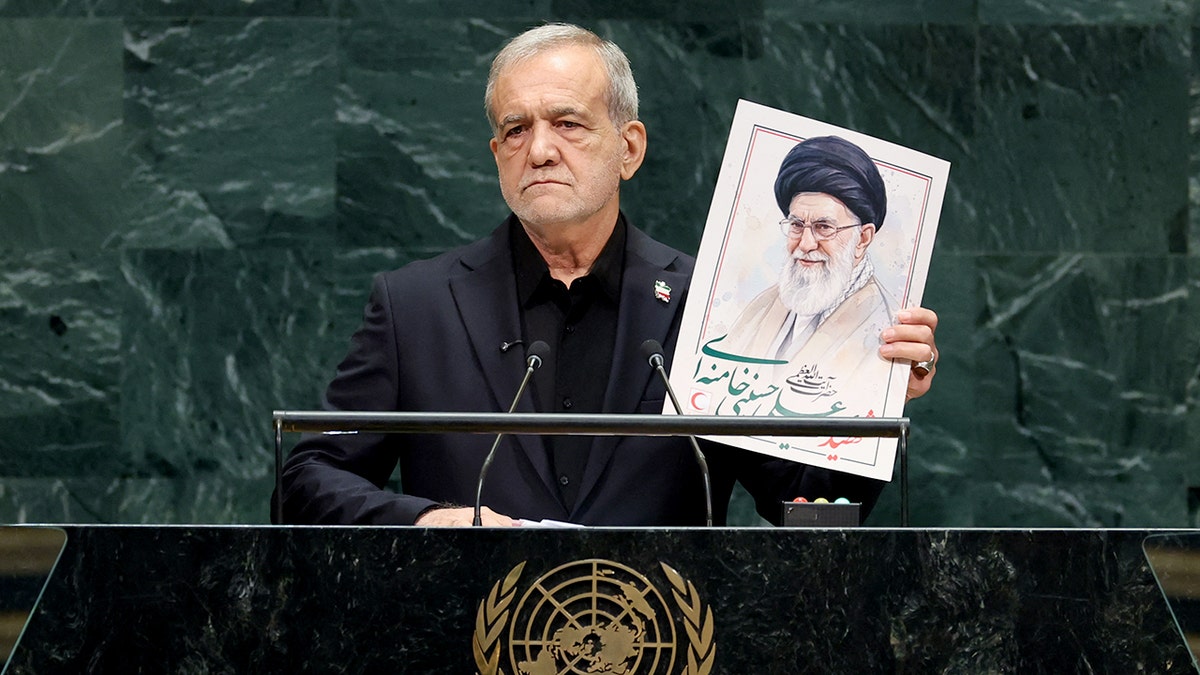
Iranian President Masoud Pezeshkian speaks while holding a picture of Ali Khamenei, Iran’s former supreme leader, during the 81st United Nations General Assembly at United Nations Headquarters in New York on Sept. 23, 2026. (Timothy A. Clary/AFP via Getty Images)
Ginsberg appealed directly to President Trump for funding, political backing and the tools he said Iran’s people need. Such assistance, he argued, would fulfill promises made to the Iranian public, help create a path out of the conflict and speed the development of what he described as Iran’s “arsenal of democracy.”
Maryam Rajavi, president-elect of the National Council of Resistance of Iran, which organized the demonstration, said in a video message that Iranians have rejected all forms of dictatorship, whether religious or monarchical.
She said the protest movement’s message from Iran’s oppressed population was reaching the international community, challenging what she called the continued occupation of Iran’s U.N. seat by religious extremists.
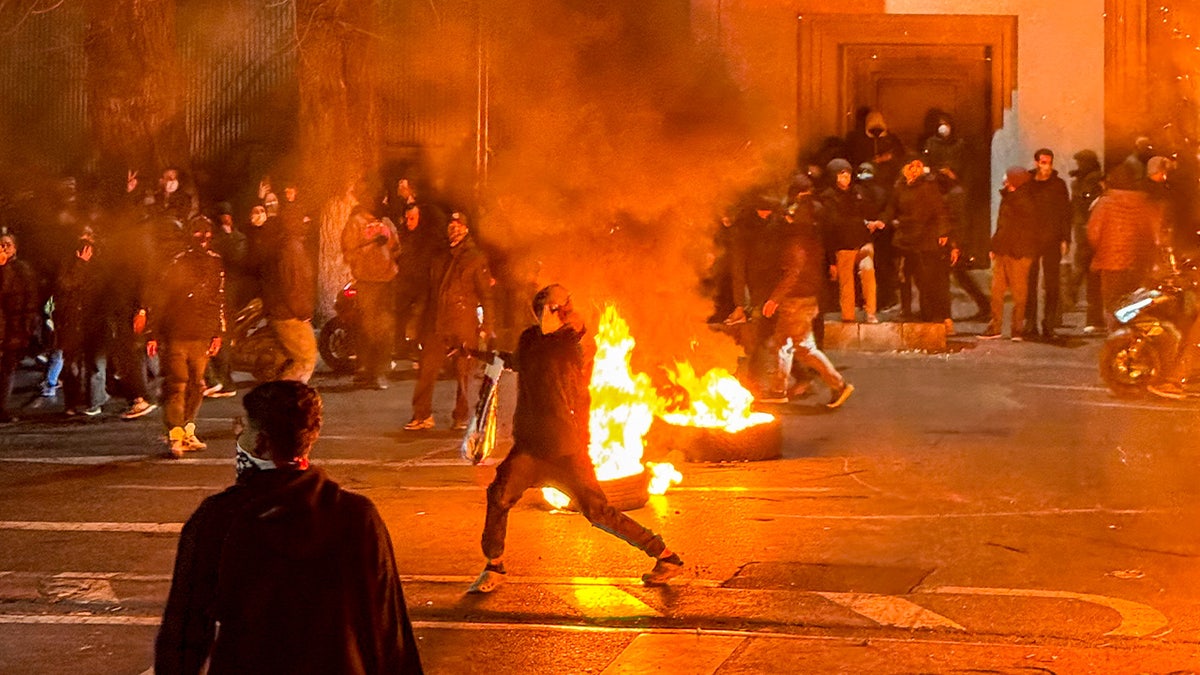
Iranians gather as they block a street during a protest in Tehran, Iran, on Jan. 9, 2026. (MAHSA/Middle East Images/AFP via Getty Images)
The demonstration stretched across two days, with speakers delivering a unified appeal to diplomats at the United Nations.
“The regime only responds to firmness and decisiveness,” Alireza Jafarzadeh, deputy director of the NCRI’s Washington office, told Fox News. He argued that sanctions and sustained international pressure remain the only effective means of confronting Tehran from abroad.
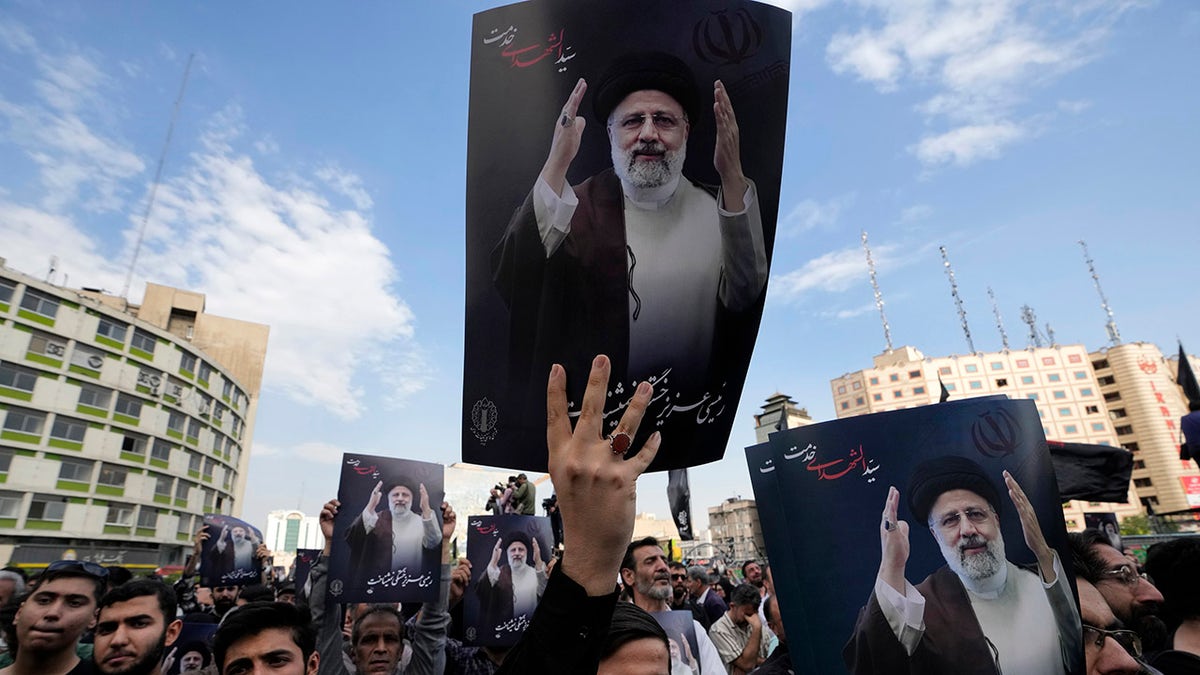
People display posters of Iranian President Ebrahim Raisi during a memorial ceremony at Vali-e-Asr Square in central Tehran, Iran. (AP Photo/Vahid Salemi)
Jafarzadeh said Iran’s ruling system is unable to reform itself, arguing that meaningful change would have occurred years ago if the regime were capable of delivering it. In his view, the country’s future depends on an uprising led by the Iranian people, not negotiations or concessions that would leave the government’s conduct unchanged.
“The real Iran is represented by the people of Iran,” he said. “The real change has to come from within.”