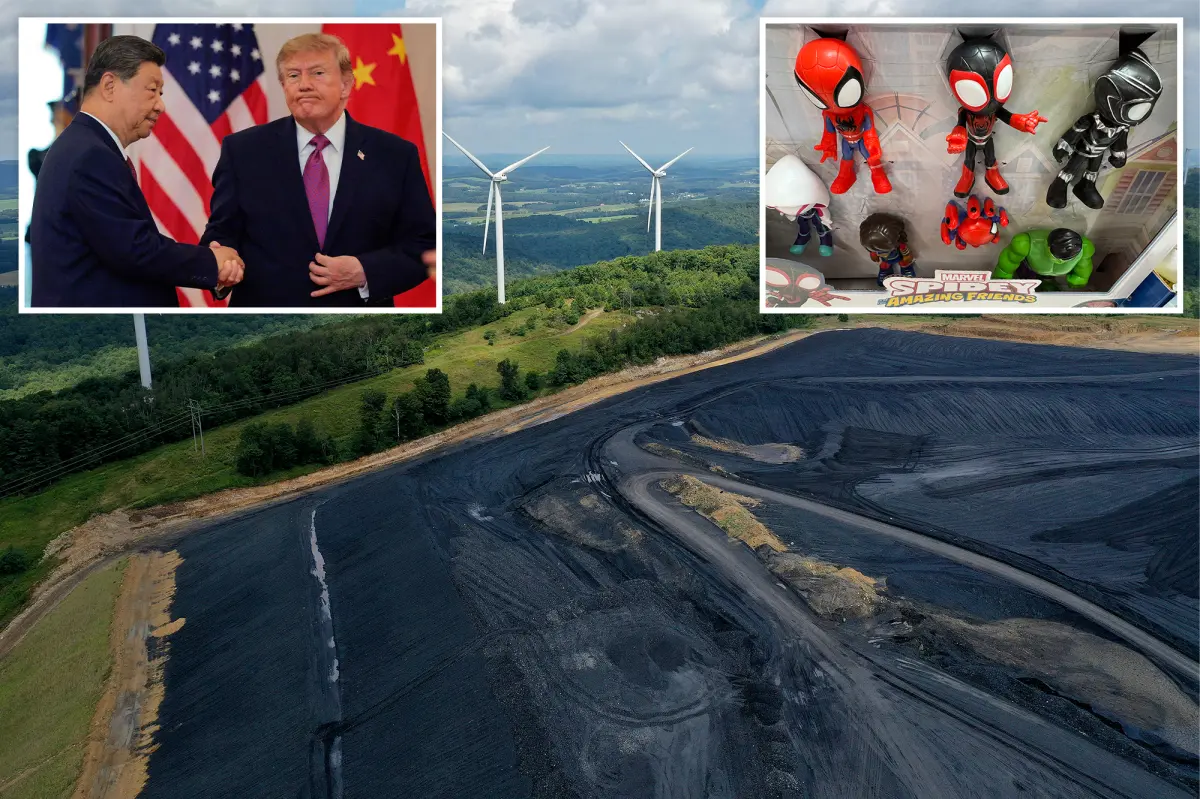

President Donald Trump’s meeting with Chinese President Xi Jinping produced more than symbolic goodwill: China agreed to purchase at least 10 million metric tons of American coal annually in 2027 and 2028.
The coal agreement is part of Trump’s effort to reinvigorate the US coal industry. It was among several commitments unveiled by the White House following the leaders’ closely watched three-day state visit, although the summit did not yield major breakthroughs on several of the countries’ most contentious issues.
The United States and China also struck an arrangement through the US-China Board of Trade that would grant preferential tariff treatment to roughly $30 billion in non-sensitive goods, according to the White House.
The terms cover American exports such as farm products, medical equipment, seafood, lumber and cosmetics. Chinese goods included in the arrangement range from small household appliances and toys to holiday decorations and child car seats.
“We’ve actually reached agreement with the Chinese on a number of these things,” US Trade Representative Jamieson Greer told CNBC on Friday.
Trump has made expanding US exports and easing pressure on consumers central goals, particularly as inflation remains a leading concern ahead of the midterm elections.
MORE STORY: NYC Mayor Eric Adams Slammed Over Tweet Amid Claims He’s Losing Focus
The challenge, however, will be ensuring that Beijing follows through on the promises it has made.
According to Agriculture Department data, China has not met its pledge to purchase US soybeans or its broader commitment to buy $17 billion worth of American agricultural products. US farmers are also facing higher diesel costs linked to the country’s war with Iran.
Coal remains a major pillar of China’s economy, even though Beijing has honored a pledge made at the United Nations five years ago to end financing for coal-fired power plants overseas.
The latest trade commitments followed Trump’s warning to Xi that China’s backing for Iran was “totally unacceptable,” according to the US ambassador to China.
One of the summit’s more unusual outcomes involved the language surrounding advanced technology. Trump and Xi agreed to refer to artificial intelligence as “super intelligence,” a term Trump had been advocating publicly.
“The two leaders agreed to use the term ‘super intelligence’ rather than ‘artificial intelligence’ to describe the applicable emerging technologies,” the White House said.