

WASHINGTON — CIA Director John Ratcliffe has issued a stern message to Cuban authorities, emphasizing that Cuba can no longer serve as a sanctuary for adversaries of the United States. He also extended an olive branch, suggesting potential collaboration on economic and national security fronts if Cuba implements significant reforms.
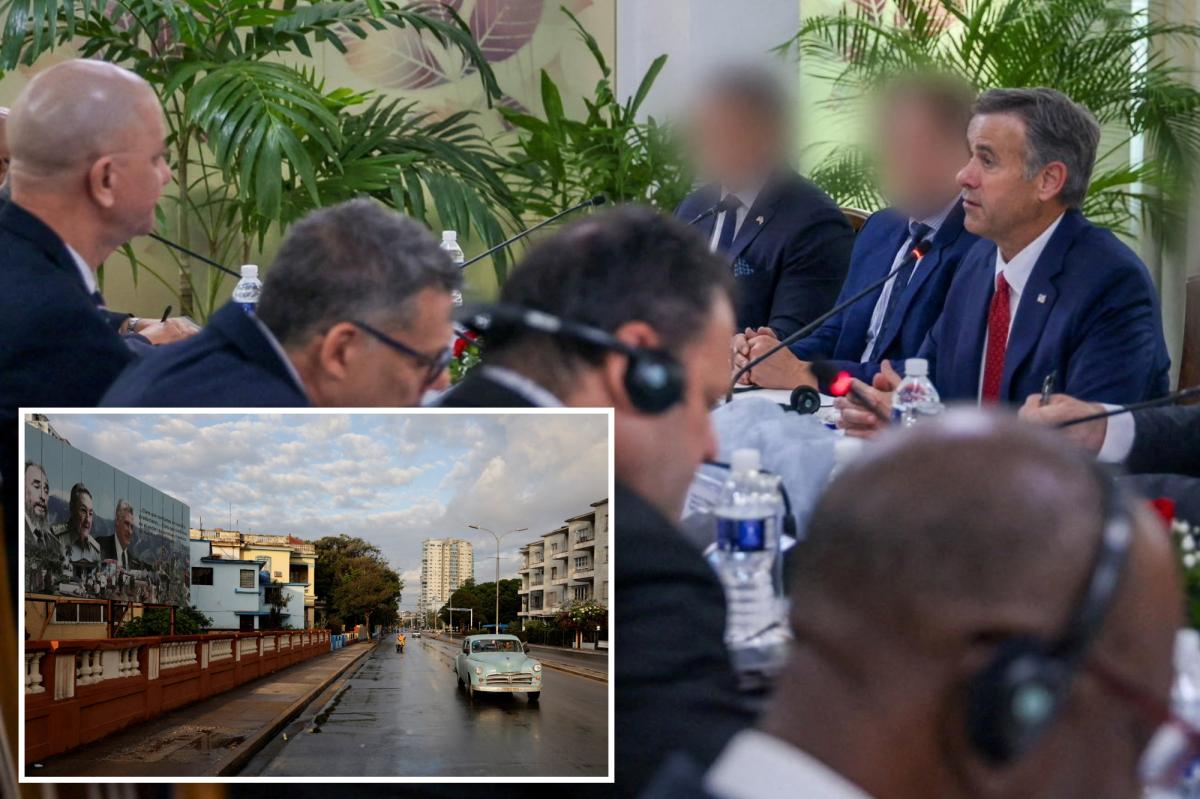
During his visit to Havana, Ratcliffe engaged in discussions with Cuban officials on topics such as intelligence sharing, economic stability, and security issues. A CIA representative described the talks as centered on the notion that Cuba must cease being a refuge for adversarial activities in the Western Hemisphere.
Cuba has been cited as a “safe haven” due to the presence of a Chinese spy base, the possibility of a military training facility, and its cooperation with Russia, particularly regarding energy resources. Additionally, there are concerns about its potential role in the spread of the mysterious “Havana Syndrome,” which has affected U.S. diplomats.
Ratcliffe had discussions with Raulito Rodriguez Castro, the grandson of former leader Raul Castro, along with Interior Minister Lazaro Alvarez Casas and the head of Cuba’s intelligence services. The talks aimed to offer support to the leftist government as it faces dwindling oil supplies from Venezuela.
Throughout these discussions, Ratcliffe underscored President Trump’s preference for improving bilateral relations with Cuba rather than imposing strict boundaries.
The Cuban government noted after the meeting that the discussions occurred “against a backdrop of complex bilateral relations,” emphasizing the intricate nature of the current diplomatic climate.
Ratcliffe’s suggestions came four months after the successful capture and extradition to the US of Venezuelan dictator Nicolas Maduro, whose regime had provided Cuba with most of its crude oil imports.
The curbing of Cuba’s energy supply has caused blackouts and an economic downturn with downstream effects on other critical services such as medical care, President Miguel Díaz-Canel acknowledged in March.
“They need help,” President Trump told reporters on board Air Force One Friday as he returned to the United States from China. “You talk about a declining country, they are really a nation or a country in decline. So we’re going to see.”
Last month, the president suggested that US forces “may stop by” the island after completing Operation Epic Fury against Iran.
In February, Secretary of State Marco Rubio held a private meeting with Rodriguez Castro on the sidelines of a gathering of Caribbean heads of government on the island of St. Kitts.
Ratcliffe’s visit marked the first direct talks between US and Cuban officials on the latter’s home turf since 2016.
The State Department extended an olive branch on Wednesday in the form of $100 million in direct humanitarian assistance as well as “fast satellite internet” that “would be distributed in coordination with the Catholic Church and other reliable independent humanitarian organizations.”
“The decision rests with the Cuban regime to accept our offer of assistance or deny critical living-saving aid and ultimately be accountable to the Cuban people for standing in the way of critical assistance,” a State Department spokesperson said.
Trump upped the pressure earlier this month with increased sanctions against countries or companies doing business with the island nation.
Early Friday, reports emerged that the US was preparing to indict 94-year-old Raul Castro, the younger brother of the late dictator Fidel Castro, who died in 2016.
The charges would be focused on the 1996 attack on the humanitarian group Brothers to the Rescue, which had two of their planes shot down by the Cuban Air Force, killing four people, CBS News first reported.