Share this @internewscast.com
Federal investigators have revealed that they are facing challenges due to “conflicting information” in the control tower logs at LaGuardia Airport, leaving them uncertain about who was responsible for ground-control duties just before a fatal runway incident on Sunday, March 22.
In a briefing held on Tuesday, Jennifer Homendy, Chair of the National Transportation Safety Board (NTSB), explained that the investigation is currently focused on sorting out inconsistencies in the tower’s records. These inconsistencies include mismatched dates and times, which are crucial for piecing together the sequence of events.
“Although we have access to the logs, there are conflicting entries that have made it challenging to pinpoint exact details, such as dates and times,” Homendy stated.
The crux of the issue lies in determining who was fulfilling the role of the ground controller at the time of the accident. This role is critical as it involves overseeing the movement of aircraft and vehicles on the taxiways. Conflicting reports suggest that the duties might have been handled by either the controller in charge or the local controller.
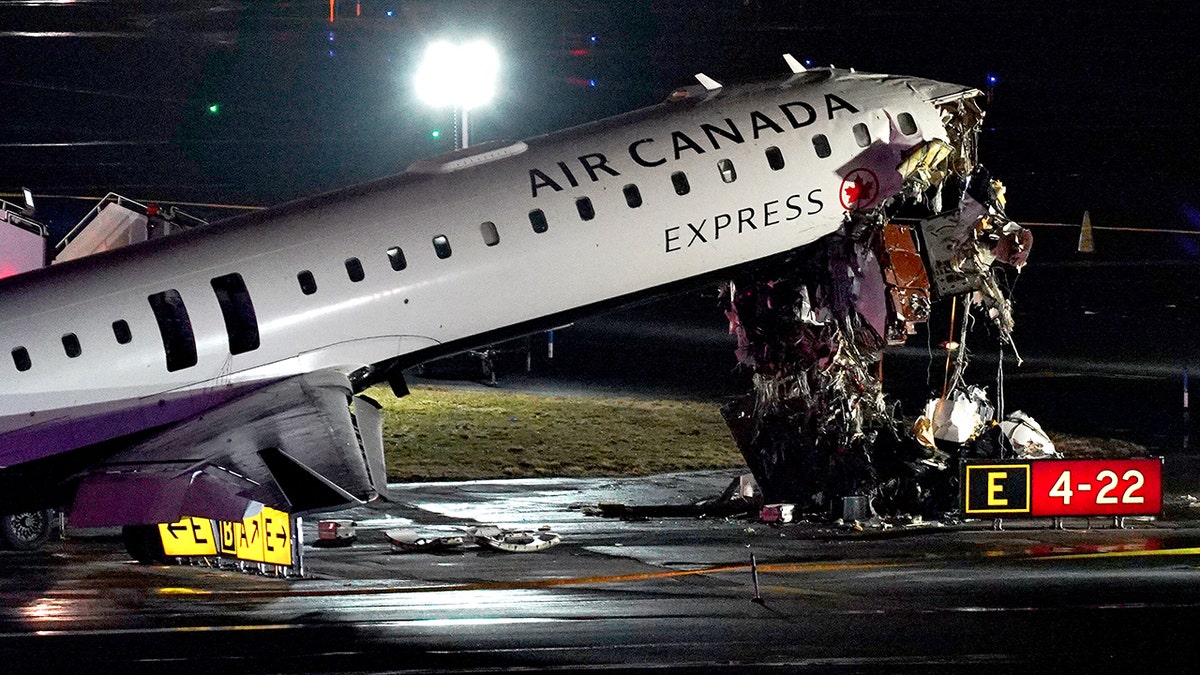
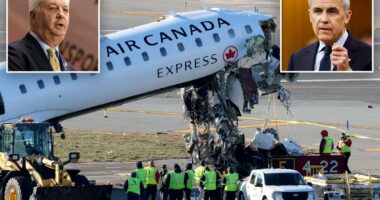
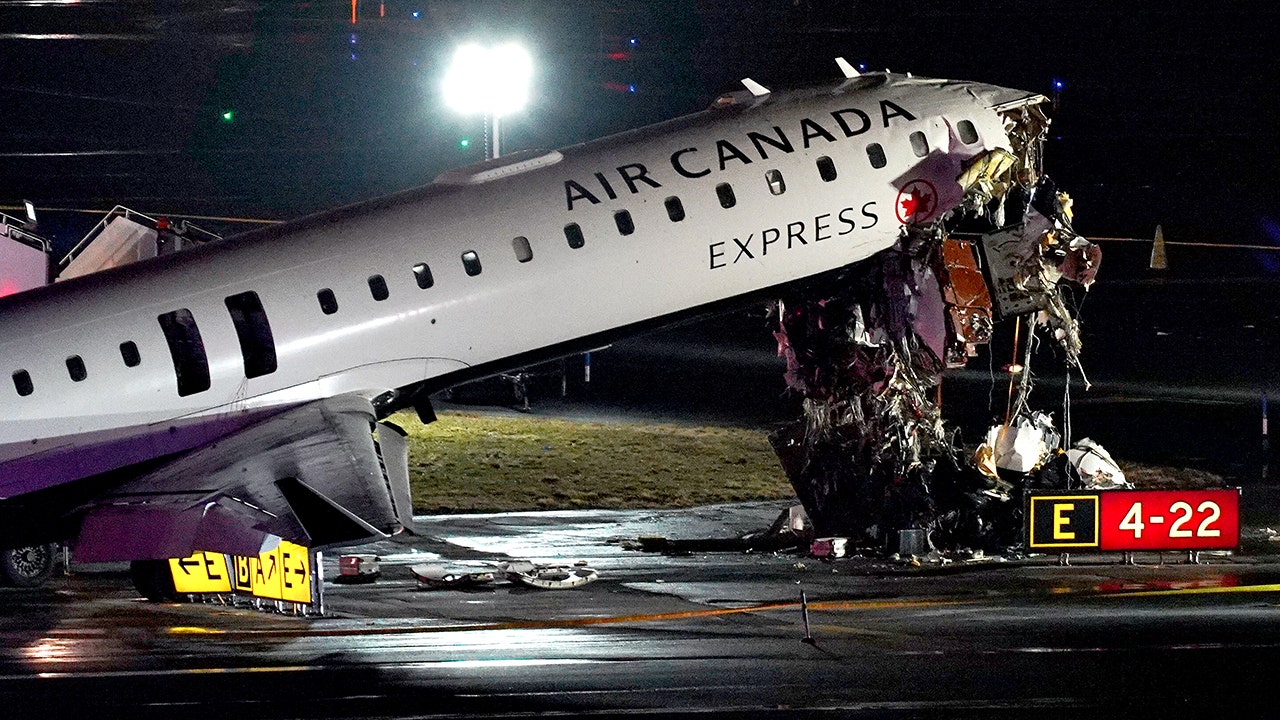
On the day of the incident, an Air Canada Express CRJ-900 aircraft collided with a Port Authority firefighting vehicle on Runway 4. The collision occurred after the control tower had allegedly granted clearance for the truck to cross the runway.
An image from the scene, captured on March 23, 2026, shows the Air Canada jet resting on the runway following the collision in New York. The photograph, taken by Ryan Murphy, illustrates the aftermath of the tragic event that has put a spotlight on the importance of clear communication and accurate record-keeping in airport operations.
According to a preliminary cockpit voice recorder summary, the sequence unfolded in seconds. The fire truck requested permission to cross Runway 4 about 25 seconds before the recording ended, and the tower cleared “truck one and company” to proceed at 20 seconds.
The truck read back the clearance, but with 9 seconds remaining, the tower ordered it to stop.
“Stop, Truck 1. Stop,” the transmission said. “Frontier 4195, stop there please. “Stop, stop, stop, stop. Truck 1, stop, stop, stop. Stop truck one. Stop!”
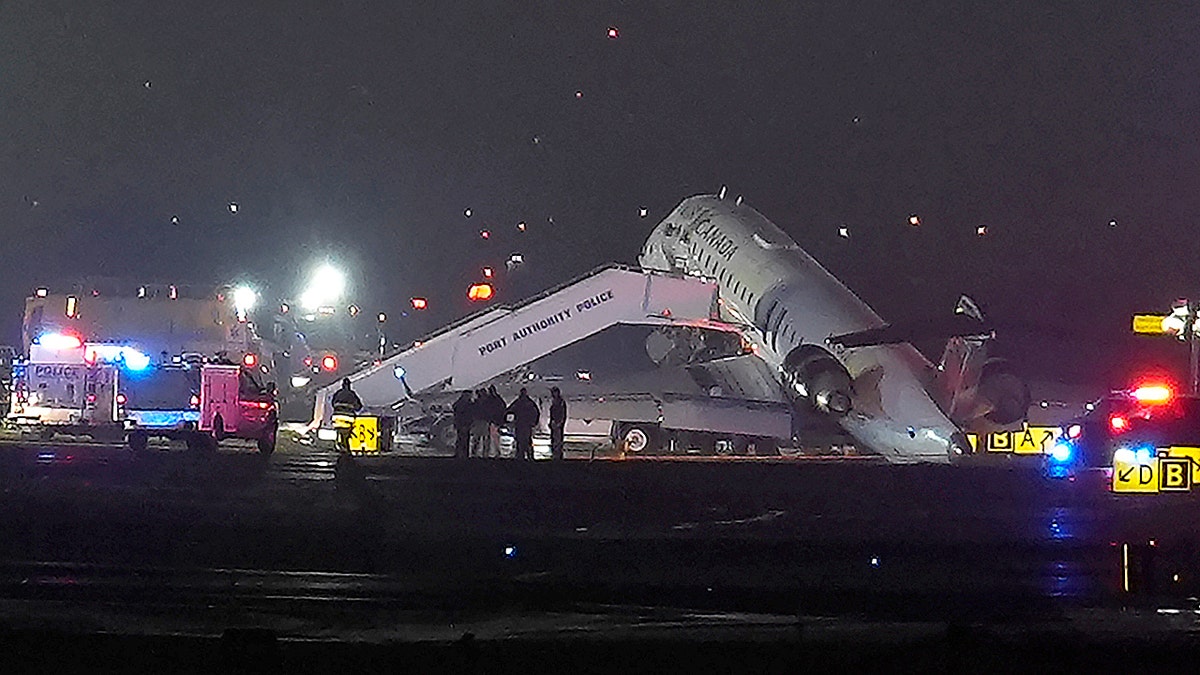
An Air Canada Jet sits on the runway at LaGuardia Airport, Monday, March 23, 2026, after colliding with a Port Authority vehicle in New York. (AP Photo/Ryan Murphy)
At 8 seconds, investigators heard a sound consistent with the aircraft’s landing gear touching down. Six seconds before the end, control shifted from the first officer to the captain. The tower again instructed the truck to stop at 4 seconds. The recording ended seconds later.
Investigators said the lead firefighting vehicle did not have a transponder, limiting the information available to controllers and airport surface detection systems.
According to the NTSB, an analysis of the airport’s surface monitoring system also found it did not generate an alert as the aircraft and vehicle converged.
“ASDE-X did not generate an alert due to the close proximity of vehicles merging near the runway, resulting in the inability to create a track of high confidence,” Homendy said.
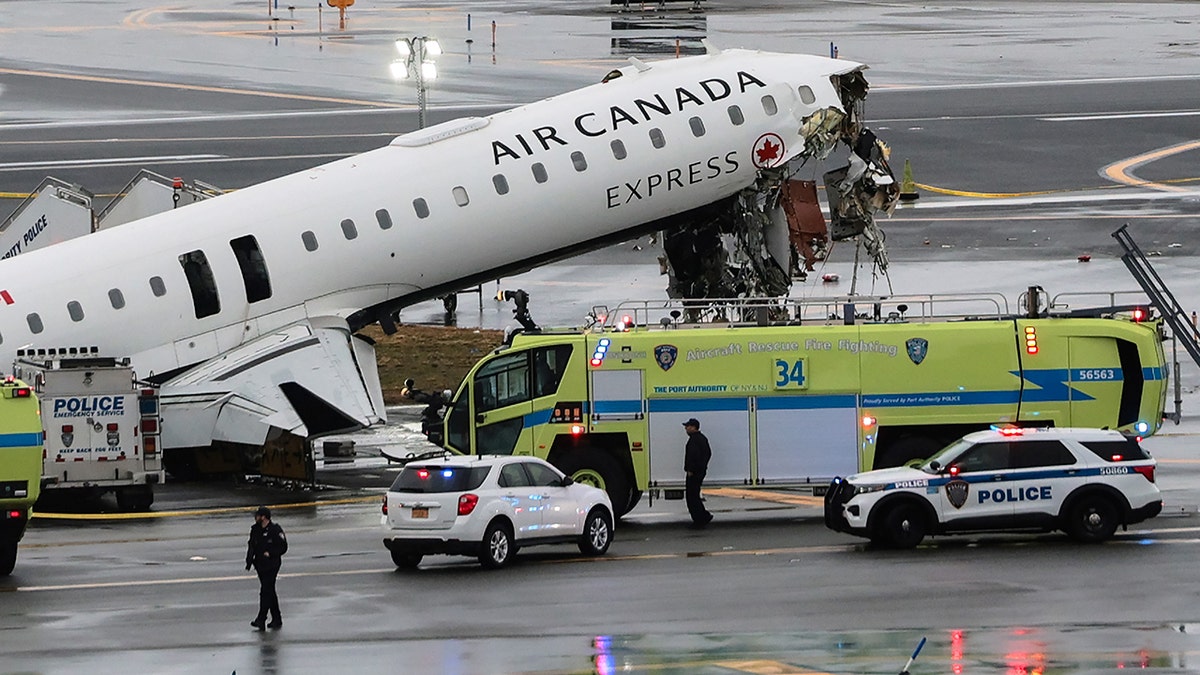
An Air Canada Express CRJ-900 sits on the runway after colliding with a Port Authority fire truck at LaGuardia Airport on March 23, 2026 in New York City. All flights into and out of LaGuardia airport have ben cancelled until 2 P.M. after an Air Canada Express plane flight from Montreal collided with a fire truck on the tarmac killing the pilot and leaving more than forty people injured. (Michael M. Santiago/Getty Images)
Investigators said two controllers were in the tower cab at the time, a local controller and a controller in charge, with roles possibly combined as part of standard overnight operations.
Homendy said that setup is common during midnight shifts across the national airspace system, though she noted the NTSB has previously raised concerns about fatigue during those hours.
She cautioned against assigning blame too early, saying investigators still have “a lot of questions.”
“We rarely, if ever, investigate a major accident where it was one failure,” Homendy said.
The aircraft was carrying 72 passengers and four crew members when it collided with the Port Authority vehicle around 11:45 p.m. Sunday while landing at LaGuardia Airport. Both pilots were killed and dozens were injured.
Investigators have recovered the cockpit voice recorder and flight data recorder and are continuing to analyze tower operations, technical systems and controller actions.
Homendy said interviews with controllers were set to begin Tuesday afternoon.