
White House requires body cams for ICE traffic stops
Former Acting DHS Secretary Chad Wolf weighed in on the White House’s latest guidance permitting I.C.E. agents to resume traffic stops when at least one agent on the scene is wearing a body camera, a shift that follows a series of recent fatal shootings, during an appearance on “America Reports.”
A New Hampshire Democratic legislator’s alleged 107 mph traffic stop has renewed scrutiny of police body cameras and dashboard cameras after INC News confirmed that the sheriff’s office involved in the case uses neither technology.
The absence of body-worn camera or dashcam footage has emerged as a central issue in the court fight involving state Rep. Ellen Read, who is contesting charges tied to two Rockingham County traffic stops. In one of those encounters, a deputy alleged she was driving 107 mph. Read maintains that both stops ran afoul of a New Hampshire Constitution provision that protects lawmakers while they are traveling to and from official legislative duties.
With no body camera or dashboard camera recording available, there is no official video record of the stop that has now triggered a broader constitutional dispute over legislative immunity.
Rockingham County Sheriff’s Office Major Christopher Bashaw told INC News that the department does not currently deploy body-worn cameras or dashboard cameras because it does not have the funding needed to buy them.

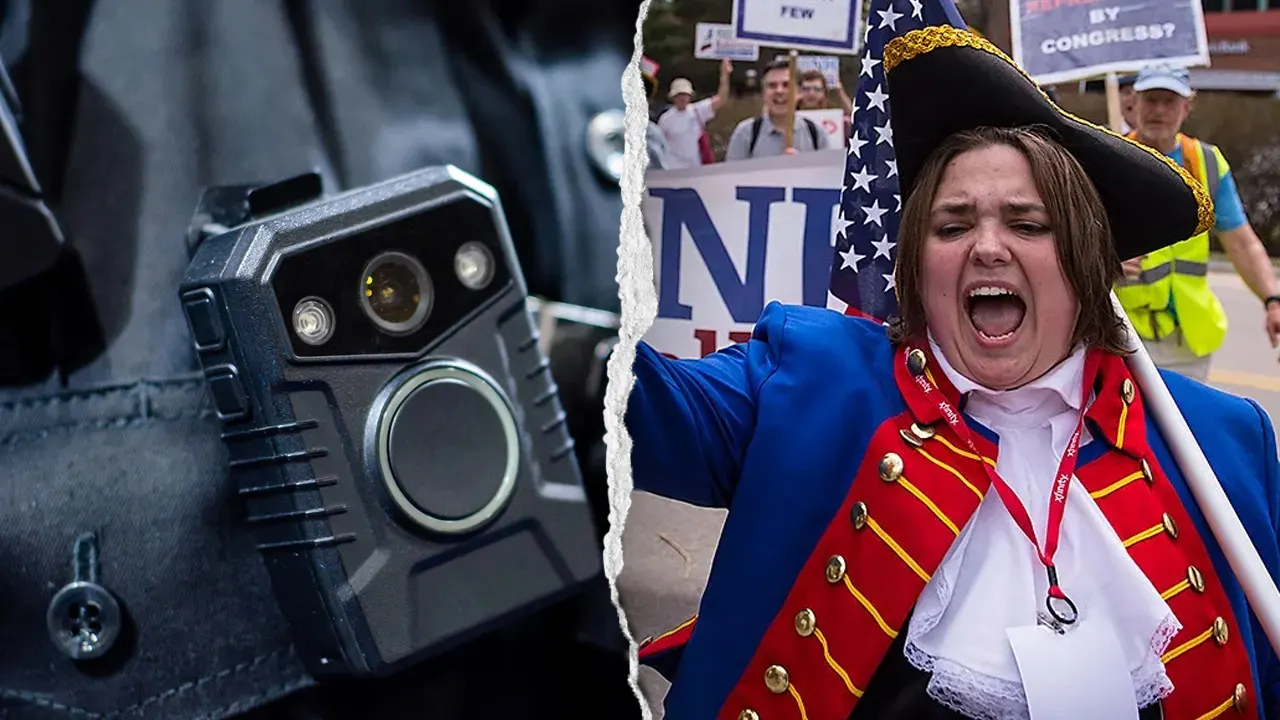
New Hampshire state Rep. Ellen Read, shown at a political demonstration in 2015, is asking for two speeding cases to be dismissed, arguing that the state constitution shielded her from arrest while she was traveling to or from a legislative session. (Getty Images)
“We don’t have that either,” Bashaw said when asked whether deputies are equipped with body cameras or dashboard cameras. He added that the sheriff’s office would like to provide deputies with the technology if funding becomes available.
New Hampshire lawmakers created the Body-Worn and Dashboard Camera Fund in 2021 to help local law enforcement agencies purchase cameras through matching grants, while also supporting related costs such as maintenance, replacement and data storage. Every local law enforcement agency in the state is eligible to apply.
State law also requires agencies that choose to deploy body cameras to adopt policies governing when officers must record law enforcement encounters, including traffic stops. The law, however, does not require agencies to purchase or use body cameras.

(iStock)
It is unclear whether the Rockingham County Sheriff’s Office has applied for funding through the state grant program.
Read told INC News she has consistently supported legislation governing body-worn cameras, as well as funding to help law enforcement agencies purchase them. She also said she would be willing to work with the Rockingham County Sheriff’s Office to help secure funding for body cameras in the next state budget.
Read said she supports funding body cameras even though she questions other forms of law enforcement spending, including military-grade equipment and expensive vehicles.
She also disputed the sheriff’s office’s assertion that she recorded part of the traffic stop on her cellphone.
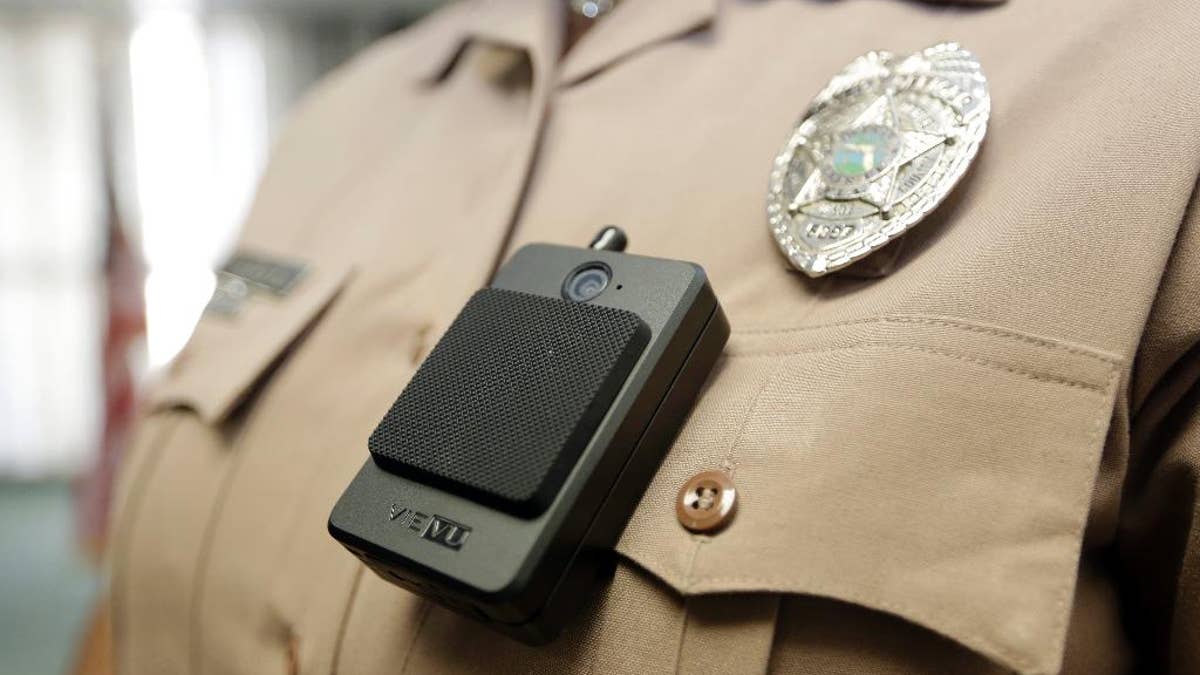
A police officer wears a body-worn camera affixed to a uniform. New Hampshire established a matching grant program in 2021 to help law enforcement agencies purchase body-worn and dashboard cameras. (AP Photo/Lynne Sladky)
“They are incorrect, I wish I had,” Read said. “The officers conveniently not wearing/using body cams are the reason that I’m investing in a dash cam.”
According to Read, the sheriff’s office misunderstood what happened during the stop. She said she did not record the encounter and that a witness listening during a cellphone call later testified in court.
Read has argued the constitutional provision protects lawmakers from being delayed while traveling to legislative duties—not from prosecution.
“I admitted to the officer and in court that I was going about 85 miles an hour on the highway,” she said, adding that she was willing to accept a speeding ticket but disputed the deputy’s allegation that she was traveling 107 mph and driving recklessly.

The New Hampshire State House, the state capitol building of New Hampshire, is seen on February 16, 2023 in Concord, New Hampshire. (Michael M. Santiago/Getty Images)
Lawrence Friedman, a professor at New England Law, said the constitutional provision dates back centuries and was intended to prevent lawmakers from being delayed while performing their legislative duties – not to provide blanket immunity from traffic stops or criminal prosecution.
“I think it’s probably not the case that this provision provides some kind of absolute immunity,” Friedman told INC News. “It’s unlikely that a court would say, ‘No, you’re absolutely immune from arrest for a moving violation that everyone else would be subject to arrest for just because you happen to be a legislator.'”
Friedman also said the New Hampshire Supreme Court’s refusal to immediately hear Read’s constitutional challenge should not be interpreted as a ruling on the merits of her argument.
“My understanding is that it’s not that her appeal is denied,” Friedman said. “The Supreme Court said no because they want to see how it plays out at the trial court.”
Bashaw said the constitutional provision was intended to prevent law enforcement from interfering with legislative business, not to shield lawmakers from accountability for dangerous driving.
“The claim that you’re immune from all types of arrests … that’d be like saying you could drive at those speeds, commit a vehicular homicide, and that you are not allowed to be held accountable because you’re traveling to and from session,” Bashaw said.
Read acknowledged the constitutional language could be modernized while preserving its original intent.
“I did not write this constitutional provision … it was written before cars existed,” she said.