
Federal employees are once again allowed to download TikTok on government-issued devices, ending a yearslong restriction, according to a Department of Justice memo.
The policy shift follows a major restructuring of the popular social media app. ByteDance, TikTok’s Chinese parent company, transferred control of TikTok’s U.S. user data and domestic operations to TikTok U.S. Data Security, known as TikTok USDS, a majority American-owned joint venture. That agreement was completed in January.
Federal workers had been barred from using TikTok on official devices under a 2022 law passed amid national security concerns. But a new opinion from the DOJ’s Office of Legal Counsel concluded that the company’s reorganization addressed the risks that originally led to the ban.
In the opinion, which was sent to the deputy counsel to President Donald Trump, the DOJ said the American-controlled version of TikTok “poses no such risk.”
The TikTok logo is seen displayed on a smartphone screen on July 3, 2026. (Thomas Fuller/SOPA Images/LightRocket via Getty Images)
“We understand you have since instructed that employees of Executive Branch agencies may download TikTok onto their official devices, subject to the agency’s discretion and consistent with all applicable workplace policies,” the opinion said.
Under the divestiture agreement, American and global investors hold an 80.1% stake in the new joint venture, while ByteDance retains 19.9% ownership.
The DOJ said ByteDance’s remaining minority stake does not alter its assessment. “The fact that ByteDance Limited remains a minority shareholder in the joint venture operating TikTok USDS makes no practical difference,” the opinion stated.
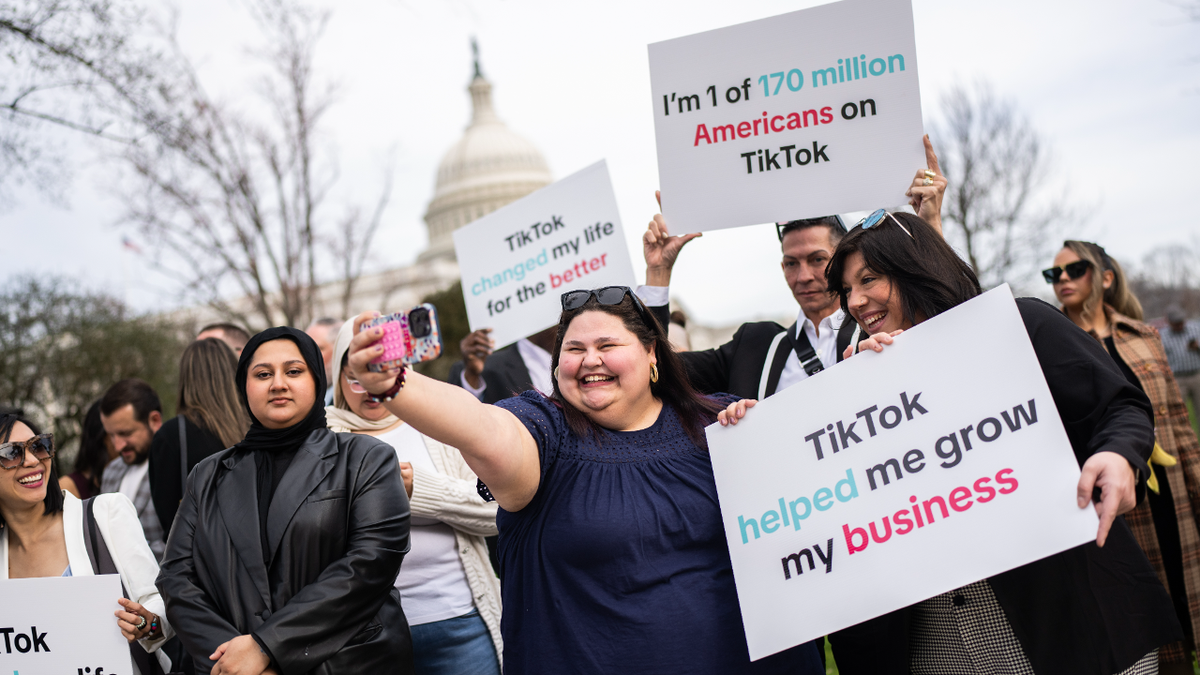
TikTok supporters are seen outside the U.S. Capitol on March 13, 2024, before the House passed the Protecting Americans from Foreign Adversary Controlled Applications Act. The bill was later signed by President Joe Biden, eventually prompting the sale of TikTok to an American-controlled joint venture. (Tom Williams/CQ-Roll Call, Inc via Getty Images)
RELATED: Woman Holds Onto Husband After He Is Partly Pulled Out of Airplane Window
ByteDance’s divestiture from TikTok was prompted by a 2024 law that passed with overwhelming bipartisan support in Congress.
The law, signed by President Joe Biden in April of that year, required ByteDance to divest control of TikTok’s U.S. operations or risk having the app barred from U.S. app stores and internet-hosting services.
TikTok attempted to challenge the constitutionality of the law, arguing that it violated the free speech rights of its tens of millions of users.
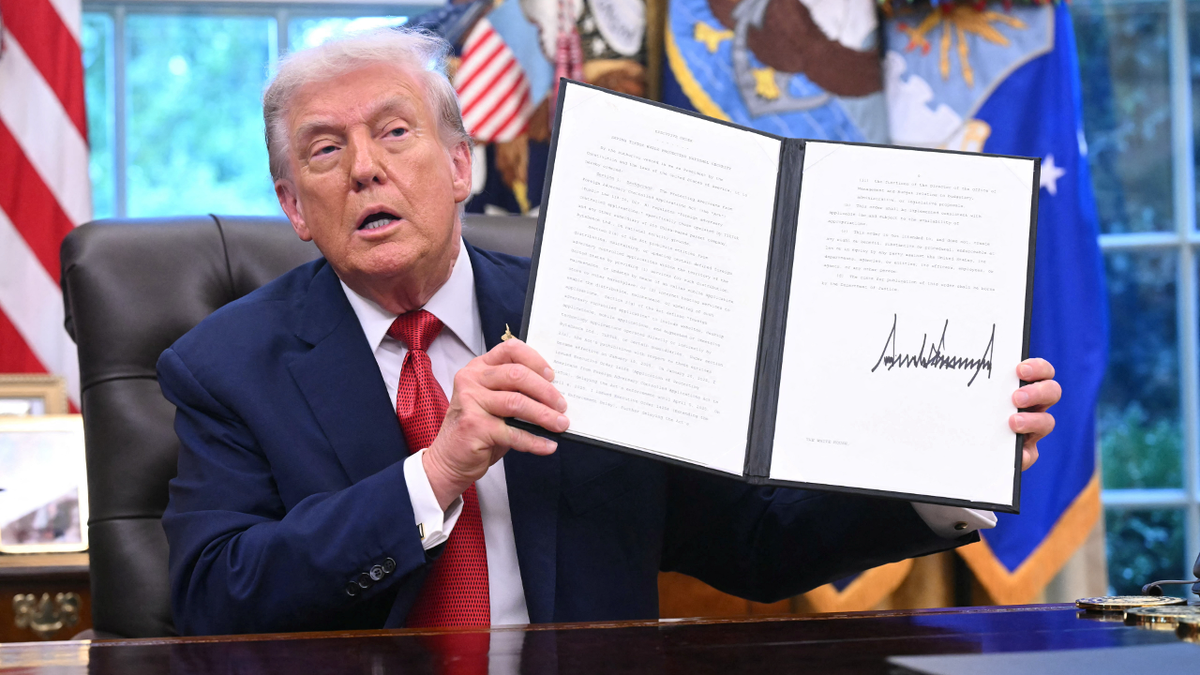
President Donald Trump shows an executive order about TikTok he signed in the Oval Office of the White House in Washington, D.C., on September 25, 2025. (SAUL LOEB/AFP via Getty Images)
On Jan. 17, 2025, the Supreme Court ruled that Congress had the right to impose a sell-or-ban ultimatum to address the “well-supported national security concerns regarding TikTok’s data collection practices and relationship with a foreign adversary.”
The law was supposed to take effect on Jan. 19, 2025, but Trump delayed its enforcement after returning to office the following day.
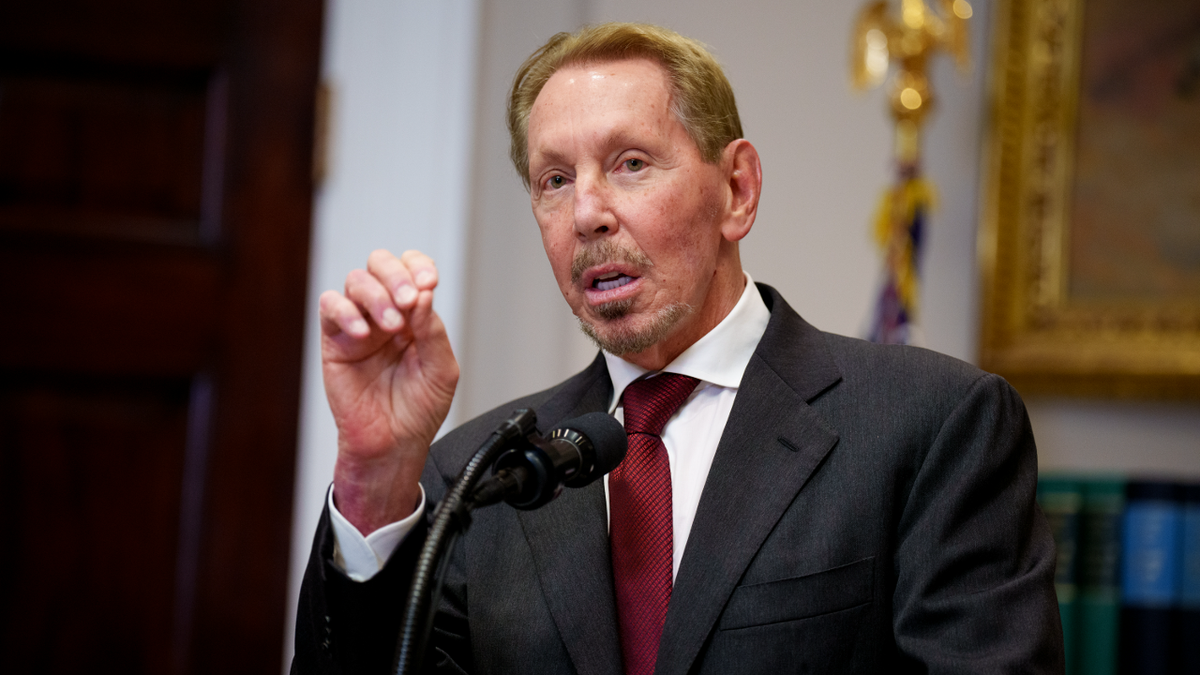
Oracle co-founder, CTO and Executive Chairman Larry Ellison speaks during a news conference with President Donald Trump in the Roosevelt Room of the White House on January 21, 2025, in Washington, D.C. (Andrew Harnik/Getty Images)
Trump repeatedly delayed enforcement of the law last year to allow enough time for investors to express interest in taking over TikTok, which is used by around 200 million Americans.
Oracle, Silver Lake and Emirati investment firm MGX emerged as the most prominent investors. The new venture said in January that U.S. user data would be protected in Oracle’s secure cloud and that TikTok’s recommendation algorithm would be retrained using U.S. user data.