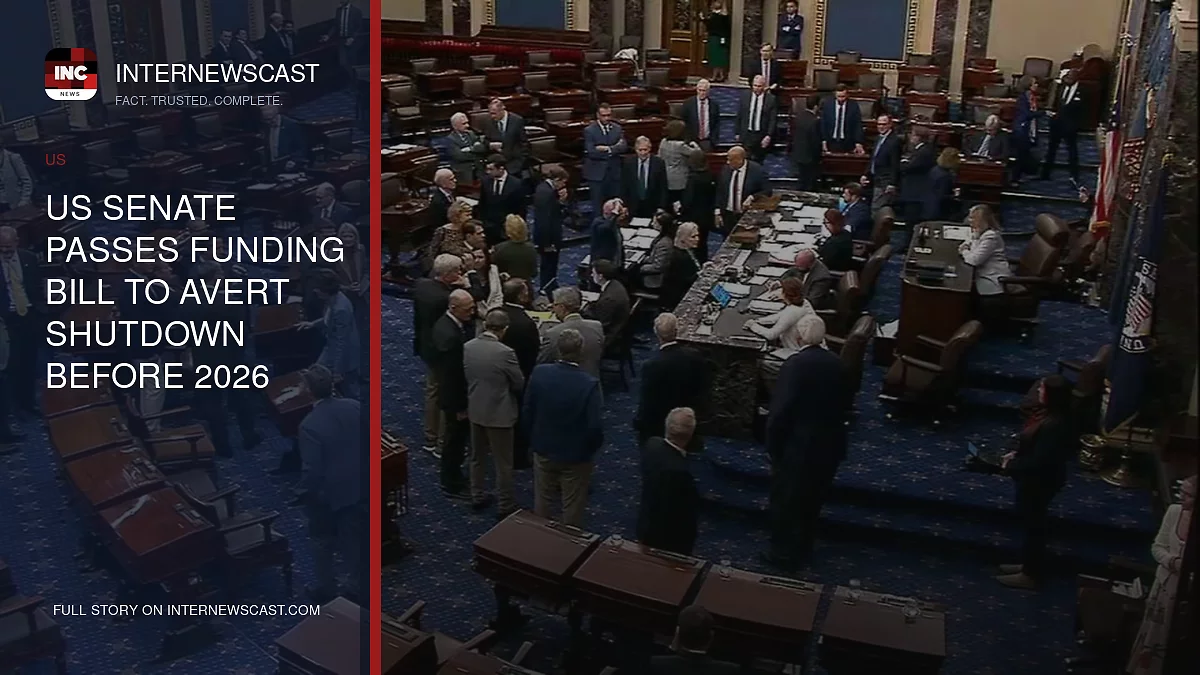

WASHINGTON — The Senate voted overnight Saturday to pass a short-term spending measure that would keep federal agencies funded into early December, heading off the risk of a disruptive government shutdown in the middle of campaign season.
The timing of the late-summer vote was notable. Congress typically waits until the final days, and sometimes the final hours, before a funding deadline to approve temporary extensions. This time, senators moved nearly two months ahead of the Sept. 30 end of the fiscal year.
The lopsided 90-6 vote reflected a clear desire among lawmakers to avoid a repeat of the two historic shutdowns that unfolded over the past year, particularly with voters soon preparing to cast ballots.
Senate Majority Leader John Thune had pushed to resolve the funding issue before senators left Washington for a five-week stretch focused on reelection campaigns and other business back home. Although unrelated disputes delayed votes late into the night, the stopgap bill drew broad bipartisan backing. The House must still approve the measure after members return from their August recess before it can be sent to President Donald Trump for his signature.
The legislation would largely keep federal funding at existing levels through Dec. 11, while carving out several exceptions negotiated between senators and the White House.
Democrats won language blocking the transfer of funds to the Border Patrol. They also turned aside a White House request for $1 billion to begin work on a new “Trump-class” battleship, a project the administration announced on Dec. 22.
“The only person who wants these golden ships is Donald Trump so he can slap his name on them,” Senate Democratic leader Chuck Schumer said.
Hemp provision became a point of contention
The measure also contains language postponing a national ban on most intoxicating hemp products. The one-month delay angered some Senate Republicans, who argue that too many of the products are ending up with children who may not understand what they are consuming. Critics have pointed to packaging that uses bright colors and closely imitates popular snack brands to draw attention from buyers.
Sen. Ted Budd, R-N.C., said that since 2017 there has been nearly a 10-fold increase in cannabis-related emergency room visits by minors in his home state.
“This is a public health crisis that deserves this Senate’s immediate attention,” Budd said. “Our children should never be the testing ground for an industry willing to exploit a loophole in federal law for profit.”
But the hemp industry said the delay buys time for Congress to craft legislation that protects hemp farmers and businesses while also putting in place safeguards to protect children.
Trump himself has called Budd to discuss the issue, though the president did not specifically ask the senator to drop his effort, Budd’s spokesman said.
“Senator Budd had a friendly phone call with President Trump discussing the legislative efforts regarding THC,” said spokesman Christian McMullen. He said the senator outlined his concerns about “any delay to closing the hemp loophole.”
Budd tried to strip the hemp delay from the bill, but the Senate turned aside his effort.
The bill delays a Trump administration rule on grants
Democratic lawmakers, along with Sen. Susan Collins, R-Maine, also got language in the bill that would block, for the duration of the funding patch, new regulations on federal grants. The regulations would require a senior political appointee to review grants before they are awarded to ensure, among other things, that they advance the president’s policy priorities. Democrats worry it’s an effort to kill grants destined for Democratic-leaning states.
“They are not interested in making our tax dollars work better – they just want them to work for Donald Trump,” said Sen. Patty Murray, the ranking Democrat on the Senate Appropriations Committee.
The White House Office of Management and Budget says its effort is about improving accountability to ensure taxpayer dollars aren’t wasted or misused. The issue is sure to be a topic of future negotiations on a full-year spending measure.
But Collins said the vast majority of the nearly 500,000 people and groups weighing in on the rule are opposed to it.
“I don’t think in my time that I’ve been privileged to serve in the Senate that I have ever seen a proposed rule generate that many negative comments,” Collins said.
Copyright © 2026 by The Associated Press. All Rights Reserved.