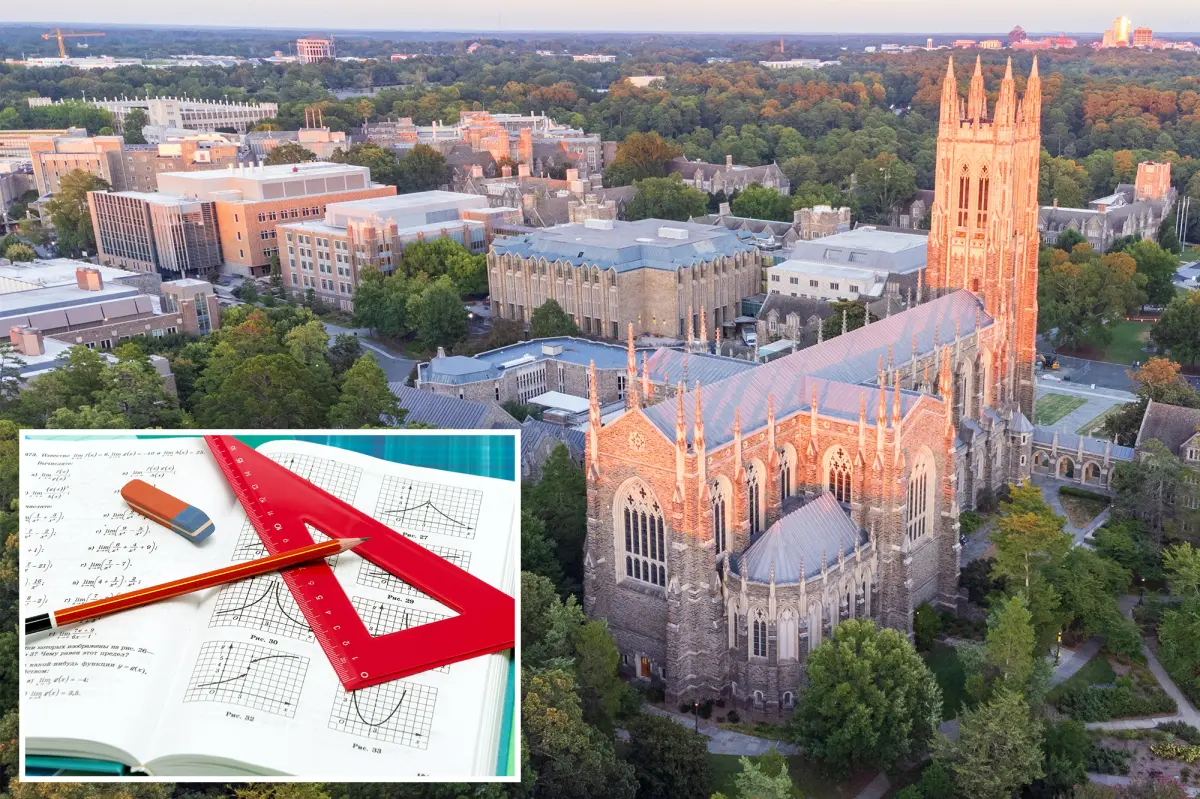

Some college graduates are turning their degrees into extraordinary paychecks.
Mathematics graduates from Duke University hold the highest-earning degree program in the United States, with a median income approaching $300,000, according to newly released data.
The graduates earned a median annual salary of $297,029 four years after completing their degrees in 2018 or 2019, based on federal earnings data.
Carnegie Mellon University computer science graduates ranked second, reporting a median income of $268,121, data from the U.S. Department of Education’s College Scorecard showed.
Electrical, electronics and communications engineering graduates from Carnegie Mellon placed third. Their median earnings reached $250,168 just four years after graduation.
University of Pennsylvania graduates with computer science degrees ranked fourth, earning a median $241,380.
Duke’s mathematics graduates may be especially successful because many pursue interests that extend well beyond equations and formulas, professors and students told The New York Times.
EXPLORE MORE: Australian Teacher Accused of Grooming and Raping Student Still Paid
“I don’t know a single math major who was only doing math,” said Faisal Alsaadi, a 2019 graduate who has worked at startups in Saudi Arabia.
Alsaadi said he combined mathematics with a second major in economics.
“I like it when I’m able to train young people to think mathematically and then they take it into every part of the world,” said Ezra Miller, a Duke professor.
Miller noted that three current undergraduates with double majors recently won an international mathematics competition after developing models designed to maximize a soccer team’s performance.
Although mathematics degrees can lead to lucrative careers, Miller said high salaries are not always the main motivation for students who choose the field.
“It does also attract people who are interested in beauty and truth,” Miller said.
Greg Herschlag, another Duke mathematics professor, cautioned that graduate salaries are not the most meaningful measure of success.
“I would rather universities and departments be judged not simply by how well their graduates do for themselves, but by how much value they create for others: how much they contribute to society, who benefits from that labor and whether that work is improving people’s lives,” he said.