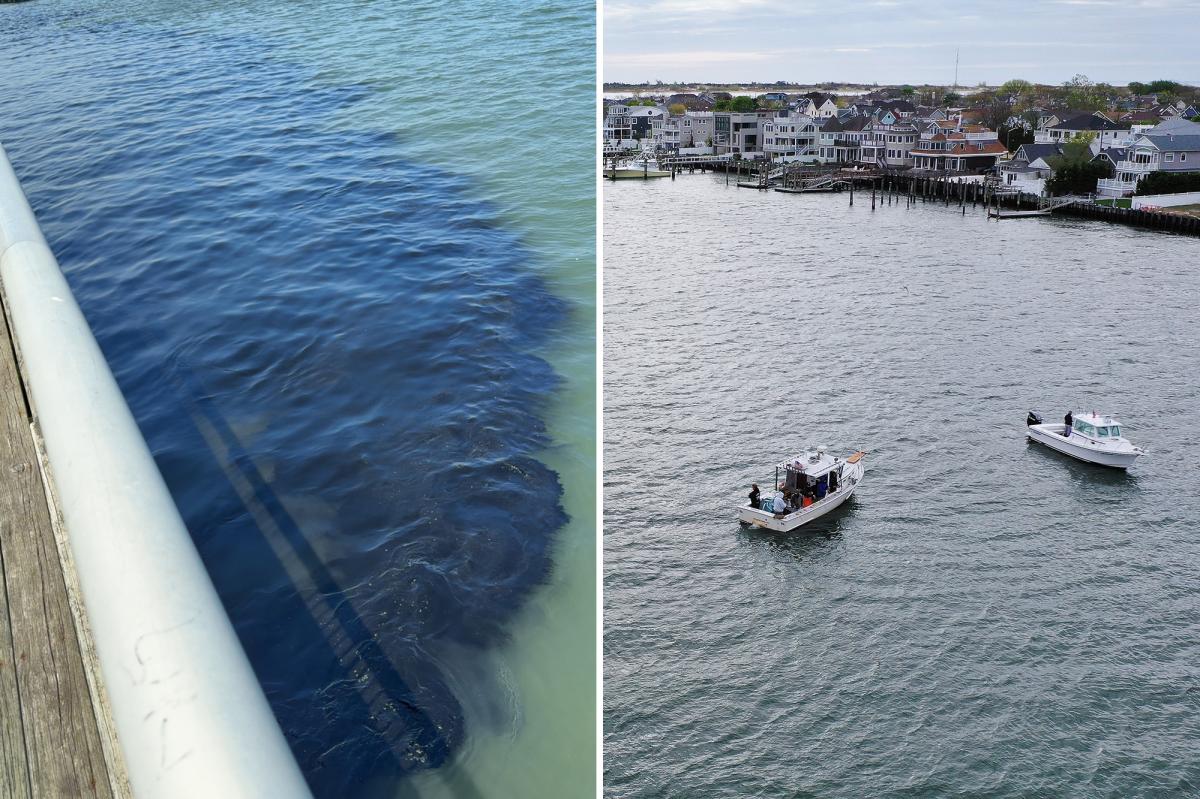


State officials have confirmed that an accidental discharge of tens of thousands of gallons of partially treated sewage occurred in a Long Island bay on Sunday. The incident lasted for approximately 15 minutes.
Authorities in Long Beach reported that nearly 30,000 gallons of sewage, which had not undergone disinfection, was released into Reynold’s Channel. The discharge, described as a dark, unpleasant sludge, resulted from a plant operator’s failure to close a valve.
This oversight led to an overflow that directed the untreated waste into the facility’s stormwater system, ultimately spilling into the waterway near the city’s fishing pier, according to both state and local officials.
The sewage overflowed from the plant’s primary digester tank for a continuous 15 minutes before being detected. During this time, the sludge spread across adjacent surfaces before entering the stormwater system, which empties directly into Reynolds Channel.
Long Beach city officials undertook an extensive clean-up operation over several days, which has now been completed in the waterway. Efforts to clear the storm drain system are ongoing, state officials reported.
The State Department of Environmental Conservation has launched an investigation into the incident and is actively monitoring the situation to ensure public health safety, a spokesperson informed The Post.
There are no known, immediate impacts to any wildlife or marine life, state officials said, although it is unclear if the waterway is safe to return for fishing or swimming activities.
In April, researchers from Stony Brook University discovered that a potentially deadly, flesh-eating bacteria — vibrio vulnificus — was living inside multiple Long Island waterways.
The bacteria is partly caused by nitrogen runoff from similar sewage water, mainly from septic tanks that leech the waste into the region’s waterways.
Reynold’s channel was not one of the bodies of water found to have the bacteria living within it.