Share this @internewscast.com
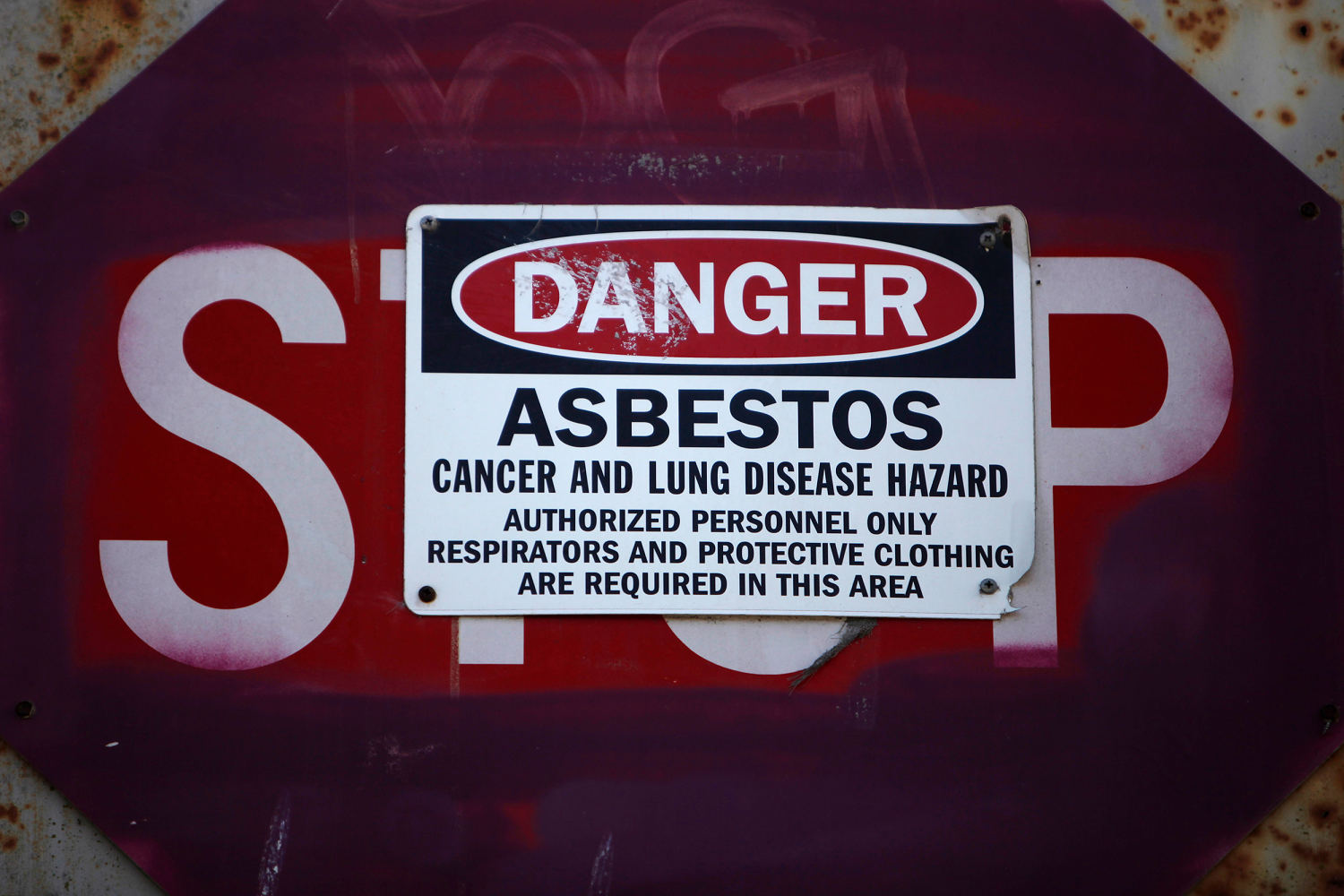
The Environmental Protection Agency on Monday announced a comprehensive ban on asbestos, a carcinogen that is still used in some chlorine bleach, brake pads and other products and that kills tens of thousands of Americans every year.
The final rule marks a major expansion of EPA regulation under a landmark 2016 law that overhauled regulations governing tens of thousands of toxic chemicals in everyday products, from household cleaners to clothing and furniture.
The new rule would ban chrysotile asbestos, the only ongoing use of asbestos in the United States. The substance is found in products such as brake linings and gaskets and is used to manufacture chlorine bleach and sodium hydroxide, also known as caustic soda.
EPA Administrator Michael Regan called the final rule a major step to protect public health.
“With today’s ban, EPA is finally slamming the door on a chemical so dangerous that it has been banned in over 50 countries,’’ Regan said. ”This historic ban is more than 30 years in the making, and it’s thanks to amendments that Congress made in 2016 to fix the Toxic Substances Control Act,’’ the main U.S. law governing use of chemicals.
Exposure to asbestos is known to cause lung cancer, mesothelioma and other cancers, and it is linked to more than 40,000 deaths in the U.S. each year. Ending the ongoing uses of asbestos advances the goals of President Joe Biden’s Cancer Moonshot, a whole-of-government initiative to end cancer in the U.S., Regan said.
“The science is clear: Asbestos is a known carcinogen that has severe impacts on public health. This action is just the beginning as we work to protect all American families, workers and communities from toxic chemicals,’’ Regan said.
The 2016 law authorized new rules for tens of thousands of toxic chemicals found in everyday products, including substances such as asbestos and trichloroethylene that for decades have been known to cause cancer yet were largely unregulated under federal law.
Known as the Frank Lautenberg Chemical Safety Act, the law was intended to clear up a hodgepodge of state rules governing chemicals and update the Toxic Substances Control Act, a 1976 law that had remained unchanged for 40 years.
The EPA banned asbestos in 1989, but the rule was largely overturned by a 1991 court decision that weakened the EPA’s authority under TSCA to address risks to human health from asbestos or other existing chemicals. The 2016 law required the EPA to evaluate chemicals and put in place protections against unreasonable risks.
Asbestos, which was once common in home insulation and other products, is banned in more than 50 countries, and its use in the U.S. has been declining for decades. The only form of asbestos known to be currently imported, processed or distributed for use in the U.S. is chrysotile asbestos, which is imported primarily from Brazil and Russia. It is used by the chlor-alkali industry, which produces bleach, caustic soda and other products.
Most consumer products that historically contained chrysotile asbestos have been discontinued.
While chlorine is a commonly used disinfectant in water treatment, there are only 10 chlor-alkali plants in the U.S. that still use asbestos diaphragms to produce chlorine and sodium hydroxide. The plants are mostly located in Louisiana and Texas.
The use of asbestos diaphragms has been declining and now accounts for about one-third of the chlor-alkali production in the U.S., the EPA said.
The EPA rule will ban imports of asbestos for chlor-alkali use as soon as the rule is published, but a ban on most other uses would take effect in two years.
A ban on the use of asbestos in oilfield brake blocks, aftermarket automotive brakes and linings and other gaskets will take effect in six months. A ban on sheet gaskets that contain asbestos will take effect in two years, with the exception of gaskets used to produce titanium dioxide and for the processing of nuclear material. Those uses would be banned in five years.
The EPA rule allows asbestos-containing sheet gaskets to be used until 2037 at the U.S. Department of Energy’s Savannah River Site in South Carolina to ensure that safe disposal of nuclear materials can continue on schedule, the EPA said.
Scott Faber, senior vice president of the Environmental Working Group, an advocacy group that pushed to ban asbestos, hailed the EPA action.
“For too long, polluters have been allowed to make, use and release toxics like asbestos and PFAS without regard for our health,’’ Faber said. “Thanks to the leadership of the Biden EPA, those days are finally over.”