
Internal agency records and noncompliance reports indicate that federal health officials repeatedly approved funding—or failed to detect serious safety and oversight weaknesses—until after taxpayer-supported animal studies had already begun.
Following the findings, PETA submitted a formal complaint Monday to NIH Director Dr. Jay Bhattacharya, calling on the agency to immediately suspend all federal funding for animal experiments conducted outside the United States.
The disclosures come as lawmakers intensify scrutiny of foreign research oversight and renew support for the bipartisan Cease Animal Research Grants Overseas (CARGO) Act, which would permanently bar the NIH from financing animal experiments in other countries.

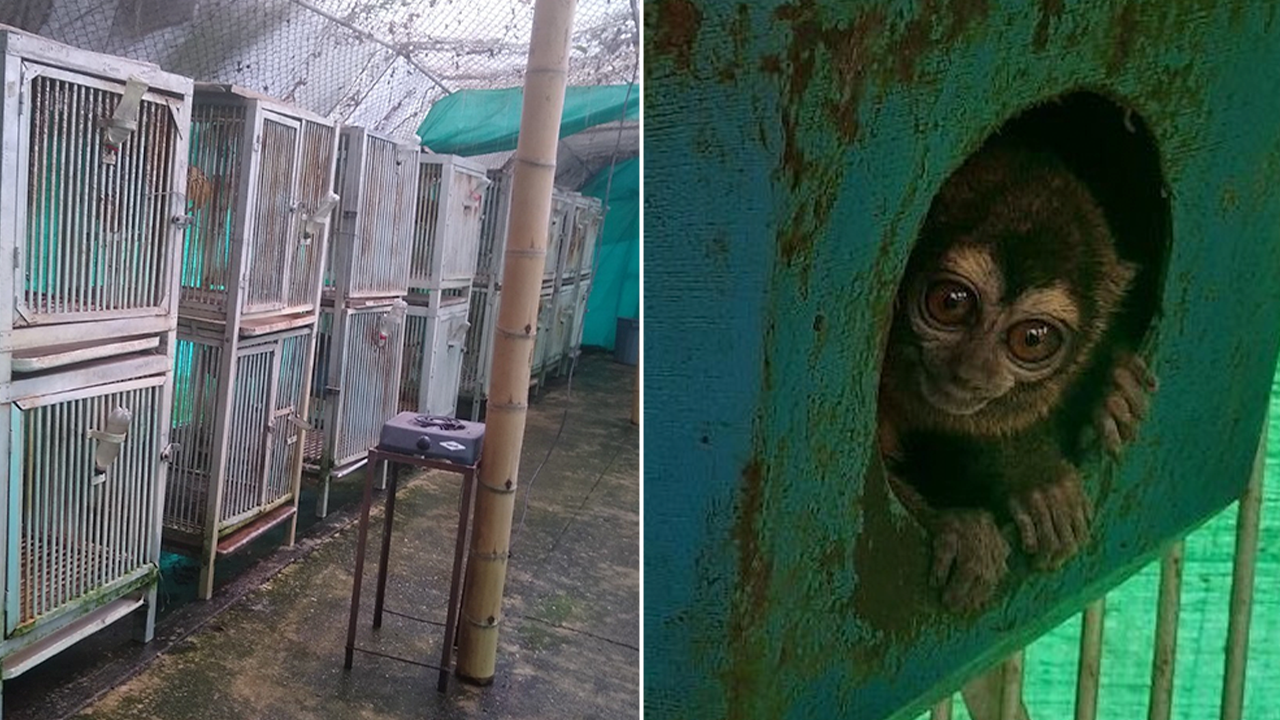
Fundación Centro de Primates (FUCEP): An Aotus monkey rests in a feces-covered nest inside a rusty cage. An inspector took the photograph on Nov. 24, 2021. PETA obtained it through a public records request to Corporación Autónoma Regional del Valle del Cauca, or CVC. (PETA)
Deadly bat virus study suspended after biosafety failures
Federal documents show that the NIH funded a Hendra virus study at the Australian Centre for Disease Preparedness, operated by Australia’s national science agency, CSIRO. The project, titled “Shining a light on bat cellular immunity following virus infection,” was suspended by the facility’s Animal Ethics Committee after serious operational problems came to light.
Internal records cited a shortage of properly trained personnel qualified to perform animal procedures at the required containment level, inadequate contingency planning, unclear protocols and the prolonged confinement of flying foxes without appropriate enrichment.
After one flying fox tested positive for Hendra virus, staff euthanized all eight bats housed in the same room because the space could not be upgraded to Biosafety Level 4, or BSL-4, containment. A ninth flying fox kept separately under BSL-4 conditions was later euthanized after also testing positive.
The principal investigator notified the NIH of the infections in May 2023, and the ethics board suspended the project several weeks later. According to the records, however, the NIH’s Office of Laboratory Animal Welfare, or OLAW, did not receive even an initial suspension report until April 2024—more than 10 months after the study was halted.
The records suggest the Australian bat project was not an isolated case. At Newcastle University in the United Kingdom, researchers used nonhuman primates in NIH-funded brain and stroke studies. A 2025 federal review directed the institution to reassess its personal protective equipment requirements, tuberculosis screening and emergency protocols for possible human exposure to the deadly Herpes B virus.

Fundación Centro de Primates (FUCEP): Dirty cages sit on cracked concrete floors covered in black and green mold. Water containers appear to be repurposed soda bottles, including one that still bears its original label. Two pieces of guadua bamboo appear to help support the structure, while construction fibers and tree debris hang from its roof. A portable electric stove rests beside the bamboo, with its cable seemingly attached to the structure’s ceiling. What appears to be an animal carcass is wedged between the chain-link roof and the plastic covering. PETA obtained the photograph from a whistleblower. (PETA)
‘Enhanced’ inspections rely on cameras controlled by institutions
After previous international scandals—including the closure of a Colombian facility that received $17 million in U.S. funding while housing monkeys in squalid conditions—the NIH promised “enhanced oversight” of foreign institutions in response to recommendations from the Government Accountability Office, or GAO.
But PETA’s review of 124 federal files obtained through the Freedom of Information Act found that the NIH’s oversight depends largely on self-reporting and scheduled virtual site visits.
The records show that facilities received advance notice of virtual inspections, giving them months to prepare. Newcastle University, for example, was notified in May 2025 of a virtual visit that ultimately took place in December.
The notification letters described advance planning meetings, document reviews and camera tours during which overseas personnel controlled what federal monitors could view.
According to the records, this approach prevented regulators from carrying out unannounced walk-throughs, selecting rooms at random, reviewing records in real time or conducting private interviews with staff.
IN CASE YOU MISSED IT: Dutch OnlyFans Model Vera Dijkmans Returns Home After ICE Detention
Of 70 annual reports reviewed for active NIH-supported animal research at foreign laboratories between 2023 and 2025, 67 reported no violations—an outcome that underscores the system’s heavy reliance on laboratories policing themselves.
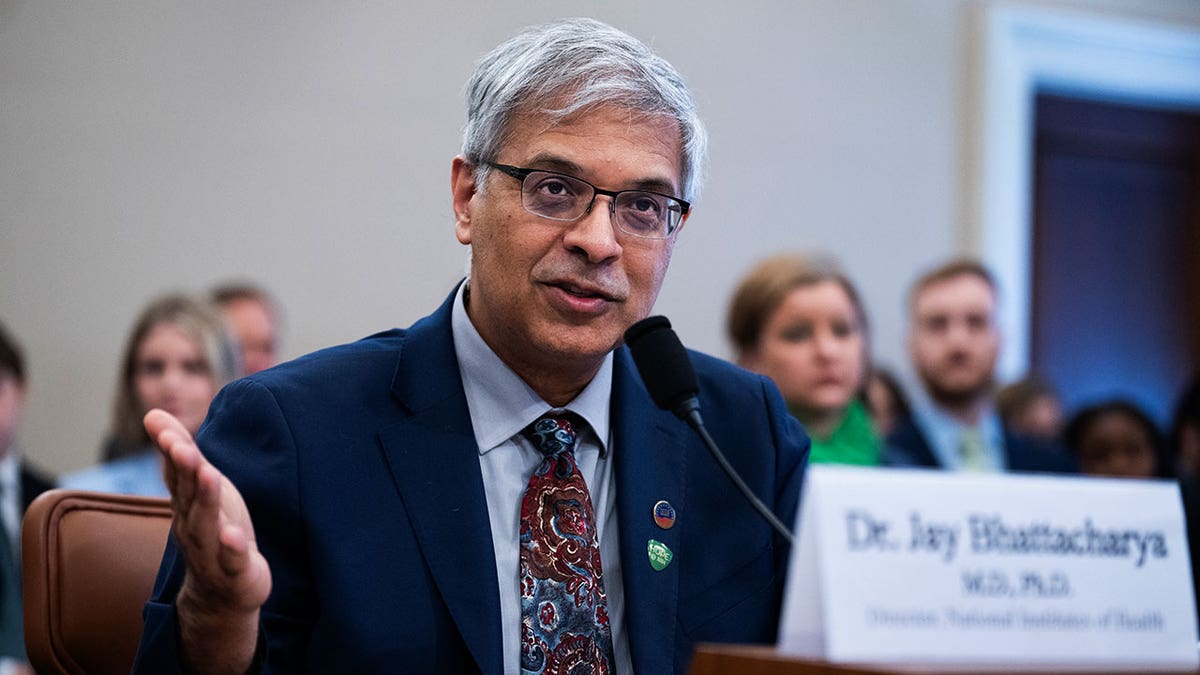
NIH Director Jay Bhattacharya testifies at a House subcommittee hearing on oversight of the National Institutes of Health in the Rayburn Building on March 17, 2026. (Tom Williams/CQ-Roll Call, Inc)
Unapproved laboratories, missing animals and absent assurances
The files also reveal broad administrative shortcomings, including federal grants directed to institutions without required authorizations.
In 2022, the NIH awarded the University of Sydney a $13 million contract for a tuberculosis vaccine adjuvant. The university outsourced the animal testing to Australia’s Centenary Institute, which did not have the NIH Foreign Animal Welfare Assurance required for such work.
The NIH failed to detect the unauthorized arrangement for years. It came to light only after the university asked about the death of an experimental mouse in 2025.
The NIH also said it could find “no records of an assurance” for several foreign organizations conducting U.S.-funded animal research. Among them was Australian biotechnology company Kinoxis Therapeutics, which carried out opioid-withdrawal experiments involving 80 dogs, 314 rats and 1,485 mice under a grant that remained active through May 2026.
Comparable gaps in the records involved animal-testing grants at institutions in Canada, Kenya and Israel.

Fundación Centro de Primates (FUCEP): Employees conduct a procedure on an Aotus monkey placed on a dirty table over a cracked concrete floor covered in green mold. PETA obtained the photograph from a whistleblower. (PETA)
At Argentina’s Research Center in Clinical Biochemistry and Immunology, the NIH funded a multiyear study of Chagas disease. A 2026 preprint co-authored by the lead researcher described mice suffering continuous full-body tremors and hind-limb paralysis—conditions that required euthanasia under the approved protocol.
Yet the laboratory reported that untreated animals died over a 120-day period and acknowledged that it did not create animal-monitoring or veterinary records. As a result, federal regulators had no documentation showing how the deaths were monitored or recorded.
PETA and lawmakers urge an end to overseas animal research funding
In her letter to Bhattacharya on Monday, Dr. Magnolia Martínez, PETA’s lead projects manager and congressional liaison, said the NIH’s system for monitoring foreign animal research was fundamentally failing.
PETA said an Animal Welfare Assurance is only a basic administrative requirement and does not guarantee humane treatment or demonstrate that research will translate to human health. The group urged the NIH to stop financing animal experiments abroad and shift resources to research methods based on human biology.
News Outlet contacted the NIH for comment on the reported biosafety problems, the delays in oversight and the calls to suspend overseas animal grants, but the agency did not immediately respond.
Lawmakers in Washington are also seeking to block foreign funding through the CARGO Act, arguing that U.S. taxpayers should not support research abroad that is hazardous or lacks accountability.
News Outlet contacted bipartisan CARGO Act sponsors—including Sens. Rick Scott, R-Fla., Cory Booker, D-N.J., and Dina Titus, D-Nev.—to ask whether the newly disclosed laboratory failures would lead to renewed legislative action or oversight hearings aimed at permanently prohibiting federal funding for animal experiments overseas.