
Arizona, California and Nevada would draw less water from the Colorado River under a new federal proposal unveiled Friday, an effort aimed at preventing a deeper emergency on a river that supplies drinking water, agriculture and industry for more than 40 million people across seven Western states.
The U.S. Bureau of Reclamation’s proposal would, at least for now, shield Colorado, Utah, New Mexico and Wyoming from mandatory reductions. Still, the measure is only an interim solution as the Colorado River states remain locked in difficult negotiations over how to manage a shrinking water supply that supports vast portions of the Western U.S.
Under the framework, the Lower Basin states could be required to cut their combined water use by as much as 3 million acre-feet, or 130 billion cubic feet, through 2036, depending on hydrologic conditions, according to a Department of the Interior news release. That volume is roughly enough to supply more than 25 million people for a year.
The proposal also sets a wide operating range for Lake Powell, the Colorado River Basin’s second-largest reservoir, allowing annual releases of between 5 million and 12 million acre-feet. Over the 10-year federal plan, water management decisions would be revisited every two years.
“This framework provides the flexibility to respond to changing hydrologic conditions while preserving the opportunity for the Basin States to continue working toward durable, consensus-based solutions,” Interior Secretary Doug Burgum said in the release.
The proposal comes as water levels at Lake Powell and Lake Mead — the nation’s two largest reservoirs, both located on the Colorado River — have dropped to historic lows this year following an exceptionally dry winter across the drought-battered West.
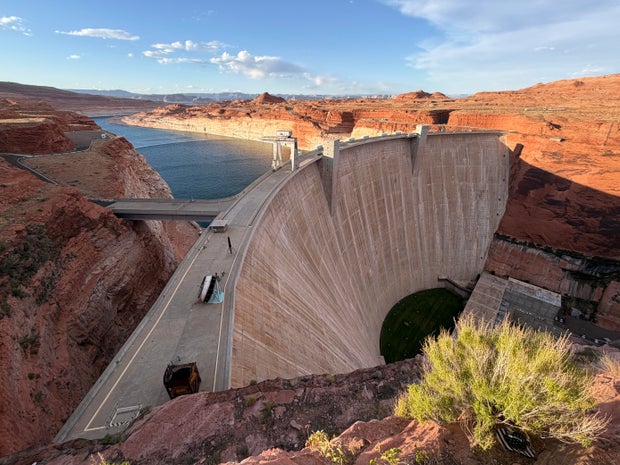
Federal forecasts indicate Lake Powell could fall so low by the end of the year that it may no longer be able to turn the turbines at Glen Canyon Dam. Those turbines produce electricity used by homes, businesses and irrigation systems throughout the region.
George Frey / Getty Images
If adopted, the reductions for California, Arizona and Nevada would be the largest Lower Basin cuts yet, with potentially sweeping consequences for cities and farms. The impacts could include higher water costs, heavier dependence on groundwater, more farmland taken out of production and new conservation requirements in communities that have never faced them before.
The federal plan comes after years of deadlocked negotiations between the states. Federal officials are expected to finalize the plan in the coming days.
Along with more than 40 million U.S. residents, several tribal nations and Mexico, farmers, wildlife, industries and hydropower all rely on the dwindling 1,450-mile-long Colorado River. Years of overuse combined with rising temperatures and drought have severely depleted flows in the Colorado today than in decades past.


