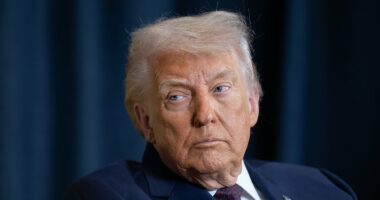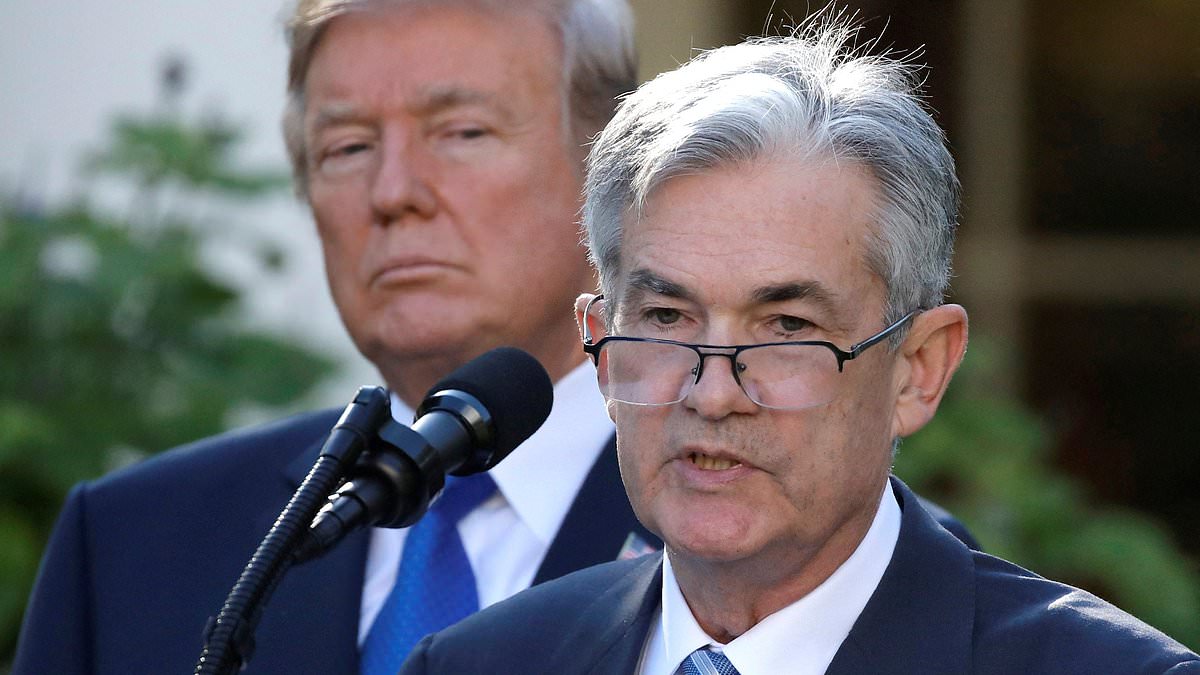

Jerome Powell has sent ripples through global stock markets by indicating he plans to stay on the Federal Reserve’s governing board even after his term as chair concludes in May.
Powell stated, “Following the end of my term as chair on May 15, I will continue my service as a governor for a yet-to-be-determined period.”
Until today, investors and international markets had been speculating about Powell’s future, placing the Federal Reserve in an unprecedented situation.
This morning, Congress moved forward with the nomination of Kevin Warsh, President Donald Trump’s chosen candidate to succeed Powell, setting the stage for his likely confirmation by the Senate in the coming days.
While Warsh is expected to take over as chair after Powell’s term ends on May 15, Powell’s decision could prolong the Federal Reserve’s ongoing tensions with President Trump.
Powell’s tenure as a Fed board member is not set to expire until 2028. Traditionally, outgoing chairs have vacated their board positions once they step down from their leadership roles.
But these are not normal days, and Powell has warned that President Trump’s assault on the independence of the central bank requires him to remain, on principle.
Meanwhile, Trump has threatened to fire Powell if he doesn’t step down of his own accord.

Today’s announcement dispels the uncertainty over Powell’s plans that had been front of mind for investors and markets worldwide
As expected, the Federal Reserve left its key interest rates unchanged, although Wall Street analysts were shocked to see the level of internal disagreement over the decision.
This is the third consecutive meeting where the central bank has stayed on pause, in the wake of three quarter-point rate cuts in late 2025.
The committee that sets interest rates has 12 members, and today’s vote was split eight votes to four – the last time there were this many members voting against the majority was October 1992.
While only one member dissented from the decision to keep rates unchanged at 3.5 to 3.75 percent, three others voted against a major policy change that could have long-term implications for stock markets.
Rates were left on pause, but the policy change would have teed up the possibility of rate cuts soon, and the four voters were united against the change – preferring not to open the door to rate cuts.
In addition, the Fed warned on prices, stating that ‘inflation is elevated, in part reflecting the recent increase in global energy prices.’
Wall Street experts note that while Fed chair Jerome Powell has been able to maintain strong consensus at the central bank throughout his term, the central bank has been subjected to historically unprecedented pressure from President Donald Trump to cut rates for the last year.
Now markets are eager to hear what Powell has to say about his future at the post-meeting news conference.
The Fed usually prefers to operate quietly in the background, but during President Trump’s second term, it has been surrounded by more drama than usual.
Between the recently ended Department of Justice investigation, questions about Powell’s status, and an incoming Fed chair backed by a White House that has been unusually vocal on monetary policy,
‘The Fed usually prefers to operate quietly in the background,’ Bret Kenwell, US investment analyst at eToro, told the Daily Mail. ‘[Recently] it has found itself in a brighter spotlight than it would probably prefer.’
In January, Powell warned that he would not leave his position until the Department of Justice investigation into the Fed was closed with ‘transparency and finality,’ and warned later that he had ‘no intention’ of stepping down early.
Top federal prosecutor, Jeanine Pirro, closed her investigation last week, but questions remained about whether the probe was entirely over, temporarily suspended or fobbed off to a Federal Reserve office.
The probe centered on alleged cost overruns in a $2.5 billion renovation of the Fed’s Washington headquarters, and Pirro said it would be handed to the central bank’s internal watchdog.
‘So far, the Fed has done a solid job maintaining its independence despite heightened political pressure, and investors will be watching to see whether that continues into the next chapter,’ said Kenwell.
Investors won’t have to wait long for a better sense of how the Fed may be thinking about interest rates.
On Thursday, we’ll get the first-quarter GDP report and another update on inflation. Until inflation and energy prices cool off – or we see a more notable deterioration in the economy or labor market – rate cuts may be hard to justify.