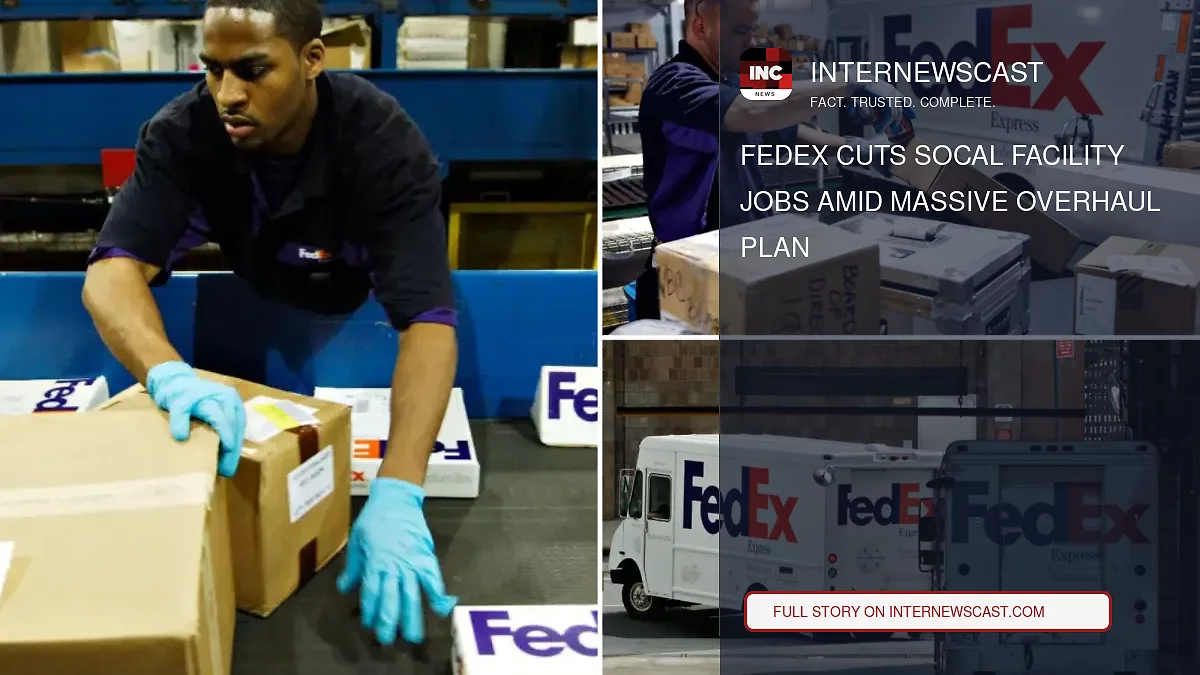

FedEx is moving deeper into a sweeping modernization push, trimming jobs, shuttering select facilities and accelerating investments in automation across its delivery network.
In Southern California, the logistics giant is eliminating 173 positions as it closes operations in Palm Springs, Victorville and San Diego.
The reductions are tied to FedEx’s broad “Network 2.0” restructuring plan, an effort to merge its air and ground delivery systems into one streamlined logistics network. The company expects the overhaul to deliver nearly $2 billion in annual savings by the end of 2027.
The urgency is clear: FedEx is facing an increasingly powerful rival.
Amazon has rapidly expanded its own delivery infrastructure, turning package delivery from warehouse to front door into a more crowded and aggressive battlefield.
To stay competitive, FedEx is pouring resources into automated sorting centers, artificial intelligence-driven route planning and a redesigned network aimed at lowering costs while boosting speed and efficiency.
The newest round of California layoffs includes 62 employees at a FedEx shipping facility near Palm Springs International Airport, with those job cuts scheduled for Sept. 29.
In Victorville, another 54 workers at a FedEx shipping hub are set to be laid off Sept. 28.
In San Diego, 57 workers are scheduled to lose their jobs at the end of August.
“We’ve been undergoing a network transformation for several years to improve how we pick up, transport, and deliver packages across the US and Canada,” FedEx spokesman David Westrick said. “As we go through this transformation, some facilities must close. These decisions are never made lightly. We’re committed to supporting impacted employees through job placement assistance, relocation aid, or severance. As of this time, there are no further Southern California closures planned.”
The latest layoffs bring the total number of California workers affected by Network 2.0 to 347.
FedEx has already closed more than 200 stations as part of the initiative.
The company expects to close more than 475 by the end of 2027, according to Scott Ray, FedEx’s chief operating officer for US and Canada surface operations.
These stations are the workhorses behind local deliveries.
Drivers sort packages, load trucks and manage pickup and delivery routes there before shipments reach homes and businesses.
The jobs being eliminated include couriers, shuttle drivers, warehouse workers, managers and employees in administrative and support roles.
Earlier Network 2.0 cuts included 95 workers in Oakland and 79 in Emeryville last year.
Another 405 jobs eliminated at LAX in November 2023 were unrelated to Network 2.0.
Those positions disappeared after FedEx relocated a heavy aircraft maintenance base to Indianapolis.
The interesting part is what FedEx is building on the other side of those cuts.
For fiscal 2026, the company reported $94.72 billion in revenue, up 7.7% from the previous year.
Net income climbed 8.3% to $4.43 billion, while operating margins reached 7.7%, the company’s highest profitability level in four years.
FedEx stock has surged more than 38% since the start of the year.
Now the company is betting that automation and artificial intelligence can make its massive network even more productive.