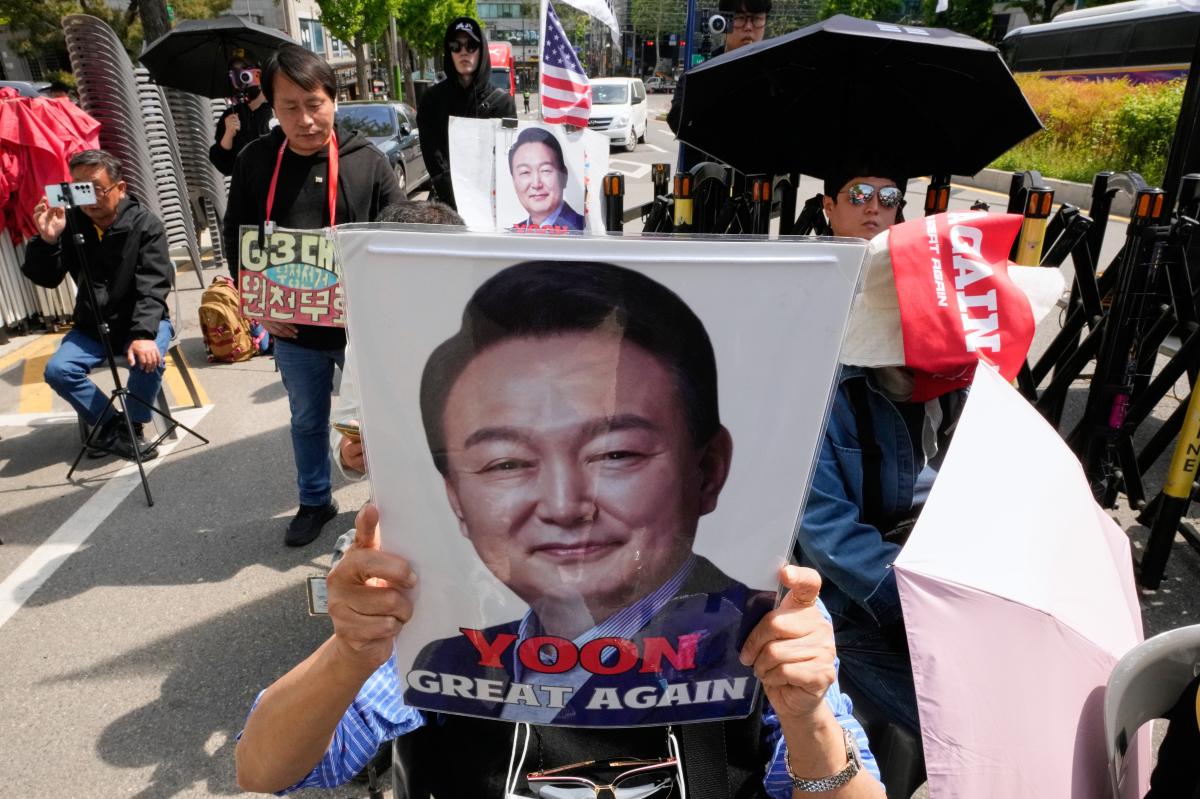


A South Korean appeals court handed down a seven-year prison sentence to former President Yoon Suk Yeol on Wednesday. The charges stem from his resistance to arrest and bypassing a legitimate Cabinet meeting before briefly imposing martial law in December 2024.
This conviction, which includes obstruction of justice and other charges, adds to a life sentence he is already serving for rebellion. Yoon’s authoritarian actions created the most significant democratic crisis South Korea has faced in decades.
Seoul High Court Judge Yoon Sung-sik stated that Yoon circumvented the legal requirement of a full Cabinet meeting before declaring martial law. He was found guilty of falsifying documents to cover this up and deploying security personnel as his “private army” to resist arrest post-impeachment. Yoon remained silent as the verdict was read.
Initially, a lower court in January sentenced Yoon to five years, partially acquitting him of abuse of power concerning the Cabinet meeting. The court determined he wasn’t responsible for the absence of two members who had been invited.
However, the Seoul High Court overturned that partial acquittal, finding him guilty on all counts. The court ruled that he violated the rights of two invited members and seven others who were not informed, thereby simulating a legitimate meeting by gathering only a select group.
Despite its brief duration, Yoon’s martial law decree on December 3, 2024, plunged the nation into a profound political crisis. It disrupted the political landscape, high-level diplomacy, and caused turmoil in financial markets.
The turmoil eased only after his liberal rival, Lee Jae Myung, won an early presidential election in June.
Yoon was suspended from office on Dec. 14, 2024 after being impeached by the liberal-led legislature and was formally removed by the Constitutional Court in April 2025.
Following his suspension from office, he refused to comply with a Seoul court’s warrant to detain him for questioning, setting up a standoff in which dozens of investigators arrived at the presidential residence in early January 2025 but were blocked by presidential security forces and vehicle barricades.
He was detained later that month, released by another court in March, and was then re-arrested in July.
He remained in custody after that as a series of criminal trials, which are continuing, began.
Wednesday’s ruling came a day after the same court increased to four years the sentence of Yoon’s wife, Kim Keon Hee, for charges including accepting luxury gifts from the Unification Church, which sought political favors from Yoon’s government, and involvement in a stock price manipulation scheme.
Prosecutors in a separate trial last week also requested a 30-year prison term for Yoon over allegations that he deliberately tried to escalate tensions with North Korea in 2024 by ordering drone flights over Pyongyang as he sought to create justifiable conditions for martial law at home.