

Florida health officials have reported a fourth death linked to Vibrio vulnificus, a potentially fatal “flesh-eating” bacterium often associated with eating raw or undercooked oysters.
The latest fatality appeared Thursday in the Florida Department of Health’s updated tally for infections caused by the dangerous bacteria.
The victim was a Broward County resident between 75 and 79 years old, WSFA reported. Officials have not determined how the person was exposed to the infection.
Earlier deaths involved residents of Bay, Palm Beach and Marion counties, according to the state health department.

FILE — Florida health officials warned that raw or undercooked oysters may carry Vibrio vulnificus, a potentially deadly flesh-eating bacterium. (iStock)
“The majority of people contract vibriosis after eating raw or undercooked shellfish, especially oysters,” the Florida Department of Health said.
State health department data show that Florida has recorded 21 Vibrio vulnificus cases so far in 2026.
The state’s highest case and death totals in the past decade came in 2022 and 2024. Florida reported 82 cases and 19 deaths in 2024, compared with 74 cases and 17 deaths in 2022.
North Carolina mountain community prepares for hurricane season two years after Helene’s devastating impact
Health officials said the elevated numbers were connected in part to hurricane-related conditions in some counties, including the effects of Hurricanes Helene and Ian. Flooding and persistent standing water can increase the risk of coming into contact with the bacteria, officials warned.
Vibrio vulnificus occurs naturally in warm, brackish coastal waters.
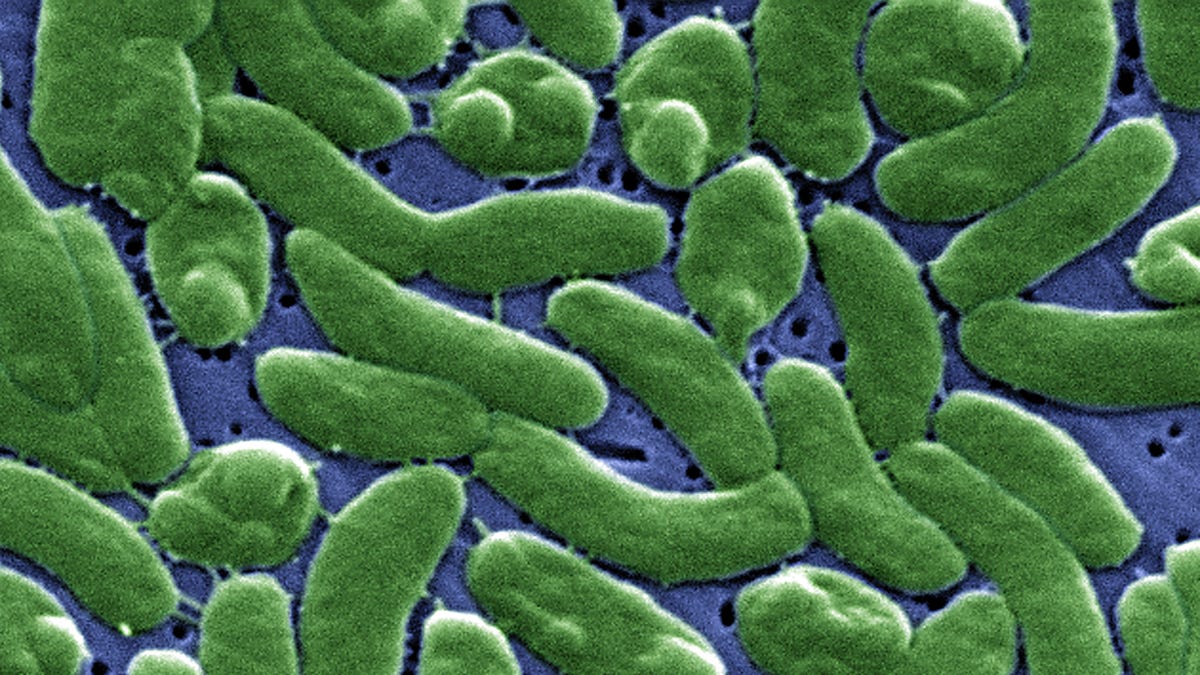
FILE — Florida health officials say bloodstream infections caused by Vibrio vulnificus are fatal in roughly half of cases. (CDC.gov)
People may become infected by eating contaminated oysters or other shellfish, or when an open cut comes into contact with contaminated water.
According to health officials, bloodstream infections involving Vibrio vulnificus are fatal approximately 50% of the time.
Healthy people often experience only mild symptoms, but the infection can become life-threatening for those with weakened immune systems.
“A recent study showed that people with these pre-existing medical conditions were 80 times more likely to develop Vibrio vulnificus bloodstream infections than healthy people,” Florida health officials said.
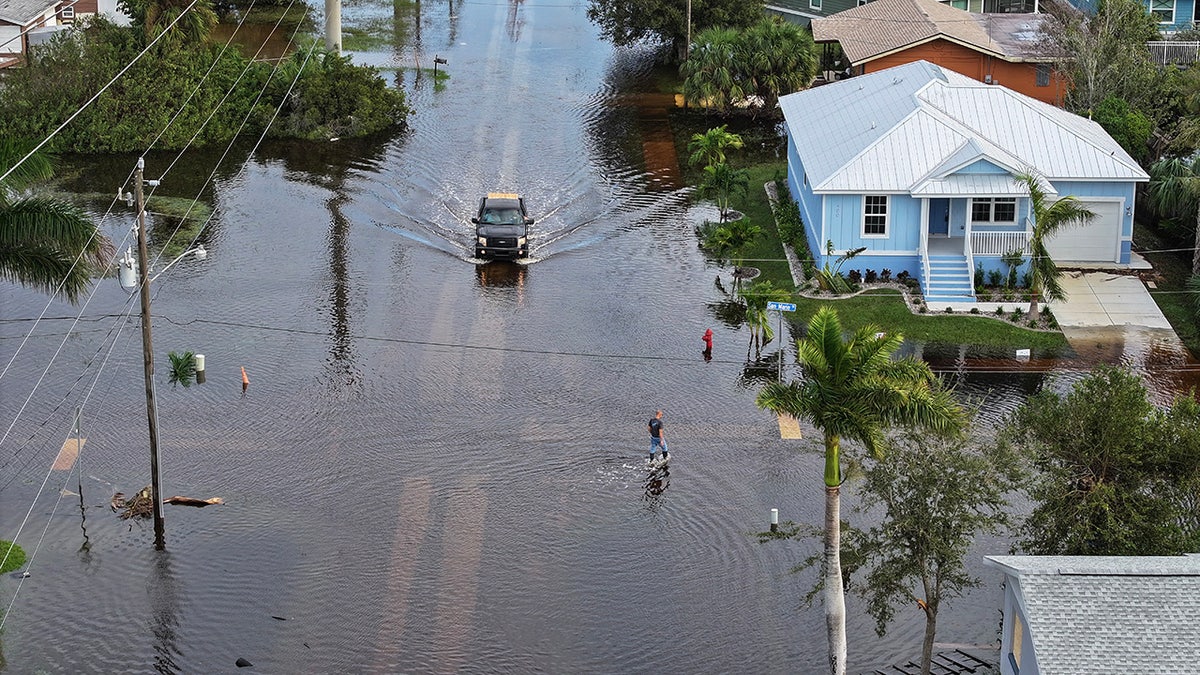
FILE — In this aerial view, a person walks through floodwaters that inundated a neighborhood after Hurricane Milton came ashore on Oct. 10, 2024, in Punta Gorda, Florida. Flooding and standing water can increase the risk of exposure to Vibrio vulnificus, health officials said. (Joe Raedle/Getty Images)
Severe infections can cause symptoms including fever, chills, decreased blood pressure, also known as septic shock, and blistering skin lesions. In some cases, wound infections can lead to tissue damage requiring amputation.
Elsewhere along the Gulf Coast, Louisiana has reported 15 cases and six deaths this year as of Sept. 9, according to the Louisiana Department of Health. Fourteen of the cases were attributed to wound or seawater exposure.
The Texas Department of State Health Services says Texas typically sees an average of 33 cases per year.
Mississippi reported three cases as of August, according to the state’s health department.