

Gasoline prices are climbing just as Labor Day travel approaches, and AAA says drivers could encounter the most expensive holiday weekend at the pump on record as the conflict in the Strait of Hormuz continues to ripple through energy markets.
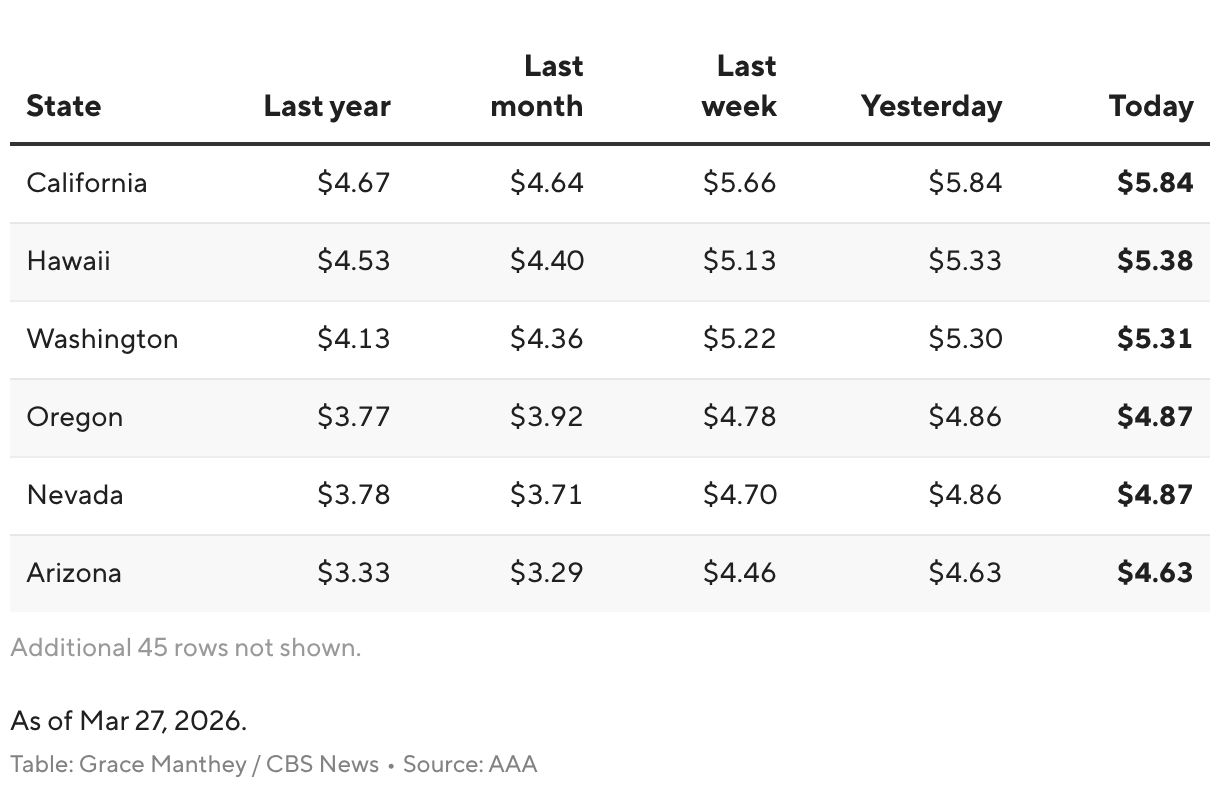
The U.S. average for regular gasoline rose to $4.14 a gallon on Thursday, 4 cents higher than a week earlier, according to AAA data. Diesel prices also set a fresh record Friday, reaching $5.85 a gallon and surpassing the previous high of $5.81 recorded in June 2022.
AAA noted that gas prices have never exceeded $4 a gallon on Labor Day.
“Even though gasoline demand decreases this time of year, typically bringing down gas prices, this year is different due to the high cost of crude oil,” AAA said in a report.

While inflation has cooled from the peaks seen after the pandemic, elevated fuel prices are still pressuring both households and businesses. Since the start of the Iran war, rising gasoline and diesel costs have amounted to more than $741 per U.S. household, according to a tracker from Brown University.
The spike in diesel is especially costly for trucking, construction, agriculture and other sectors that depend heavily on large vehicles, equipment and machinery.
Because diesel powers much of the nation’s freight network, higher prices can feed broader inflation by increasing the cost of moving goods across the country and ultimately lifting prices for consumers.
“The everyday consumer will see higher diesel prices in the consumer goods they purchase,” said Susan Bell, senior vice president of downstream research at Rystad Energy. “Think of the groceries that get shipped around the nation, and fruits and vegetables that come from California and move by truck or rail. It’s inflationary.”
President Trump met with U.S. oil refiners Tuesday to discuss increasing capacity as the White House seeks to contain sky-high oil prices.
Last week, he also struck a deal with Venezuela to gain control of about 65 billion barrels of its proven oil reserves. But energy experts caution that it could take years for those fields to yield enough crude to move the needle on fuel prices in the U.S.
Energy analysts say fuel prices are likely to remain elevated until shipping resumes in the Strait of Hormuz, a key waterway between the Persian Gulf and the Gulf of Oman through which one-fifth of the world’s oil supply flows.
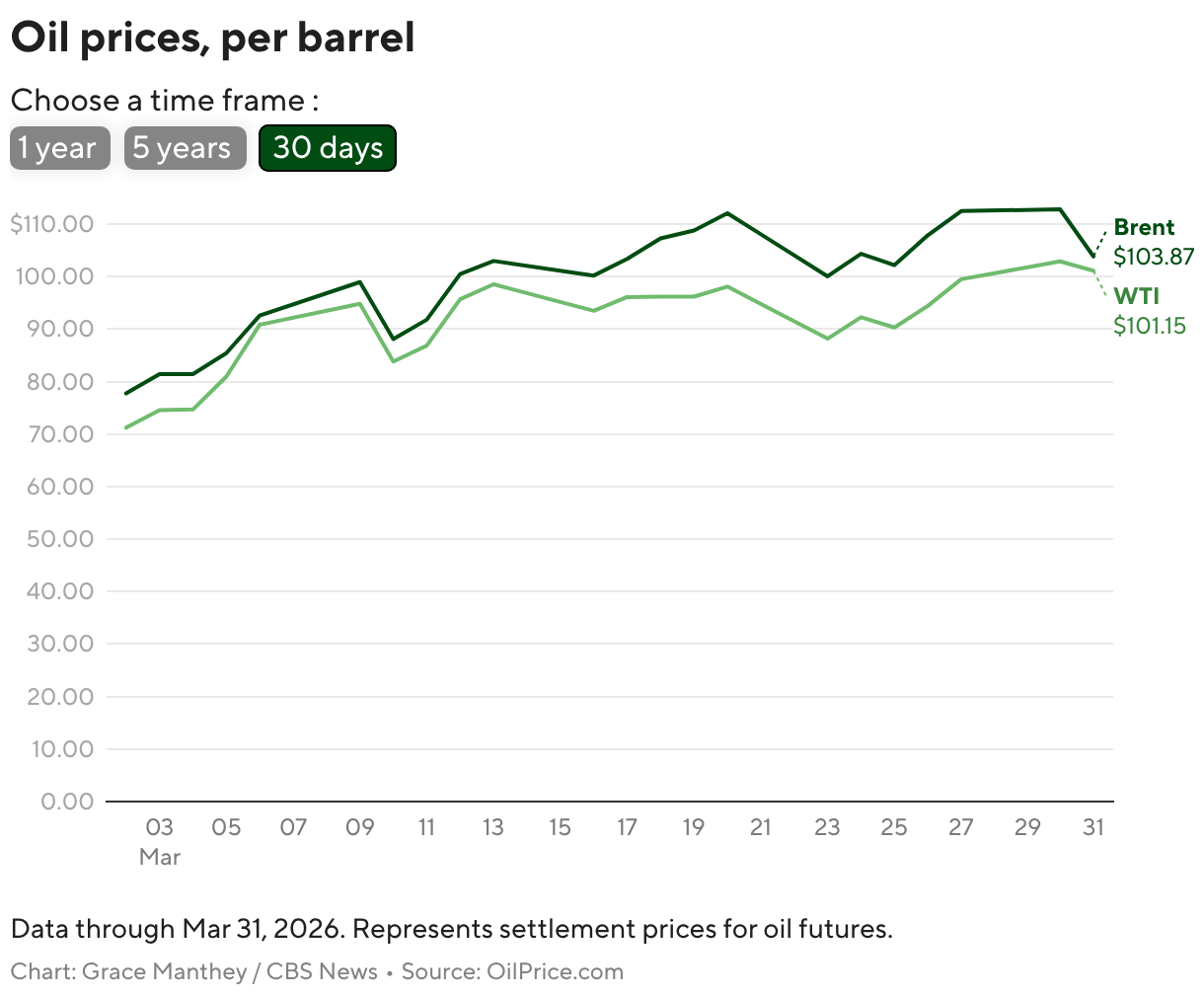
Oil prices rose again Thursday as Iran claimed new strikes targeting U.S. forces across the Middle East. In afternoon trading, the price of Brent crude, the international standard, was $95.55 per barrel, while the U.S. benchmark hovered around $91.50.
Oil accounts for about half the cost of a gallon of gas in the U.S. The rest is a combination of refining, taxes and marketing, according to the U.S. Energy Information Administration. The time of year also influences gas prices, as demand for fuel rises during warmer months.
“Typically, prices decline in the fall, but right now, it has more to do with geopolitical tensions that could change at a moment’s notice,” De Haan said.
Brian Dakss and
Aimee Picchi