Share this @internewscast.com

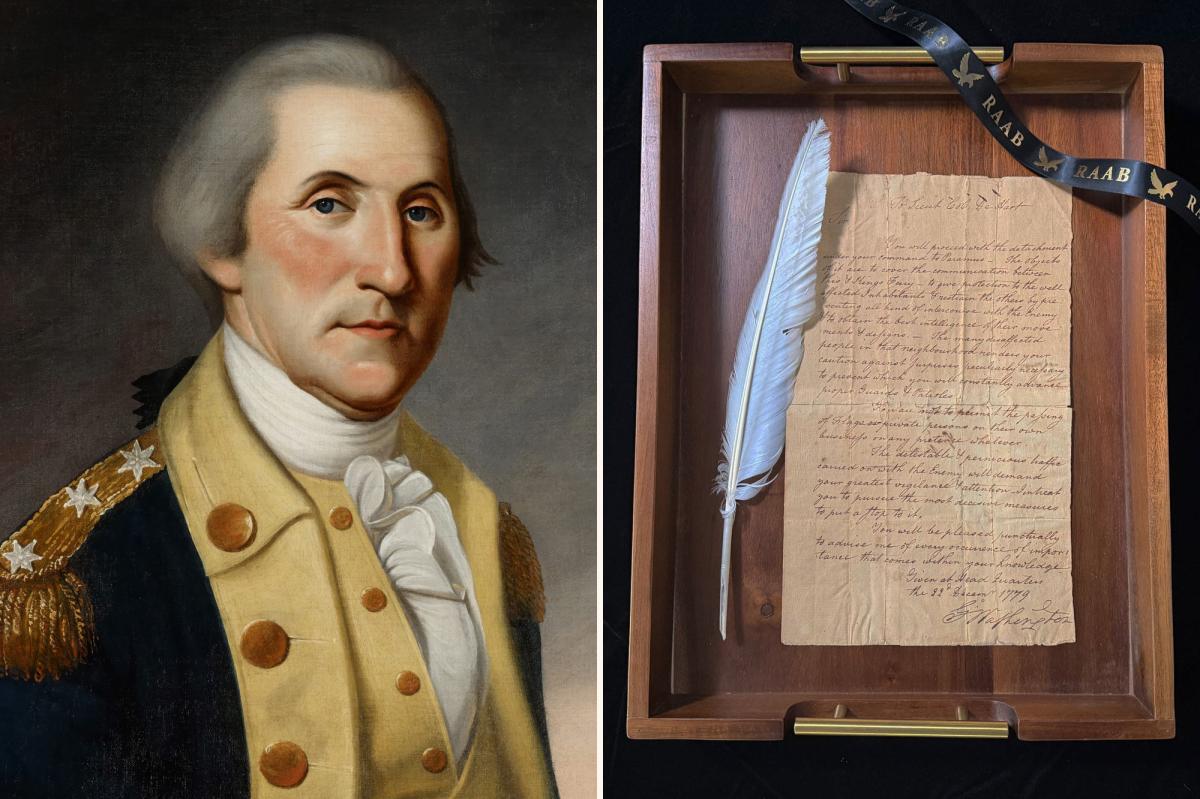
Two long-lost battlefield letters penned by George Washington during one of the harshest winters of the Revolutionary War have emerged, now available for purchase just in time for America’s 250th Independence Day celebration this July 4th.
These letters, written by General Washington from his Morristown, NJ headquarters, date back to the winter of 1779-1780. They provide a glimpse into the Continental Army’s efforts to keep an eye on loyalist movements and British troop activities across the Hudson River, four years into the colonists’ intense fight for freedom from British rule.
Preserved over the centuries by descendants of Revolutionary War soldiers, these historic documents are currently in the possession of The Raab Collection. This firm specializes in acquiring notable letters from figures like Abraham Lincoln, Amelia Earhart, and Theodore Roosevelt.
“This discovery is incredibly exciting,” shared Nathan Raab, a collector and historian, from his office in Ardmore, Pennsylvania. “We are thrilled to have these letters in our collection.”
Raab acquired the letters for an undisclosed sum from a family without heirs to pass them on to.
As the co-author of the 2020 book “The Hunt for History,” the 47-year-old Raab is now offering the letters for sale on his website, with the first letter priced at $150,000 and the second at $80,000.
In Washington’s day, communication wasn’t easy.
There were no phones, texts or emails to rally the troops. Instead, Washington relied on horse-riding couriers carrying handwritten orders.
The first letter, dated Dec. 22, 1779, shows Washington, who was commanding about 20,000 Continental soldiers for his New Jersey post, sounding the alarm about Tories — colonists still loyal to the British Crown. His object was to prevent them from passing information to the British.
He instructed its recipient, Lt. Col. William De Hart, who was part of the 1st NJ Battalion, to keep an eye on them.
Part of the letter reads: “The Objects of it are to cover the communication between this & Kings Ferry — to give protected to the well affected Inhabitants & restrain the others by preventing all kind of intercourse with the Enemy & to obtain the best intelligence of their movements & designs … The detestable & pernicious traffic carried on with the Enemy will demand your greatest vigilance & attention — I intreat you to pursue the most decisive measures to put a stop to it.”
Less than a month later — on Jan. 14, 1780 — Washington sent De Hart another urgent dispatch, detailing a surprise raid against British outposts on Staten Island, which at the time was a major British stronghold used to launch raids in New Jersey.
He ordered De Hart to Newark, N.J., to spy on the British during the campaign to make sure they hadn’t been warned of the raid and called in reinforcements.
The orders read: “An attempt is to be made by a detachment of the army under the command of Lord Stirling against the enemy upon Staten Island. The object of your taking post in Newark is to observe the motions of the enemy … You will keep parties of observation over towards Bergen, and should they discover any motion in that quarter, you will instantly communicate it by way of Elizabeth Town to Lord Stirling.”
General Stirling was dispatched that very day with some 2,500 troops to surprise attack the outposts of the enemy on Staten Island.
Unfortunately, the Tories had already warned the British of Lord Stirling’s plans. British reinforcements had been sent in, and Stirling was forced to retreat to Elizabeth Town — today known as the city of Elizabeth.
The amazingly preserved documents offer a rare glimpse into real-time decisions Washington was making during one of the toughest winters of the Revolutionary War.