
Harry Houdini’s life was filled with astonishing escapes and unanswered questions—and the mystery surrounding the legendary performer continued even after his death.
Born Erik Weisz in Hungary, Houdini immigrated to the United States with his family when he was 4. He went on to become one of history’s most celebrated magicians and vaudeville stars.
He died at age 52 on Oct. 31, 1926—100 years ago.
Doctors officially attributed his death to peritonitis, a serious infection caused by a ruptured appendix. Yet almost immediately, competing explanations began to circulate.
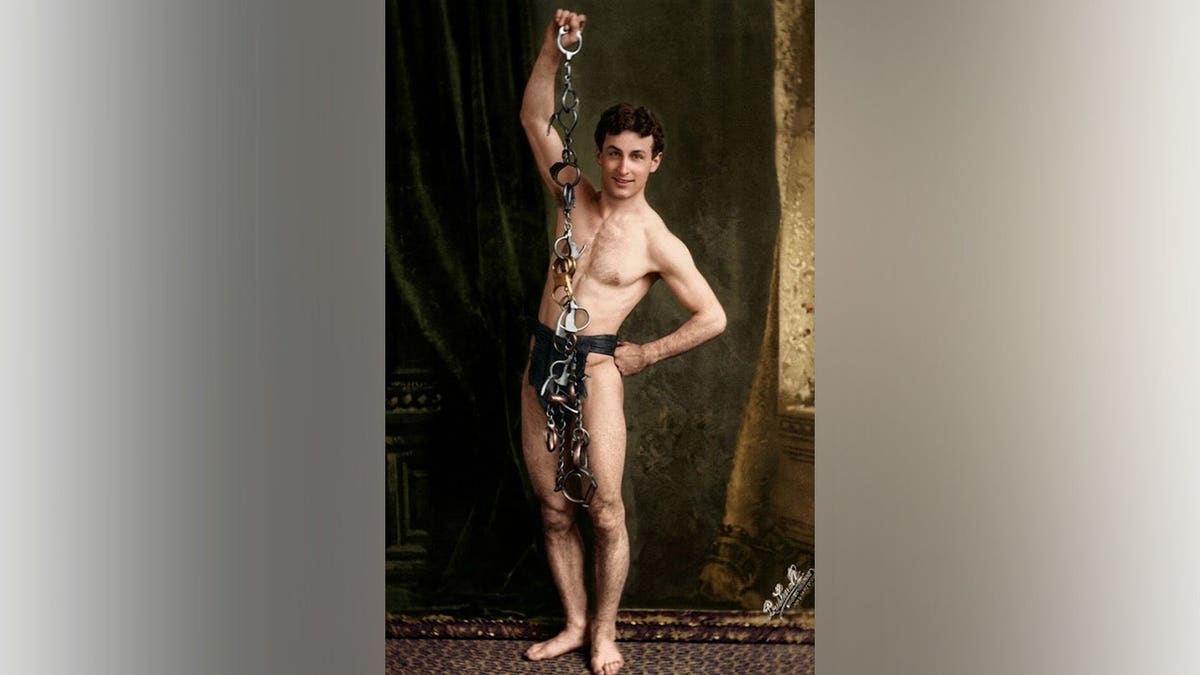
Harry Houdini poses with a chain of handcuffs in 1899. (Courtesy of Roger Dreyer)
Some theories maintain that a sudden blow to the stomach triggered fatal appendicitis in the famously fit performer.
Others suggest he may have died from an intestinal obstruction.
Another theory blames spiritualists Houdini had been challenging. In the period leading up to his death, he had worked to expose mediums who claimed they could communicate with the dead.
A 1953 movie added another layer to the legend by depicting Houdini trapped in a Water Torture Cell, unable to escape before it cost him his life.
“There’s plenty of room for speculation, for conspiracy theories, and so it continues,” Houdini historian and biographer John Cox told News Outlet.
“It continues to this day.”
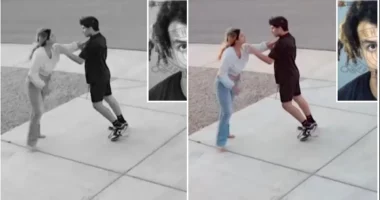
Houdini’s enduring story is revisited in the new three-part Fox Nation series “Houdini: Back from the Dead.” Using artificial intelligence, the production presents a recreation of Houdini seated for a present-day interview, reflecting on his career, relationships and death-defying accomplishments.

Harry Houdini appears to wave in this image from a teaser trailer for the new Fox Nation series, “Houdini: Back from the Dead.” (Fox Nation/Screengrab)
A ‘poorly timed’ punch
The most closely examined moment in the timeline of Houdini’s death came on Oct. 22, 1926, when he endured a series of punches to the abdomen.
Nine days before he died, J. Gordon Whitehead, a university student, visited Houdini backstage at a Montreal theater. According to historians, Houdini was reclining on a couch when Whitehead asked whether the performer could withstand a punch to the stomach.
Houdini agreed.
Before he had a chance to prepare himself, however, Whitehead started striking him.
The blows continued until another person in the dressing room intervened and asked Whitehead to stop, according to Roger Dreyer, president of Houdini Revealed, a New York museum.
Many historians believe the incident led Houdini to dismiss symptoms that were actually signs of appendicitis, Cox said.
Although some people concluded that the punches directly caused the fatal inflammation, that claim has never been established.
“He didn’t get it treated in time,” Cox said. “His appendix ruptured. This caused peritonitis, which was a massive infection. And back then, you died from that.
“Had he not been punched, this pain would have come out of nowhere, and he might have gone and sought medical attention sooner. So the punch was very likely just a very poorly timed accident that caused him to not pay attention to what was really happening to him medically.”
MORE ON THIS: Influencer Bryce Hall Left Bloodied After Halloween Brawl
The incident also had a significant financial impact on Houdini’s family.
At the time of his death, Houdini owed thousands of dollars. Because the punches were treated as an accidental cause of death, his life insurance policy paid twice the standard benefit.
“He had a life insurance [policy] of $25,000,” Dreyer said.
The policy specified that “if he died from an accident, he received another $25,000. Twenty-five-thousand dollars back then was almost $500,000” in today’s money.
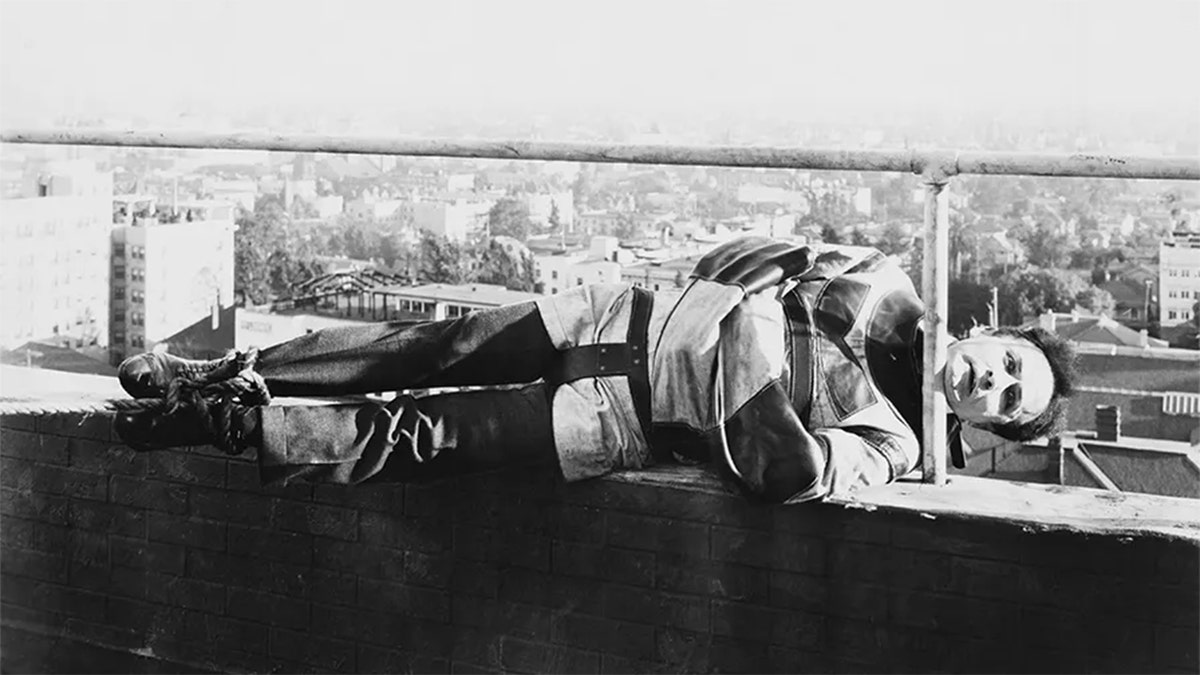
Harry Houdini grips a railing with his chin while bound in a straight jacket. (Getty)
Halloween séances and the afterlife
Houdini’s repeated brushes with death as a daredevil performer helped fuel his lifelong fascination with mortality, Dreyer said.
At the same time, Houdini devoted considerable energy to exposing fraudulent mediums who claimed to speak with the dead. He believed they exploited grieving families through elaborate scams.
His efforts led to defamation lawsuits, Dreyer said.
Houdini and his wife, Bess, also made a pact: If one of them died first, that person would attempt to send a message to the survivor.
Following Houdini’s death, Bess held a séance every Halloween for a decade in hopes of reaching him. When none of the attempts produced a meaningful contact, she ultimately stopped, deciding that communication with the dead was impossible.
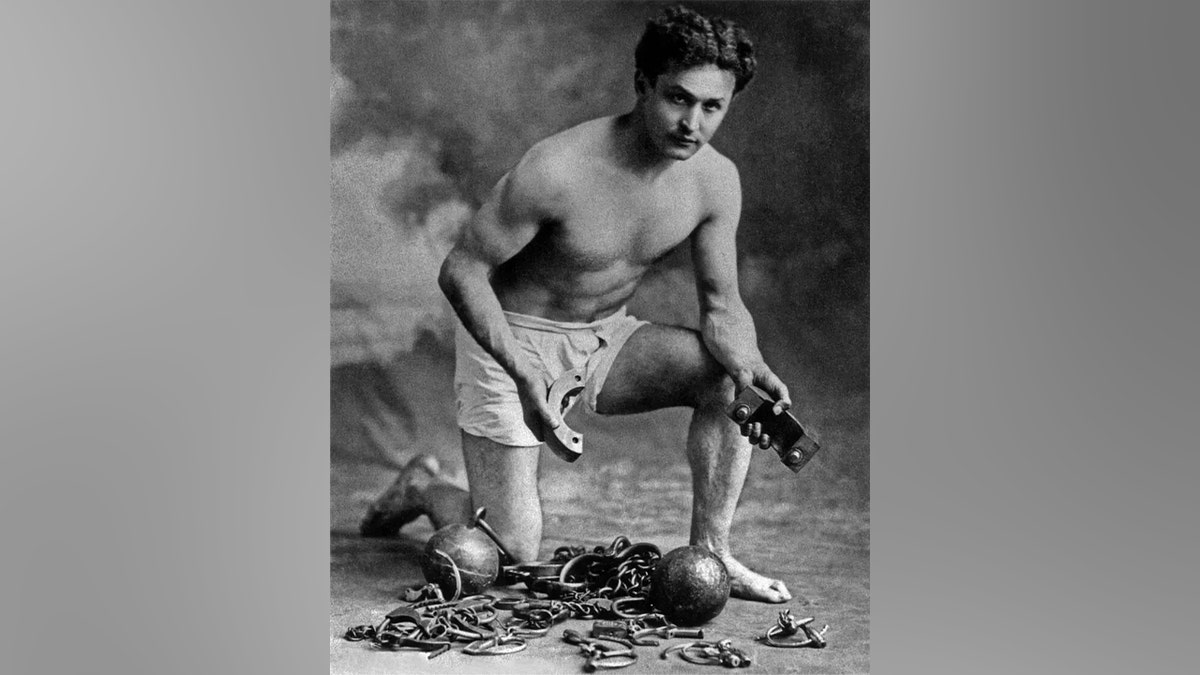
Harry Houdini (1874-1926), the American conjuror, poses with chains around 1906. (APIC/Getty Images)
A century later, Houdini remains a cultural force—not simply because of the mystery surrounding his death, Dreyer said, but because of the life he built and the ideas he represented.
“It’s not because of his death we’re talking about him. It’s because of the way Houdini lived and what he represented. That’s why we’re talking about Houdini.”
Dreyer described Houdini as the leading “social influencer” of his era and a genuine pop-culture icon. His name remains familiar worldwide and is still closely associated with escaping seemingly impossible situations.
Beyond entertaining audiences, Houdini promoted a message of resilience, encouraging people to confront obstacles and find a way through life’s challenges, Dreyer said.

Legendary escape artist Harry Houdini is recreated with artificial intelligence, allowing him to share his story with Fox Nation viewers. (Fox Nation/Screengrab)
In his role as “chief wizard officer” for Fantasma Toys, Dreyer works to preserve Houdini’s spirit of wonder and his belief in making “the impossible possible” for a new generation of aspiring magicians.
One of Houdini’s guiding phrases was, “My brain is the key that sets me free,” Dreyer said.
“His escapes remind us that ingenuity, determination and courage can help us overcome life’s challenges.”
Even researchers who have spent decades studying Houdini remain fascinated by his work, Cox said.
“We’re still trying to figure out how Houdini did what he did.”