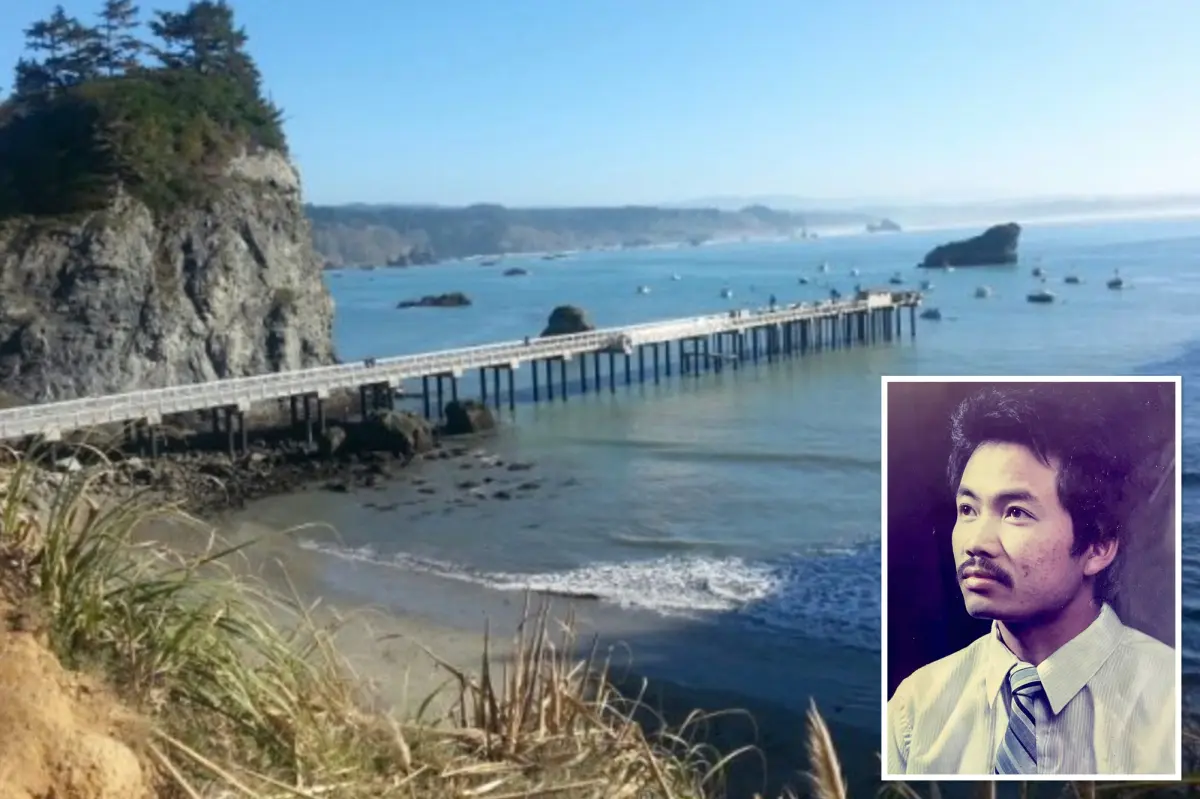

A bone discovered on a Northern California beach has been identified as the remains of a fisherman who disappeared at sea in 1999, when a rogue wave struck his boat in Humboldt Bay.
Jonathan Raxa, 37, was last seen aboard the commercial fishing vessel carrying him and three other men. An 18-foot wave slammed into the boat, tore away its pilot house and sent it crashing into the water.
The 35-foot fishing boat sank soon afterward beneath the powerful waves.
The skipper survived by clinging to a five-gallon oil container until two crew members reached him and pulled him onto their life raft, according to a Los Angeles Times report published at the time.
Authorities eventually recovered three of the four people aboard. Raxa, who owned the vessel, remained missing, the Humboldt County Sheriff’s Office said.
In the years that followed, investigators contacted Raxa’s son and obtained a DNA sample from his family.
More than 20 years after the accident, a human bone was found in March on Centerville Beach.
Deputies determined that the remains were a human sacrum, or pelvic bone. The bone was transferred to the Humboldt County Coroner’s Office, which sent it to the California Department of Justice for DNA testing, the sheriff’s office said.
The genetic analysis confirmed that the remains belonged to Raxa, bringing an end to the long-running search for the missing fisherman.
Raxa’s relatives were notified after the identification was confirmed, according to the sheriff’s office.
“This case highlights the importance of collecting and preserving DNA samples from family members of missing persons.
“These samples can provide critical investigative leads and assist law enforcement in identifying missing persons and resolving cases, even decades after a person’s disappearance.”
Between 1992 and 2008, commercial fishing was among the most dangerous occupations in the United States, claiming an average of 58 lives each year.