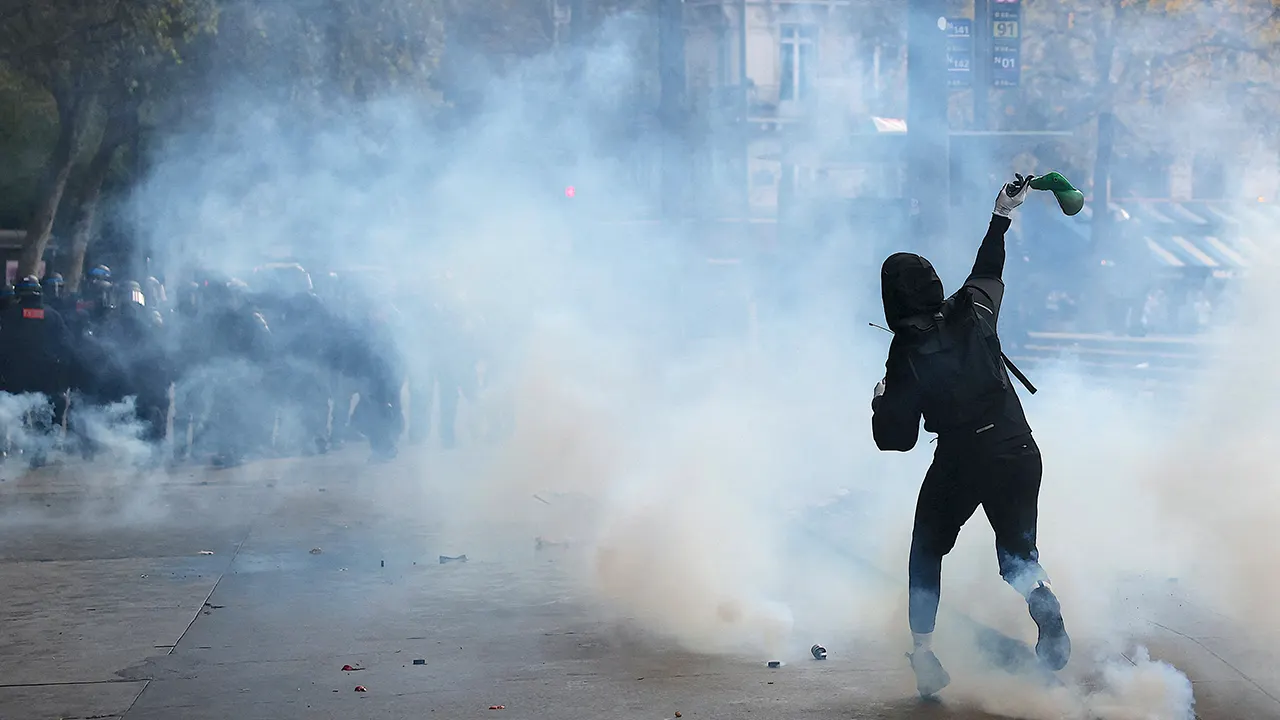

As footage of burning cars and historic buildings in France and Italy spreads across Europe, the unrest is being used by Hungary and Poland to reshape the continent’s migration debate rather than to focus solely on the violence itself.
Hungary and Poland have both established firm limits on migration. Under former Prime Minister Viktor Orban, Hungary was fined and sanctioned by European Union courts for refusing to accept what it viewed as unchecked immigration. Poland faced similar penalties in 2025.
The latest available Eurostat figures show that France had nearly 10 million foreign-born residents in 2025, while Italy had about 7 million. Poland recorded roughly 1 million and Hungary fewer than 700,000. Most of Hungary’s foreign-born population came from other EU countries, while approximately half of Poland’s foreign-born residents came from Ukraine.
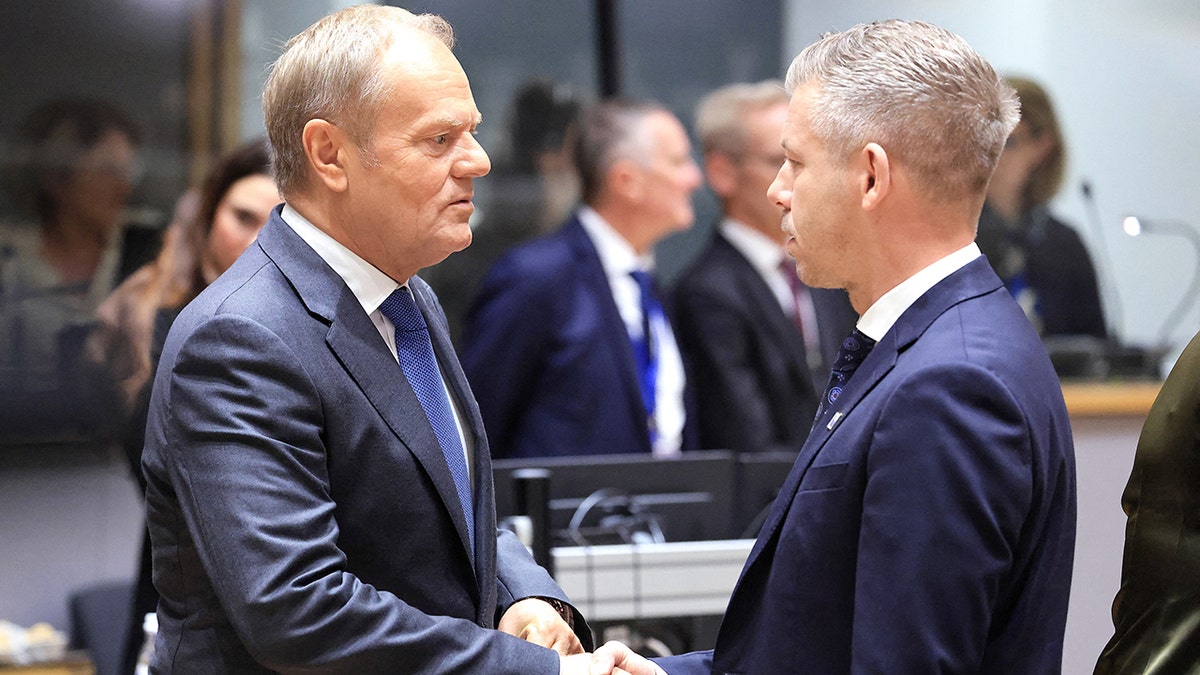
Poland’s Prime Minister Donald Tusk (L) and Hungary’s Prime Minister Peter Magyar shake hands ahead of a round table as part of a European Union summit at the EU headquarters in Brussels on October 16, 2026. EU leaders headed to Brussels on October 15, 2026, for their biggest clash yet over the bloc’s next long-term budget, as they race to lock in a deal before next year’s French presidential election. (Photo by Ludovic MARIN / AFP via Getty Images) (Ludovic Marin / AFP via Getty Images)
Following the violence, Hungary’s Prime Minister Péter Magyar wrote on X that Europe could count on Hungary. “In the face of this senseless destruction and unjustified violence, perhaps it is now clear to everyone why Hungary advocates the strictest possible approach to migration,” he said, adding that his government would not dilute its border controls or immigration policy “under any pressure.”
Polish Prime Minister Donald Tusk expressed a similar position. “Poland will not repeat the mistakes of other European countries, nor will it pay for them,” he wrote Sunday night. “We are firmly defending the border against illegal migration, we have our own asylum policy — we do not accept applications — and we deport those who break Polish law. On security issues, we will be relentless.”

A demonstrator holds a Palestinian flag beside a burning bus stop at Place de la République in Paris. The entry of the Gilets Jaunes connects student issues to wider economic discontent. Paris, France Oct. 17, 2026 (Guy Smallman/Getty Images)
Daniel Schatz, a Sweden-based political scientist, told News Outlet that burning buildings and looted stores in France and elsewhere are becoming “political ammunition” across Europe. “Leaders advocating tougher immigration policies have a blunt message for voters at home: ‘This is what we intend to prevent,’” he said. “Images of chaos can carry more political weight than a hundred policy speeches.”
Eurostat, the European Union’s official statistics agency, reported 304,900 police-recorded offenses in France in 2024, among the highest totals in the bloc. Italy recorded 142,600, compared with 57,300 in Poland and 28,600 in Hungary, placing the latter two among Europe’s lowest. Eurostat’s 2023 perception measure — the share of residents reporting crime or vandalism in their neighborhoods — also placed France near the top at about 20%. Italy stood between 14% and 17%, Poland between 7% and 8%, and Hungary between 6% and 7%.
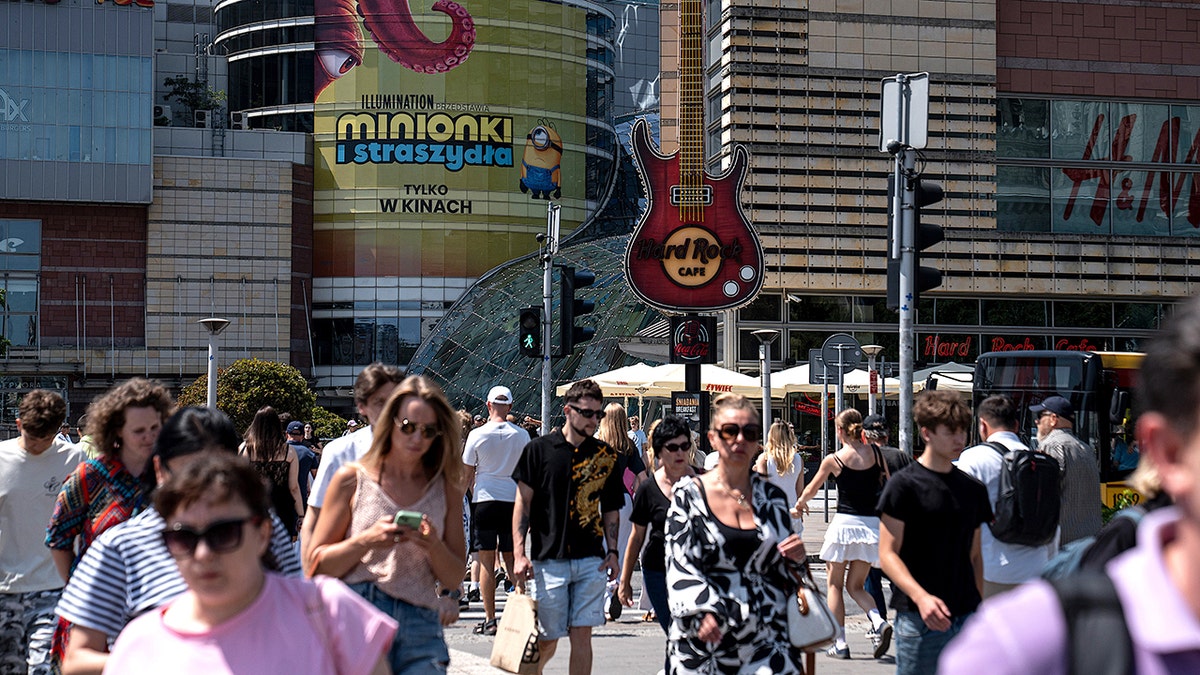
Shoppers outside the Zote Tarasy shopping center during high temperatures in Warsaw, Poland, on Tuesday, June 30, 2026. (Damian Lemanski/Bloomberg via Getty Images)
Boštjan Udovič, chair of international relations at the University of Ljubljana’s Faculty of Social Sciences in Slovenia, said Central and Eastern European countries often connect the unrest in France with immigration and the perceived failure of newcomers to adapt and integrate.
“Magyar and Tusk are delivering a blunt message to Brussels,” Schatz said. “Being pro-European does not mean signing up for liberal immigration policies.” Magyar is openly presenting the disorder in France as evidence supporting his migration strategy, while Tusk’s pledge not to repeat the mistakes of other countries carries a similar political warning.

Protesters climbed at the top of the Statue de la République as student unions and Gilets Jaunes united to demonstrate against education underfunding, austerity, and rising living costs in Paris, France, Oct. 17, 2026. (Guy Smallman/Getty Images)
EXPLORE MORE: Bryony Gordon: Thank Heavens Meghan Markle Is Back
Magyar said last week’s European Council summit showed that “the overwhelming majority of European countries have woken up and want to break with the permissive policies of the past. We hope it is not too late.”
“The Europe we all love is in serious trouble today,” the Hungarian leader said. “It is our responsibility, too, to help preserve our continent as the most wonderful place in the world for our children and grandchildren.” He also expressed his “full solidarity with the French people.”
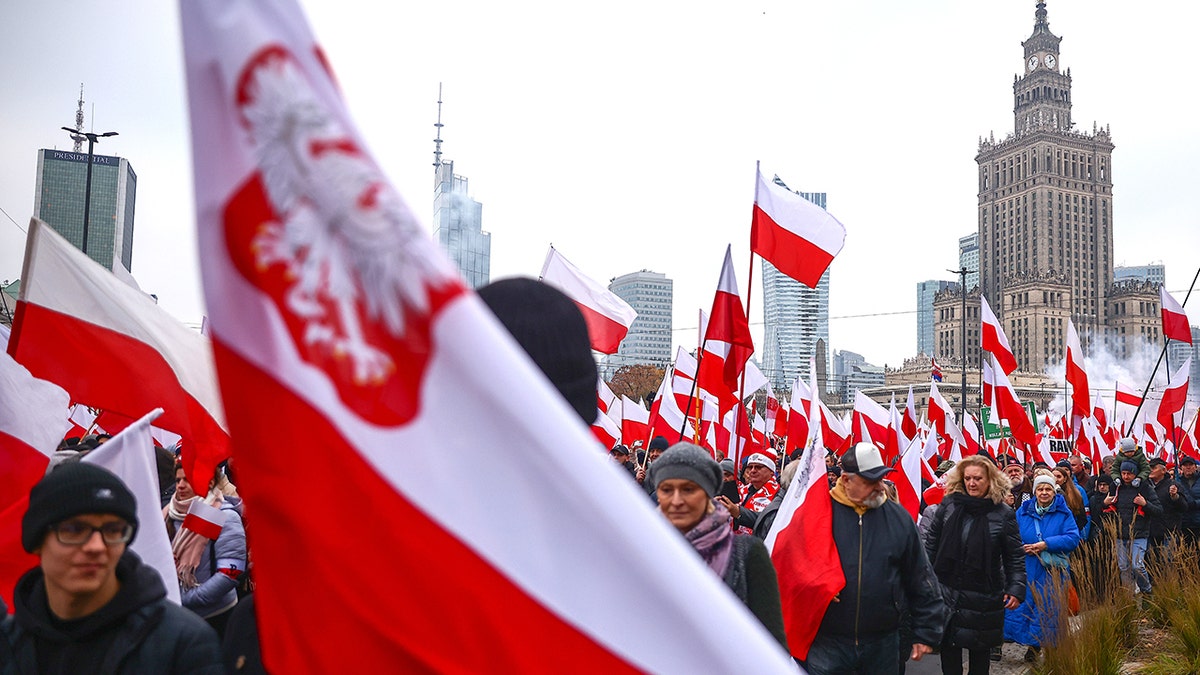
People attend Independence March celebrating the 106 anniversary of Poland regaining independence. Warsaw, Poland on 11 November, 2024. Tens of thousands of Poles from Warsaw and across the country arrived to the Polish capital city on the Nations Independence Day. (Beata Zawrzel/NurPhoto via Getty Images)
Schatz said Magyar and Tusk do not need to invoke Polish King Jan Sobieski, whose allied army defeated the Ottoman forces besieging Vienna in 1683 — a victory long portrayed as a defense of Christian Europe — to present themselves as the continent’s protectors. Today, he said, burning buildings offer a powerful modern backdrop for that argument.
Udovič said Magyar and Tusk’s positions were unsurprising. Central and Eastern European countries, he explained, “usually link their EU membership to their identity, based mostly on a single nation.” Given their histories of independence movements, he said, it would be unrealistic to expect them to quickly embrace “a concept of a multiethnic society.”
“This is ‘all politics is local’ playing out across borders,” Schatz said. “The streets are French or Italian; the voters being addressed are Hungarian or Polish.” Udovič added that Tusk is moving into “a sort of pre-election campaign where migration will also be an issue.”
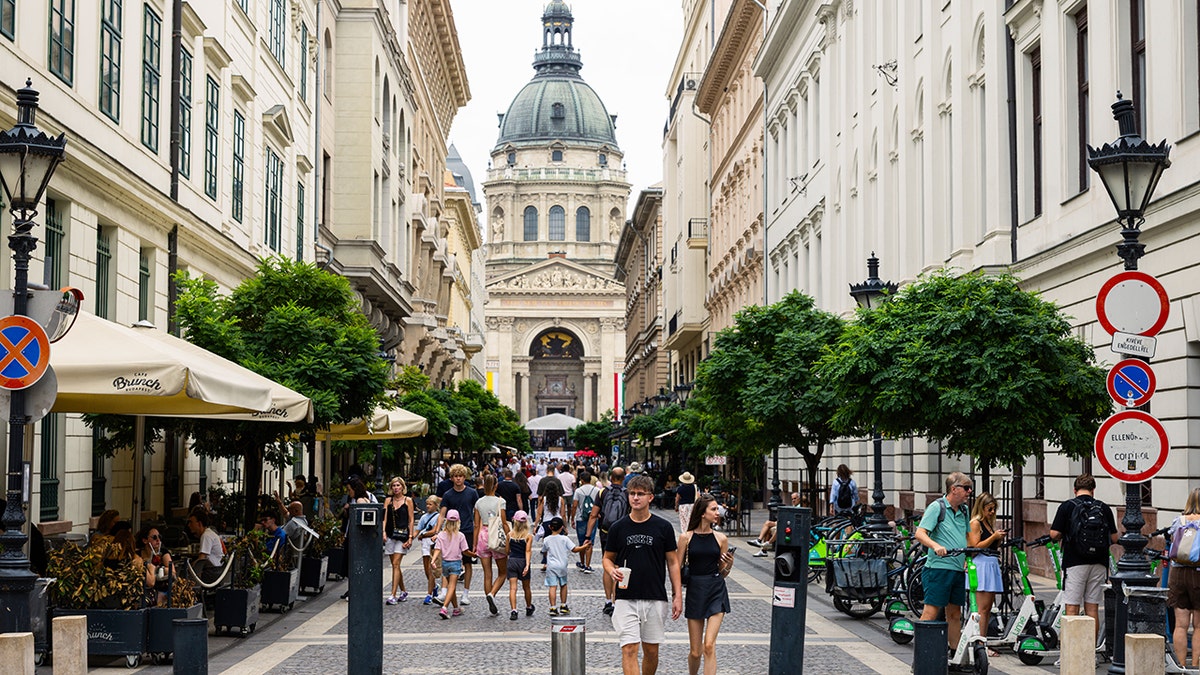
Shoppers on a pedestrianized street near St. Stephen’s Basilica in Budapest, Hungary, on Tuesday, Aug. 25, 2026. Hungary’s central bank delivered its third consecutive interest rate cut after the inflation rate fell to the lowest level in a decade. (Akos Stiller/Bloomberg via Getty Images)
Poland’s next parliamentary election is slated for Nov. 2027, and former Prime Minister Mateusz Morawiecki, a possible Tusk opponent, is echoing his successor’s remarks. “France is burning, and we must be wise before the harm is done,” Morawiecki posted to X Monday morning. He added that his new center-right political coalition, Rozwoj Plus, “has a package of comprehensive solutions that will allow Poland to be not only prosperous, but also the safest country in the world!”
Meanwhile, “Strict immigration policies enjoy broad support in Hungary,” former government official under the previous Prime Minister Viktor Orbán and current board member of the Hungarian Atlantic Council Á. Félix Debrenti told News Outlet.
He said, “Magyar understands that abandoning Orbán’s tough approach to immigration and border protection could cost him significant political support, particularly at a time when his party is already facing growing pressures.”
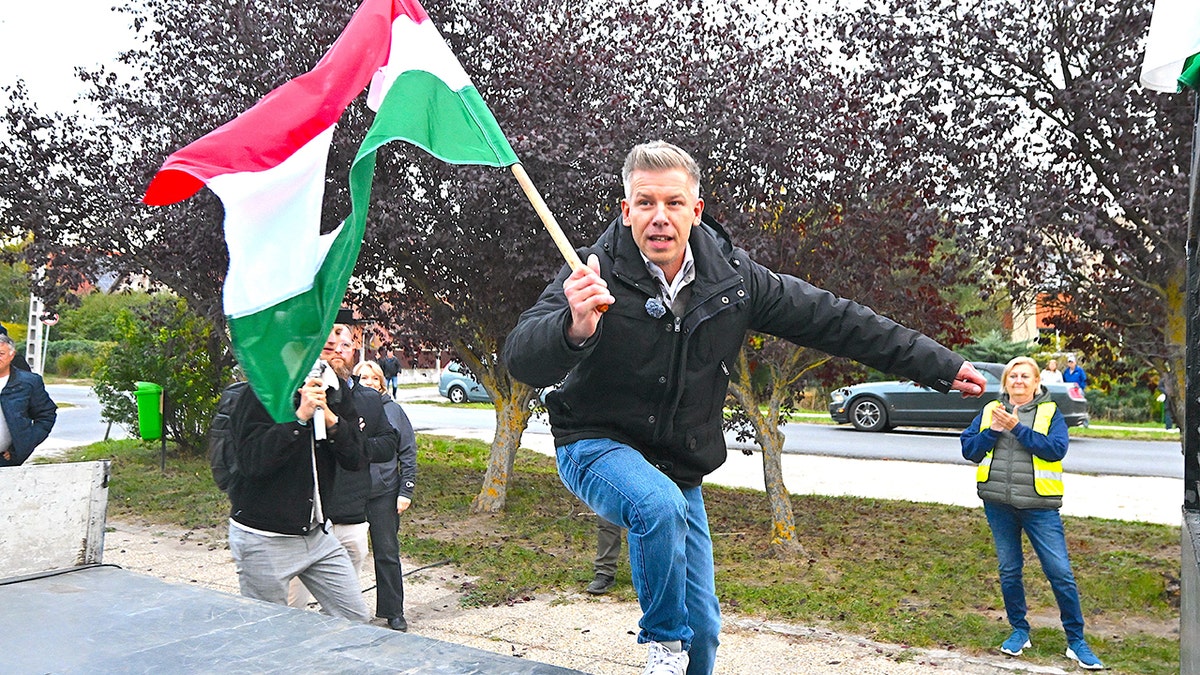
Péter Magyar, leader of the TISZA party, arrives with a national flag for a rally in Tarnok, Hungary, Oct. 20, 2025. Magyar was elected prime minister in a landslide victory on April 12, 2026. (Attila Kisbenedek/AFP via Getty images)
He said, “Taking a strong position on immigration allows Magyar to shift public attention away from the government’s domestic challenges and onto an issue where there is a broad national consensus,” Debrenti continues. “All this comes just days before Oct. 23… when Hungarians commemorate the 1956 Revolution and the fight for freedom against Soviet oppression.”
Touching on the protests, Magyar posted: “Let there be no doubt: peaceful and lawful protest is one thing; vandalism and violence are quite another. The former is a fundamental right; the latter is a serious crime.”