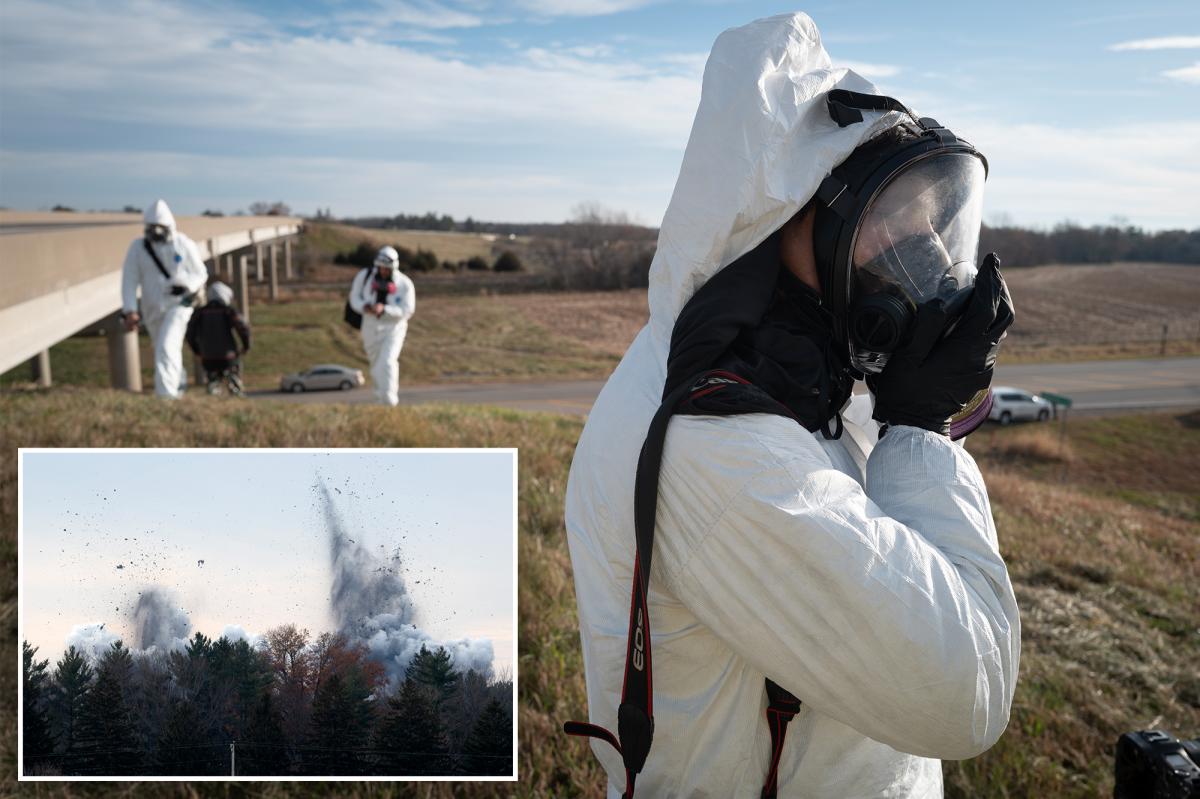

The US Army detonated roughly five tons of lead azide, a toxic chemical used in explosives, in a controlled blast at the Iowa Army Ammunition Plant in Middletown on Wednesday. The operation raised concerns about possible exposure to airborne heavy metals.
Officials reportedly determined that the procedure was necessary because the material had become “unstable” and could explode if disturbed.
A Trump administration official said the blast surpassed expectations and achieved maximum mitigation. However, the Federal Emergency Management Agency (FEMA) advised people within 20 miles of the site to continue sheltering in place to avoid breathing lead dust. Residents were also told to follow Environmental Protection Agency safety guidance “until given the all clear by officials.”
“[The] EPA has been on the ground in Iowa BEFORE the controlled detonation, we will be here DURING the detonation, and we will be here for as long as necessary AFTER detonation to ensure communities are safe,” the Environmental Protection Agency said before the blast.
The agency had forecast a short-term rise in airborne lead over Middletown, while officials in Iowa and Missouri warned residents about the potential for exposure to toxic dust.
The Mayo Clinic says that even low levels of lead can cause serious health problems. When lead accumulates in the body over time, it can be stored and gradually released back into the bloodstream.
At extremely high concentrations, lead can harm the kidneys and nervous system in children and adults. The resulting complications may include brain damage, seizures, neuropsychiatric symptoms and unconsciousness.
Children younger than 6 are especially vulnerable because lead poisoning can significantly interfere with the development of their bodies and brains.
The Iowa Farm Bureau reports that Iowa ranks first in the nation for corn, pork, eggs, ethanol and biodiesel production — commodities used in everyday household products. The state is also second nationally in soybean production and cover crops.
Doug Seyb, an Iowa farmer, told PBS that he was worried about the possible effects of the detonation on his nearby property, including his cattle grazing in the pasture and the local ponds that supply water to the farm’s tank.
Residents are concerned that lead could eventually reach the food supply through crops grown in contaminated soil or livestock exposed to polluted water.
Dr. Stephanie Widmer, a New York City emergency medicine physician, medical toxicologist and Fox News medical contributor, said the release of lead into the air is “not a small deal.”
“Lead has no beneficial role in human physiology,” she said. “In fact, lead in the human body can really mess with biology.”
People can already ingest trace amounts of heavy metals such as lead through fresh produce because the substance is widely present in soil. Widmer cautioned, however, that dispersing a “tremendous amount” of lead could increase the risk of dangerous exposure.
“If there is an enormous amount that is going to be contaminating the food supply, the water, the air that people are breathing in, this is very concerning,” she said.
Widmer advised people near the detonation site to continue following shelter-in-place instructions, keep their windows closed and use ventilation systems or air purifiers.
“We know that lead is dangerous for humans, but we don’t know how much, or if any, lead they’re being exposed to,” she said. “It could be none. It could a ton.”
The EPA said no airborne lead was detected 30 minutes after the detonation. Widmer cautioned, however, that the end of the blast does not necessarily mean there can be no lasting effects.
“Lead inhalation is one of the most efficient ways that lead can be dispersed into the human body,” she said. Even when it is not inhaled, she added, lead can settle into the environment. “It can stay in soil, it could stay in water,” the doctor said.
“The very concerning thing is that lead can have negative effects on the human body without even showing any symptoms,” she said. “There’s still going to have to be testing. Follow-up is really key here.”
Lead poisoning symptoms
According to the Cleveland Clinic, adults exposed to lead may experience the following symptoms.
- High blood pressure
- Joint and muscle pain
- Difficulties with memory and concentration
- Headache
- Abdominal pain
- Mood disorders
- Reproductive complications
In children, lead exposure can contribute to the following health and developmental problems.
- Developmental delays
- Behavioral problems
- Learning disabilities
- Attention deficits
- Growth delays
- Hearing problems
Experts say lead particles that settle on soil or enter water can pose a health risk in addition to the danger of inhaling toxic dust suspended in the air.
Widmer advised anyone who believes they may have been exposed to lead to contact a healthcare provider, even if they have no symptoms, and request a blood test to determine whether exposure occurred and measure lead levels.