
Report suggests IRGC commander holds power, linked to multiple terror attacks
IRGC commander Ahmad Vahidi has emerged as a reported linchpin in Iran’s negotiating posture, a development analysts say underscores the influence of hardline voices inside Tehran’s power structure. Fox News correspondent Jeff Paul traced Vahidi’s ascent from the Iran-Iraq War era and examined allegations tying him to major terror attacks, including the 1983 Beirut bombing and the 1994 bombing in Argentina, as questions intensify over who is steering Iran’s military decision-making.
Iran is moving to restock the top tiers of its military and security apparatus after months of battlefield losses, relying heavily on seasoned insiders whose résumés date back to the 1979 Islamic Revolution, the Iran-Iraq War and earlier crackdowns at home.
The new appointments come after a series of senior Iranian commanders were killed in U.S.-Israeli strikes since the war began on Feb. 28, The National reported on Aug. 11.
For U.S. officials, the reshuffle is about more than filling empty posts. It places veteran hardliners in command of key institutions that influence Iran’s military campaigns, national security strategy and domestic enforcement at a moment of escalating tensions with Washington.
The changes do not necessarily show that Tehran lacks younger officers, nor do they prove that loyalty was the only factor behind the selections. Still, Iran’s reliance on decades-old power brokers is prompting a larger concern in Washington: whether wartime losses have pushed the regime to depend more heavily on a tighter circle of trusted ideologues, reducing space for compromise as the United States seeks to pressure Tehran back toward an agreement.
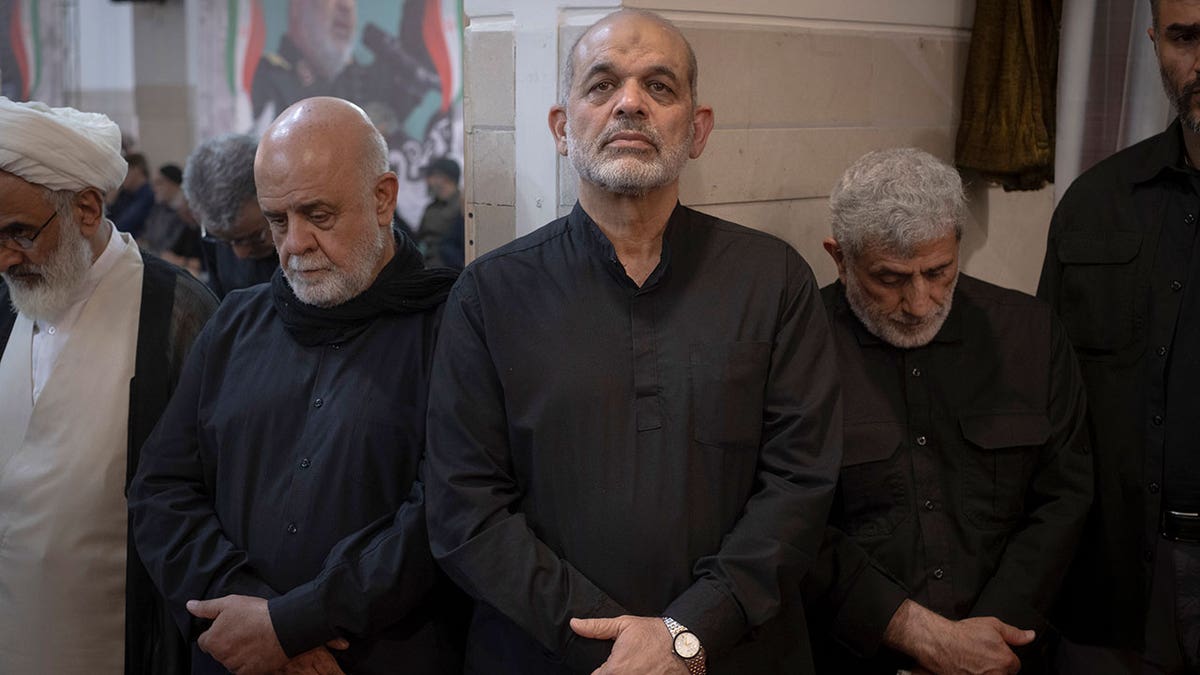
Ahmad Vahidi, commander of the Islamic Revolutionary Guard Corps Quds Force, Esmail Qaani, and Iraj Masjedi, deputy coordinator of the Islamic Revolutionary Guard Corps (IRGC) Quds Force, attend a ceremony honoring former IRGC commander Hossein Salami, who was killed in Israeli attacks, at a mosque inside an IRGC organizational housing complex in Tehran, Iran, on July 25, 2025. (Photo by Morteza Nikoubazl/Nur Photo via Getty Images)
Morad Tahbaz, a former American prisoner who was detained in Iran in 2018 and released as part of a U.S.-Iran prisoner swap in September 2023, told News Outlet that he sees the latest personnel moves as a sign Tehran remains reliant on longtime loyalists.
“They keep rotating the same old people, most of whom are fairly inept but are loyal to the Khamenei father and son,” Tahbaz told News Outlet.
The reshuffle spans Iran’s conventional military, the Islamic Revolutionary Guard Corps, its naval arm, the Basij paramilitary force and the country’s highest national-security council.
Iran’s state-run IRNA reported Aug. 10 that Supreme Leader Mojtaba Khamenei appointed Ali Abdollahi chief of staff of the Armed Forces, Kioumars Heydari his deputy, Ahmad Vahidi commander of the IRGC, Mostafa Izadi deputy IRGC commander, Ali Ozmaei commander of the IRGC Navy and Hossein Taeb head of the Basij.
The previous day, former IRGC commander Mohsen Rezaei, 71, was named secretary of the Supreme National Security Council and Khamenei’s representative on the powerful body. Reuters reported Aug. 10 that the SNSC coordinates Iran’s security and foreign policy and that Rezaei replaced Mohammad Baqer Zolqadr, who had been appointed secretary in late March following the death of his predecessor, Ali Larijani.
The appointments do not establish that Iran has run out of younger or less familiar commanders. But the reliance on longtime military and security figures has fueled assessments that wartime losses have narrowed the regime’s pool of officials it regards as sufficiently experienced and politically trustworthy.
Erfan Fard wrote for the Middle East Forum on Aug. 15 that Khamenei was not promoting a new generation but turning to veterans of the revolution, the Iran-Iraq War, intelligence operations and domestic repression, arguing that an architecture based on “institutional memory, loyalty, and coercive power” was taking shape.
The Foundation for Defense of Democracies argued in an Aug. 12 policy brief that the reshuffle looked “less like renewal than a game of musical chairs among regime veterans.”
The appointments also formalized the position of Ahmad Vahidi, a veteran hardliner who had already emerged near the center of wartime decision-making. Vahidi was a major player in shaping Tehran’s wartime policy and had risen through the IRGC’s early intelligence and external-operations apparatus before later serving as defense and interior minister. As interior minister, Vahidi oversaw police units involved in the crackdown on the 2022 protests.
IRNA confirmed Aug. 10 that Khamenei promoted Vahidi to major general and formally appointed him commander-in-chief of the IRGC.
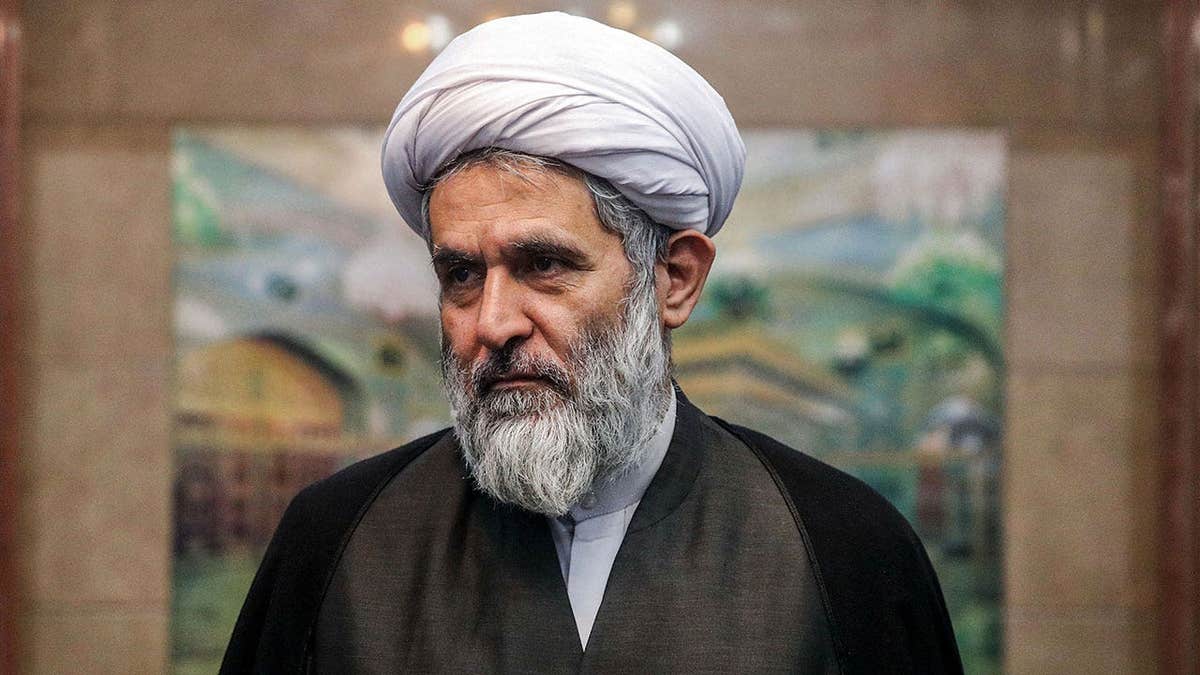
Hossein Taeb, Iranian Shia cleric and head of the intelligence apparatus of the Islamic Revolutionary Guard Corps (IRGC), looks on during a meeting in Iran’s capital Tehran on June 24, 2018. (Hamed Malekpour/Tasnim News/AFP via Getty Images)
Hossein Taeb: The intelligence veteran returns to the Basij to build a ‘20-million-strong Basij force.’
One of the most closely watched appointments is Hossein Taeb, the cleric and veteran security official tapped to lead the Basij, the IRGC’s volunteer paramilitary force that has repeatedly been used against domestic dissent.
The National reported that the Basij has been used to suppress internal dissent, while The Times reported Aug. 12 that the force is embedded in neighborhoods, universities, workplaces, factories, ministries and mosques and has played a central role in suppressing successive uprisings.
For Tahbaz, Taeb’s return is personal. Tahbaz was detained in 2018, while Taeb was leading the IRGC Intelligence Organization.
“Ta’eb is extremely close to Mojtaba Khamenei but was very unceremoniously fired from his former position as head of the IRGC Intelligence Organization,” Tahbaz told News Outlet. “He was personally responsible for my and my colleagues’ arrests and detentions. He lives and breathes conspiracy theories.”
The Times reported Aug. 12 that Taeb and Mojtaba Khamenei’s relationship dates back more than four decades and that both served in the Habib Battalion during the Iran-Iraq War. The newspaper also reported that IRGC intelligence arrested environmentalists and dual nationals during Taeb’s tenure.
Taeb previously commanded the Basij before moving into IRGC intelligence. The Times reported that months after the disputed 2009 election, the Guards’ intelligence division was elevated into an independent organization with Taeb as its first chief.
Taeb’s earlier leadership of the Basij also drew U.S. sanctions. In a Sept. 29, 2010 Treasury Department fact sheet, the U.S. government said that while Taeb commanded the Basij during the June 2009 election, forces under his command participated in “beatings, murder, and arbitrary arrests and detentions of peaceful protestors.”
According to IRNA, Parliament Speaker Mohammad Bagher Ghalibaf congratulated Taeb on his appointment as head of the Basij Organization, saying his tenure could mark a new chapter for the volunteer force. Ghalibaf said the Basij now needs a more comprehensive and forward-looking approach and argued that Taeb’s appointment by the supreme leader could help advance what he described as one of Ayatollah Ruhollah Khomeini’s longstanding goals: building a 20-million-strong Basij force.
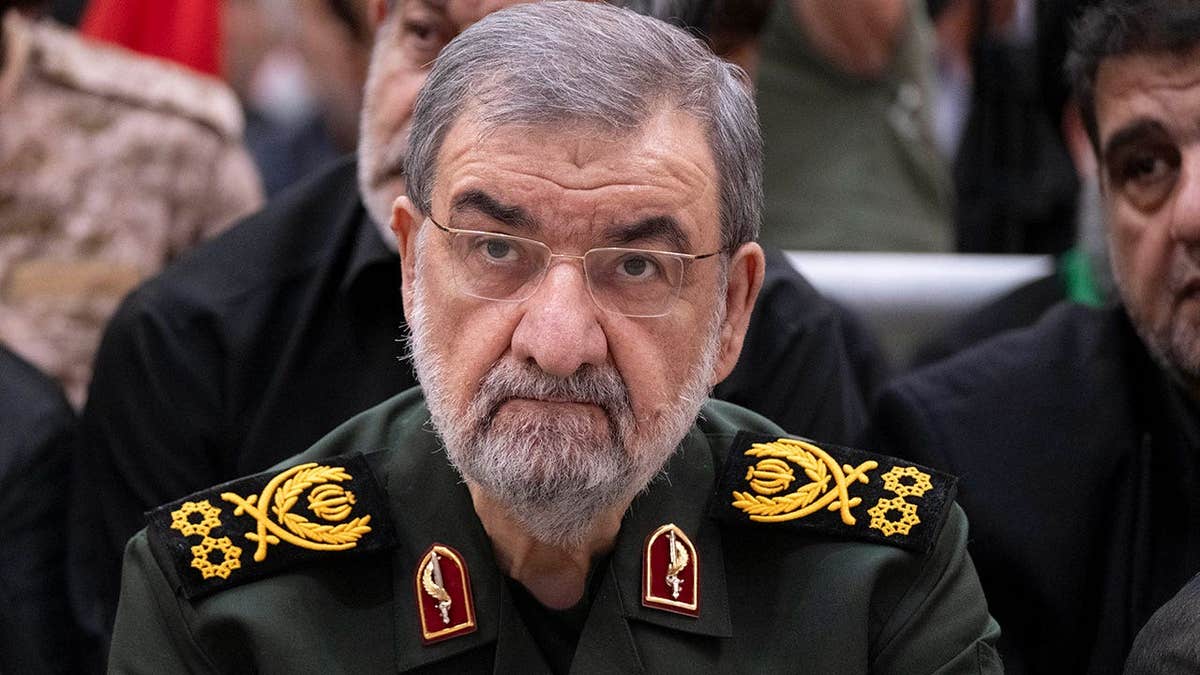
Mohsen Rezaei was named secretary of the Supreme National Security Council. A former Islamic Revolutionary Guard Corps general and member of the Expediency Discernment Council, as well as the secretary of the Supreme Council for Economic Coordination and the Iranian government’s Economic Committee, attends a ceremony at Ayatollah Ruhollah Khomeini’s shrine in southern Tehran, Iran, on June 4, 2026. (Morteza Nikoubazl/NurPhoto)
Mohsen Rezaei: Back at the center after four decades
Few appointments better illustrate the return of Iran’s old guard than Mohsen Rezaei, who was named secretary of the Supreme National Security Council.
Reuters reported Aug. 10 that Rezaei joined the IRGC shortly after the 1979 revolution, became its commander in 1981 at age 27 and led the force for 16 years, including through most of the 1980-88 Iran-Iraq War.
He later served as secretary of Iran’s Expediency Discernment Council for more than two decades and as vice president for economic affairs from 2021 to 2023 under President Ebrahim Raisi. Now, at 71, he is secretary of the SNSC and Khamenei’s representative on the body.
Beni Sabti, an Iran expert at Israel’s Institute for National Security Studies, argued that bringing back longtime figures such as Rezaei reflects weakness rather than renewal.
“This is, again, another evidence that they don’t have anyone else,” Sabti told News Outlet. “So they have to bring him out again from the desk and put him somewhere. These are the guys that they have.”
Rezaei and Vahidi were also among six people for whom INTERPOL authorized Red Notices requested by Argentina in 2007 in connection with the investigation into the 1994 bombing of the AMIA Jewish community center in Buenos Aires.
INTERPOL said in November 2007 that its General Assembly upheld the publication of notices for six individuals, including Ahmad Vahidi and Mohsen Rezaei, after Iran challenged Argentina’s requests.
Sabti argued that Rezaei’s re-emergence is particularly telling because Tehran’s decision-making circle has become less ideologically diverse.
“Today, there is only one opinion, and this is the main problem,” Sabti said. “This is why you think that there is unity and the system is stronger. No, it’s not stronger. Actually, it’s weaker also because of that.”
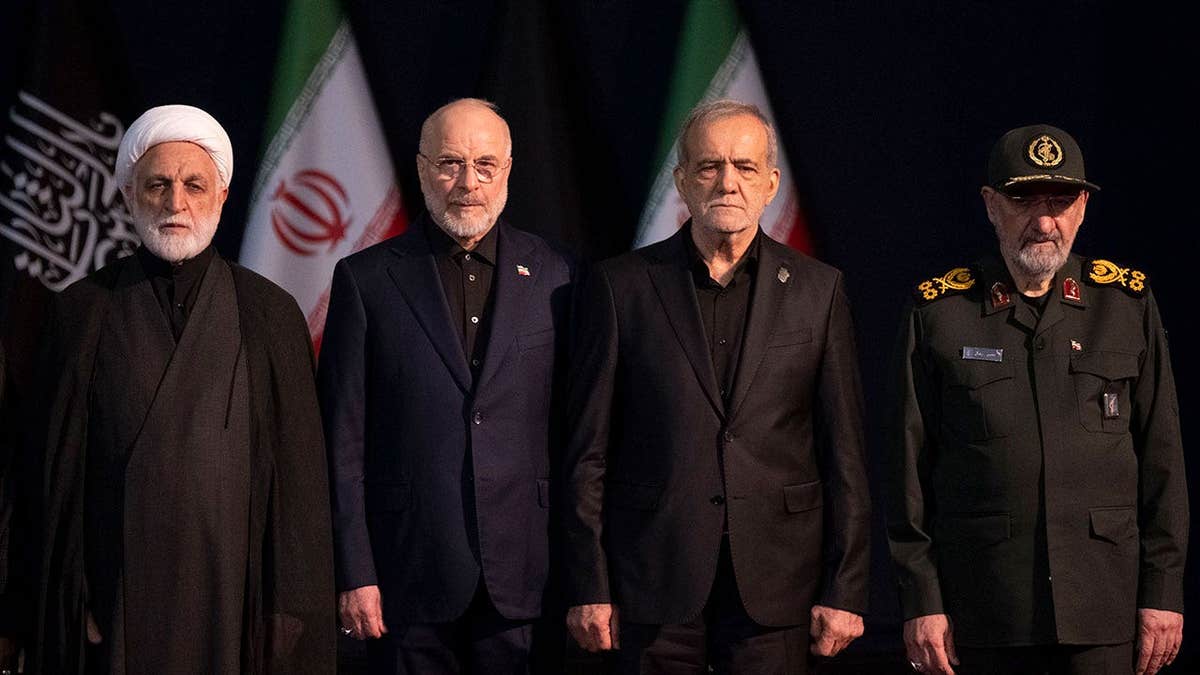
Iranian Parliament speaker Mohammad Bagher Ghalibaf, Chief Justice of Iran Gholam-Hossein Mohseni-Eje’i, Iranian President Masoud Pezeshkian, and an IRGC commander, General Mohsen Rezaei, attend a ceremony in Tehran, Iran, on July 3, 2026. (Morteza Nikoubazl/NurPhoto via Getty Images)
Ali Abdollahi: A wartime commander takes the top military job
Ali Abdollahi was elevated to chief of staff of Iran’s Armed Forces, putting him at the top of the country’s military command structure. IRNA confirmed the appointment Aug. 10.
Abdollahi had previously commanded the Khatam al-Anbiya Central Headquarters, Iran’s joint operational command responsible for coordinating its armed forces in wartime, according to Iran International on Aug. 10.
His appointment also comes amid an effort to integrate the Khatam al-Anbiya Central Headquarters more closely with the Armed Forces General Staff. Le Monde reported Aug. 11 that Abdollahi’s task includes completing that integration in an effort to further centralize command and coordination.
Fard argued in his Aug. 15 Middle East Forum analysis that Abdollahi’s elevation exemplifies Tehran’s reliance on longstanding revolutionary-security figures rather than a generational break.
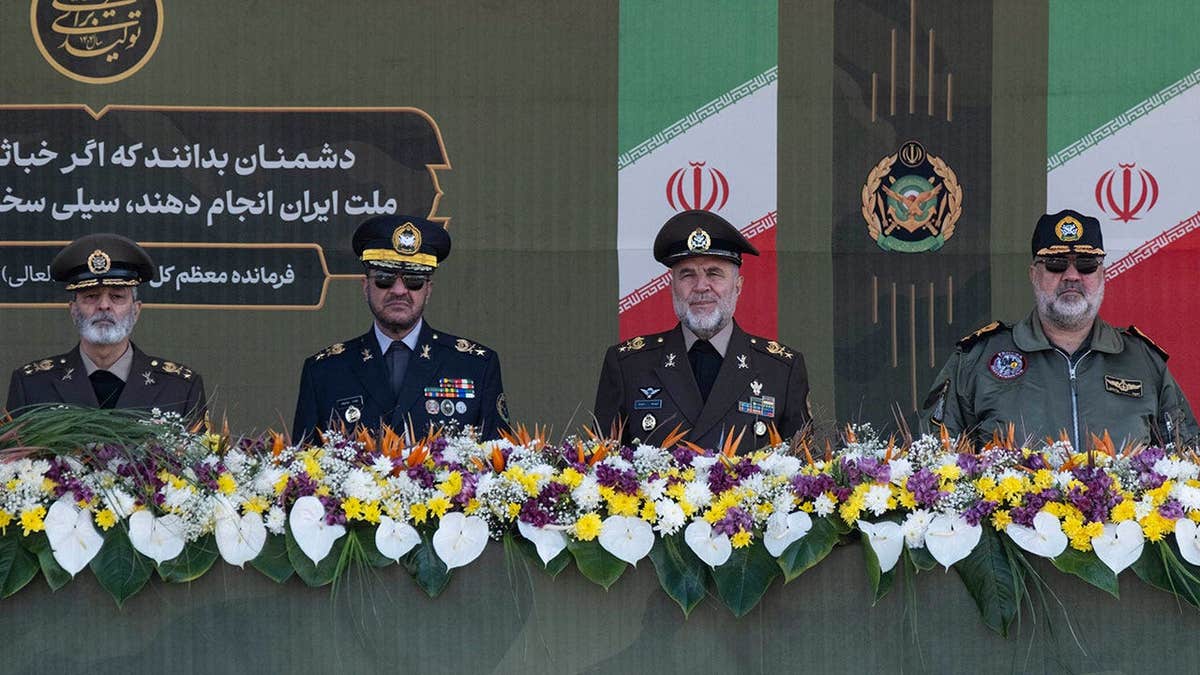
Iranian army commanders, from left to right, Sayyed Abdolrahim Mousavi, commander in chief of the Islamic Republic of Iran Army, Alireza Sabahifard, commander of Iran’s Army Air Defense Force, General Kioumars Heydari, commander in chief of Iranian Army Ground Forces, and Hamid Vahedi, brigadier general of the Islamic Republic of Iran Army and the commander of the Air Force, participate in a military parade commemorating the anniversary of Army Day outside the Shrine of Iran’s late leader Ayatollah Ruhollah Khomeini in the south of Tehran, Iran, on April 18, 2025. (Morteza Nikoubazl/NurPhoto)
Kioumars Heydari: The regular army moves closer to the center
Former Army Ground Forces commander Kioumars Heydari was appointed deputy chief of staff of the Armed Forces, bringing a senior officer from Iran’s conventional military into the new command structure.
The National reported that Heydari formerly commanded the Army Ground Forces and has held senior positions in Iran’s regular army, known as the Artesh. IRNA independently confirmed his appointment.
His inclusion also demonstrates that the reshuffle is not limited to the IRGC.
Fard argued in the Middle East Forum that Heydari’s previous public rhetoric surrounding protest suppression indicates that Tehran has increasingly integrated the regular army into its domestic-security posture.
Mostafa Izadi: Another veteran rises inside the IRGC
Mostafa Izadi was appointed Vahidi’s deputy, putting another longtime commander near the top of the IRGC hierarchy.
IRNA confirmed Izadi’s appointment Aug. 10, while The National described him Aug. 11 as a veteran commander who has held a number of senior positions in Iran’s military and security establishment.
Iran International reported that Izadi previously commanded the Cyber and New Threats Headquarters within the Khatam al-Anbiya Central Headquarters.
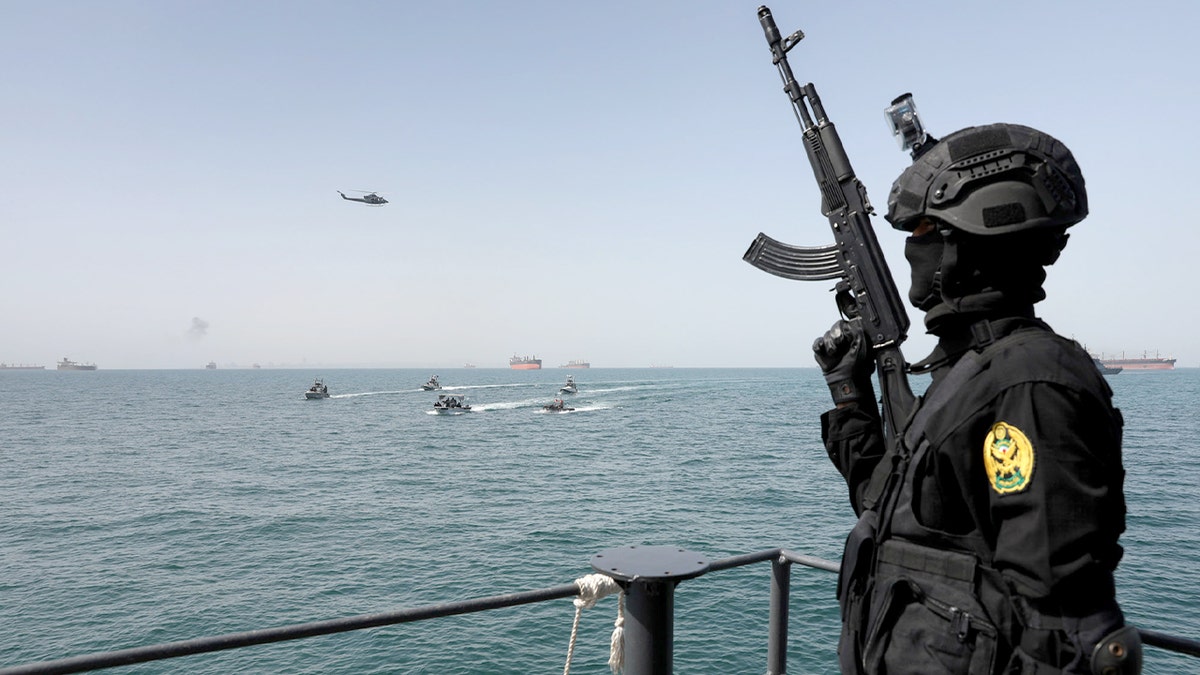
Naval units from Iran and Russia simulate the rescue of a hijacked vessel during joint drills at the Port of Bandar Abbas in Hormozgan, Iran, on Feb. 19, 2026. (Iranian Army/Handout/Anadolu via Getty Images)
Ali Ozmaei: A new commander at one of Iran’s most sensitive fronts
Rear Adm. Ali Ozmaei was appointed commander of the IRGC Navy, putting him in charge of a force central to Iran’s military posture in the Persian Gulf and Strait of Hormuz.
The National reported Aug. 11 that Ozmaei replaced Alireza Tangsiri, who was killed in an Israeli airstrike in March, and that the IRGC Navy is responsible for Iran’s military operations in the Gulf and around the Strait of Hormuz.
Iranian state media also highlighted Ozmaei’s longstanding maritime experience. IRNA reported Aug. 11 that Parliament Speaker Mohammad Bagher Ghalibaf praised Ozmaei’s years in maritime defense and his familiarity with the current conflict and the Strait of Hormuz.
The appointment came one day before Rezaei said the Strait of Hormuz would remain closed unless the United States changed its behavior and accepted Iran’s conditions. Reuters reported that Rezaei said Washington would have to end the war and unfreeze Iranian funds overseas, with other conditions relayed through mediators.
Taken together, the seven personnel changes show Tehran moving to fill and reshuffle critical military and security posts after significant wartime losses. What remains an assessment rather than an established fact is whether the identities of those chosen reveal a deeper shortage of trusted successors.
Sabti said the return of veteran figures reflected what he sees as a shrinking bench of trusted officials and a less diverse decision-making circle.
Tahbaz offered a less academic version of that assessment.
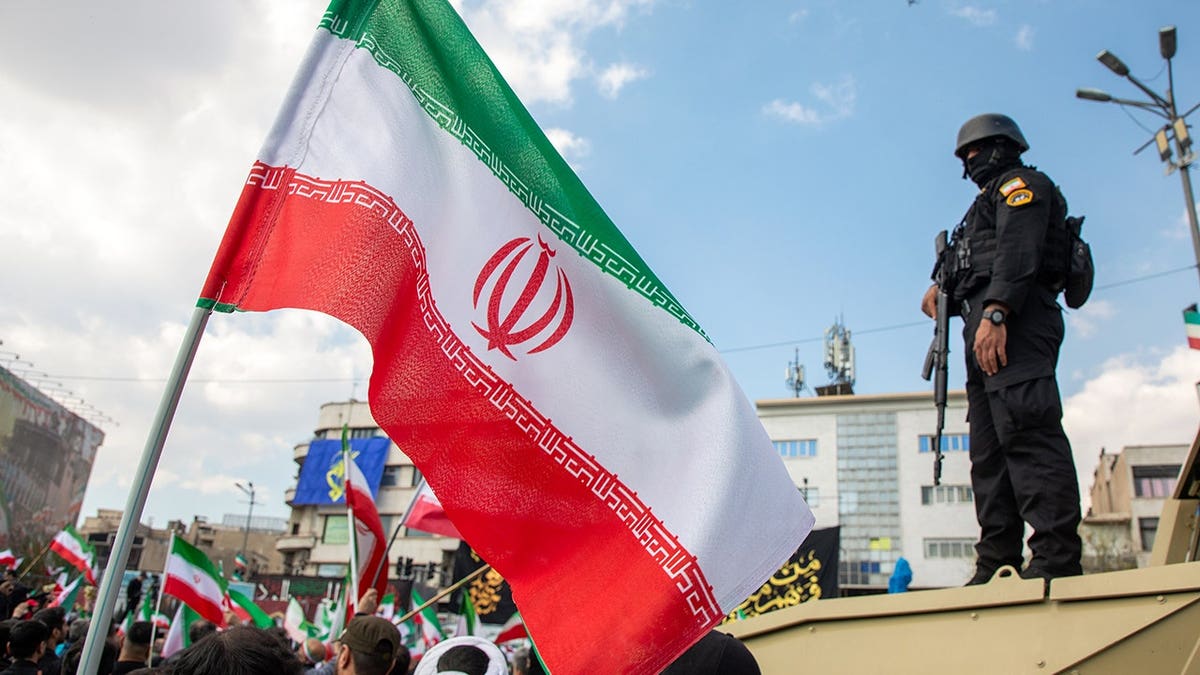
Members of security forces watch over the crowd during a funeral procession held for IRGC Navy Chief Alireza Tangsiri, alongside other senior naval commanders and their families who were killed in U.S.-Israeli strikes in late March, on April 1, 2026, in Tehran, Iran. (Majid Saeedi/Getty Images)
“They keep rotating the same old people,” he said.