
The apparent failure of crucial U.S.-Iran negotiations has raised concerns that key figures within Tehran’s leadership might escape to Russia, aiming to “sustain their insurgency and disrupt any emerging regime,” according to an analyst’s warning.
This breakdown in talks coincides with Israeli Prime Minister Benjamin Netanyahu’s remarks on CBS’ “60 Minutes,” suggesting that the overthrow of Iran’s regime is increasingly feasible.
Netanyahu pointed out that the fall of Iran’s regime would dismantle the “framework” supporting Tehran’s global terrorist proxy network, potentially diminishing Hezbollah’s regional influence.
“The entire framework of the terrorist proxy network that Iran constructed collapses if Iran’s regime collapses,” Netanyahu stated.
Former President Donald Trump mentioned that U.S. military actions against Iran were so impactful they removed much of the regime’s prospective leadership, leading to uncertainty about the future leaders of the Islamic Republic.
“I think you can’t predict precisely when it will happen. Is it possible? Yes. Is it guaranteed? No,” he cautioned.
With diplomatic options perhaps exhausted and the regime’s stability in question, an expert suggests the exit strategy any leadership may be eyeing might be similar to that of Syrian President Bashar al-Assad, who fled Syria in 2024.
“If the situation deteriorates further, some senior figures could potentially follow a path like Bashar al-Assad’s inner circle and seek refuge in Russia,” Middle East expert Saeid Golkar told Fox News Digital.
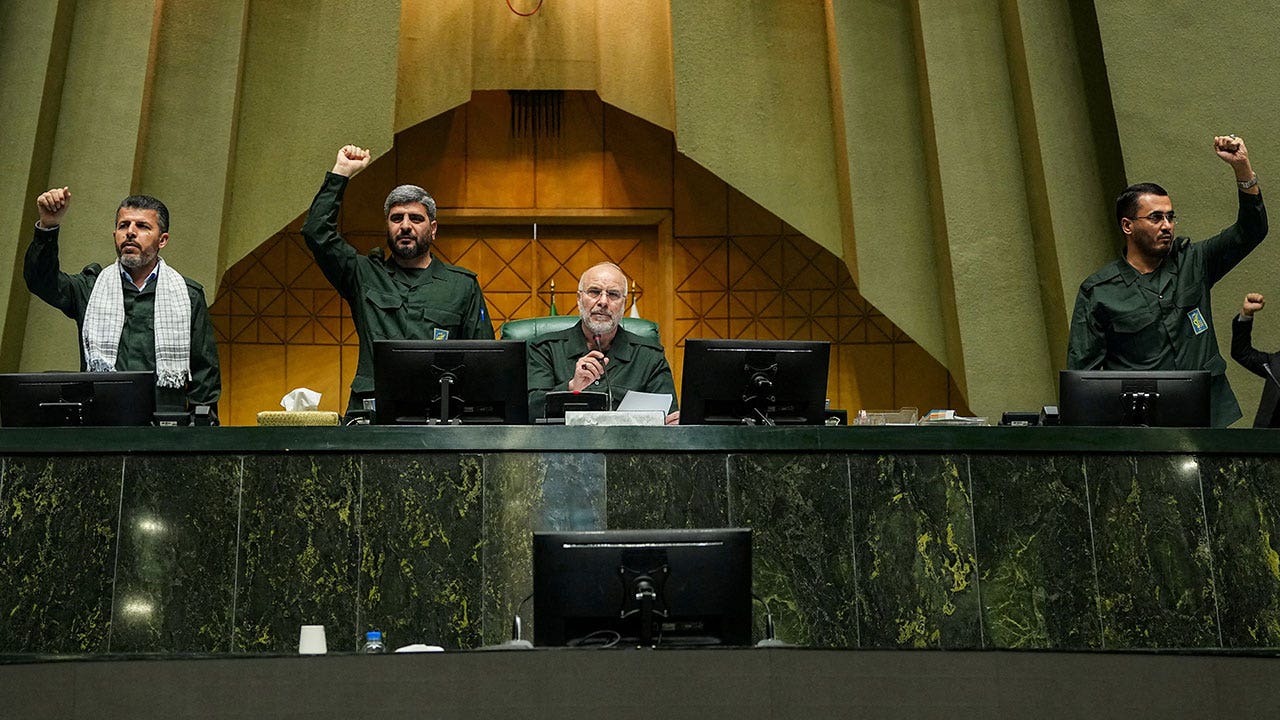
While top commanders would possibly be Moscow-bound, lower-ranking figures would more likely head for Iraq or Afghanistan, Middle East expert Saeid Golkar told Fox News Digital. (Hamed Malekpour/Islamic Consultative Assembly News Agency/WANA)
Golkar, a senior adviser at United Against Nuclear Iran, noted that flight destinations would likely depend on rank.
While top commanders like Parliament Speaker Mohammad-Bagher Ghalibaf might head to Moscow, lower-ranking figures would more likely seek shelter in Iraq or Afghanistan, where the IRGC maintains operational connections, he clarified.
“For the most senior figures, Russia would probably be the most likely destination, again as we saw with Bashar al-Assad,” Golkar said, noting many officials have already moved wealth into “financial networks outside Iran.”
The current crisis started following the death of Ayatollah Ali Khamenei earlier in 2026 during the onset of Operation Epic Fury.
While his son, Mojtaba Khamenei, was named successor, reports continue to indicate he was severely injured in the strikes and has been absent from recent negotiations.
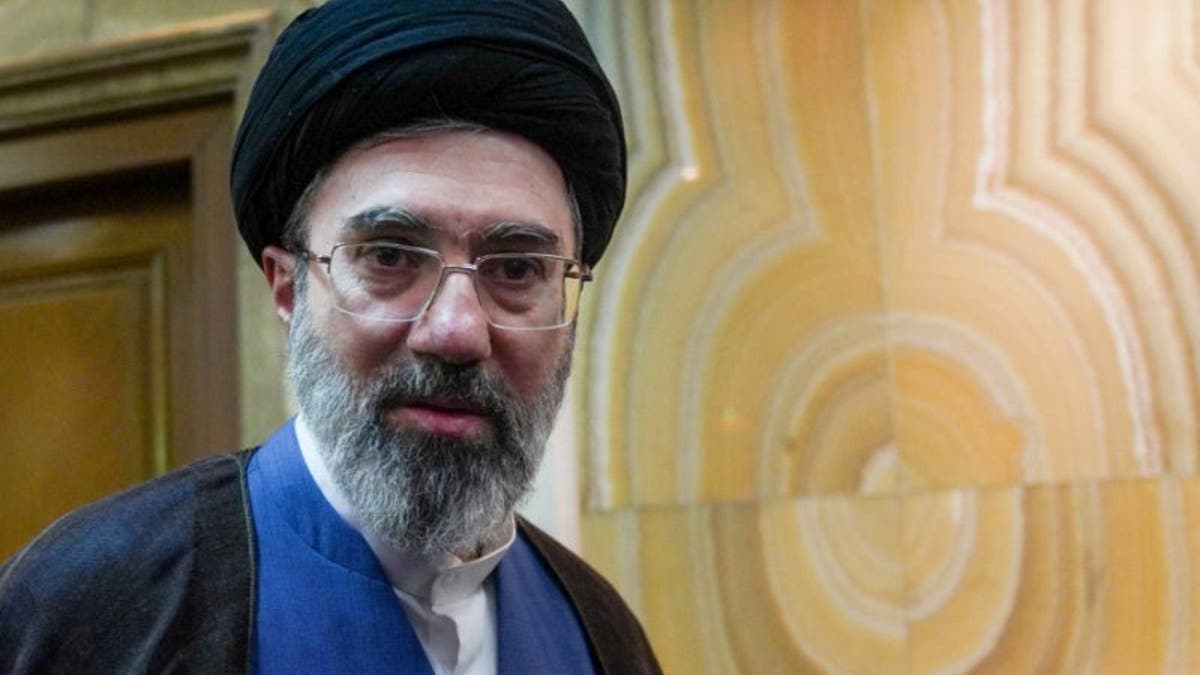
Mojtaba Khamenei, the new supreme leader of Iran and second son of the late Ayatollah Ali Khamenei, is “either dead or in bad condition,” according to Golkar. (Hamed Jafarnejad/ISNA/WANA/Reuters)
Golkar explained that the “invisible state,” or Bayt-e Rahbari, was designed to survive decapitation, while the ideological cost of fleeing for leaders would be high.
“Inside the regime’s ideological culture, leaving the country during the collapse would look like desertion,” Golkar noted.
However, as military fractures deepen and succession remains uncertain, the “Assad model” of seeking Russian protection appears increasingly attractive to those at the top.
Mojtaba, however, is “either dead or in bad condition, that he cannot send any video or voice message,” Golkar added.
“If he had died from his injuries, there was no clear natural successor. He was the continuation of the regime.”
“Still, the system was designed for continuity during a crisis,” Golkar said, adding that the goal is to “make sure the regime could survive even if formal institutions were damaged, leaders were killed, or civilian government stopped functioning.”
“I would describe it as a regime designed not just to govern, but always to try and survive decapitation,” Golkar added.