
Fmr Mossad counterterrorism head discusses Israeli intelligence on Iran
Oded Ailam, a seasoned expert in counterterrorism and a senior researcher at the JCSFA, has pulled back the curtain on Israel’s intelligence tactics focused on leveraging discontent within Iran. The Mossad has actively reached out to the Iranian populace, broadcasting a message in Farsi that encourages citizens to capture and share visual evidence of the regime’s oppressive actions. This initiative surfaces amid Israel’s recent military actions, which have seen over 2,200 strikes targeting Iran-linked facilities, including a natural gas site and Hezbollah positions in Lebanon.
Recent developments have also spotlighted Iran’s deepening efforts to infiltrate Israel’s military ranks. The arrest of two Israeli air force personnel under suspicion of espionage highlights the growing threat of Iranian recruitment from within the country.
Over the past 18 months, Israeli police, in collaboration with the Shin Bet, have delved into over 20 espionage-related cases, involving an estimated 40 to 50 individuals. While many suspects remain detained, authorities are on the lookout for others who might still be operating undetected.
Captain Sefi Berger, part of the Israel Police’s Lahav International and Major Crimes Unit, which tackles Iranian espionage, shared with Fox News Digital that Iran is particularly interested in gathering intelligence that could facilitate attack strategies. Information about prominent figures and critical targets is also highly sought after by Tehran.
A recent arrest exemplifies the situation: Ami Gaydarov was detained on March 9, suspected of collaborating with Iranian operatives to target a senior official, as confirmed by the Israeli Police.
The financial rewards for espionage vary significantly. In one instance, a network of seven individuals allegedly received approximately $300,000 for their efforts, while an Iron Dome reservist purportedly earned a mere $1,000 for similar activities, with some receiving even less.
“People may think they will get rich, but the money is not life-changing,” Berger said. “In one case last year involving two soldiers, one received just $21 and has been in prison for a year and a half.”
Iranian recruitment tactics include infiltrating WhatsApp and Facebook groups used by Israelis seeking freelance work, as well as pornography websites, where agents allegedly use compromising material to blackmail individuals into cooperating. Recruitment also relies on emotional manipulation of individuals whose moral judgment may be compromised.
“When recruiting a person, a relationship can develop between the handler and the spy. Sometimes the asset is looking for a father figure or a friend — someone who listens without judgment,” Berger said.
Former Shin Bet handler Gonen Ben Itzhak, who spent years recruiting sources within Palestinian society, told Fox News Digital that the issue is particularly serious, saying he has not previously seen so many attempts — and some successful cases — of spying against Israel.
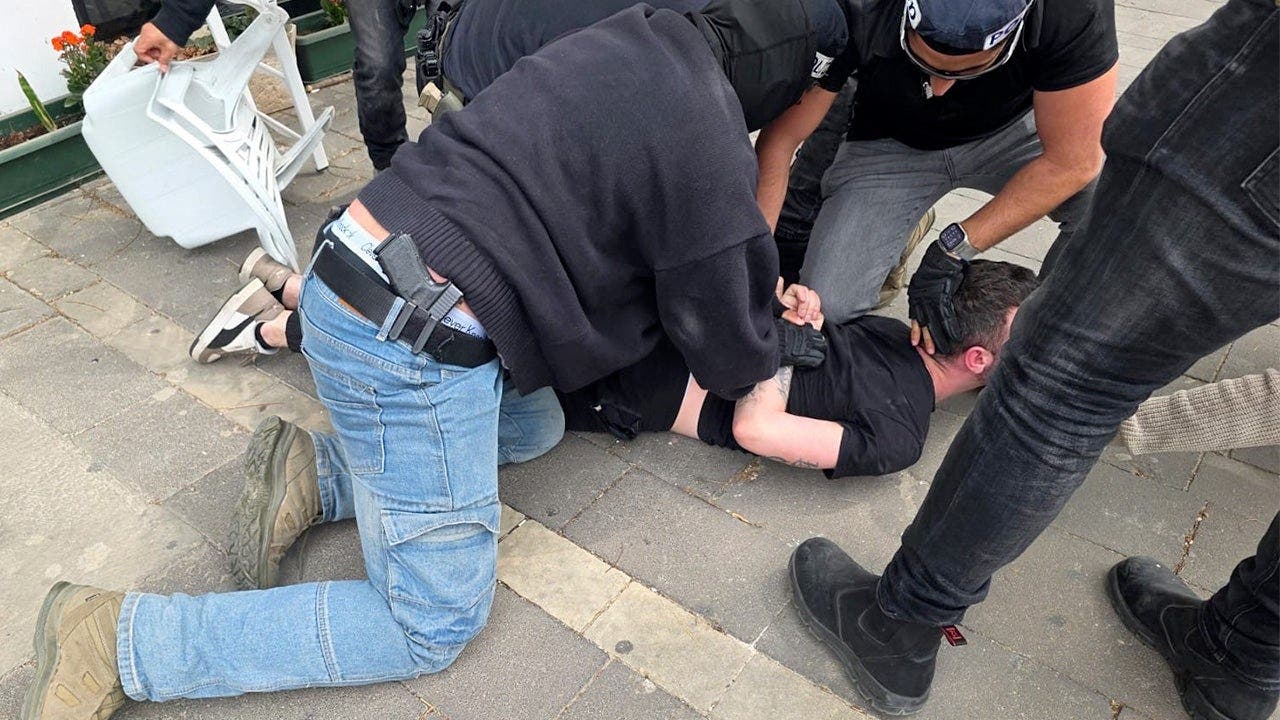
Israel Police arresting a suspect in relation to Iranian espionage in Haifa. (Israel Police Spokesperson)
“The million-dollar question is who makes a good recruit. We don’t have a clear answer. There are certain indicators that someone may be more susceptible. The Iranians use social media — something we didn’t have in the same way — and it’s a powerful tool to identify potential motives,” he said.
As a handler, Ben Itzhak said he sought to recruit as many viable candidates as possible while avoiding individuals likely to attract suspicion, such as known criminals. He described the process as gradual and often uncertain.
“At first, they need to agree to meet in secret. Sometimes they come but won’t share information. I would start with simple questions — who leads Hamas in their village,” he said.
“Sometimes it takes time. Some refuse to cooperate, some may even act as double agents. In many cases, they are trained to collect information without being exposed. It’s a process,” Ben Itzhak added.
Explosions from projectile interceptions by Israel’s Iron Dome missile defence system over Tel Aviv. (JACK GUEZ / AFP via Getty Images)
On Friday, indictments were filed against an Israeli civilian and three soldiers arrested in March on suspicion of working for Iranian intelligence and carrying out security-related missions under its direction before enlisting in the IDF.
As part of the alleged operations, the defendants documented and sent their handlers photos and videos of locations including train stations, shopping centers and security cameras, and were at one point instructed to purchase weapons. They also allegedly transferred documents from the Air Force Technical School, where some of the suspects had studied.
In March, 22-year-old Haifa resident Ami Gaydarov was arrested on suspicion of manufacturing explosives intended to target a senior Israeli figure at the direction of an Iranian agent.
A billboard depicting Iran’s supreme leaders since 1979, from left to right, Ayatollahs Ruhollah Khomeini (until 1989), Ali Khamenei (until 2026) and Mojtaba Khamenei (incumbent), is displayed above a highway in Tehran on March 10, 2026. Iran marked the appointment of Ayatollah Mojtaba Khamenei to replace his father as its supreme leader on March 9, 2026. (AFP/Via Getty Images)
Last month, a man from the Israeli-Arab city of Qalansawe was detained on suspicion of allegedly spying for “a hostile actor, mediated through the Al Jazeera channel.” According to the investigation, Miqdad Moder Hosni Natur made contact with his handler after being introduced while searching for job opportunities through the Qatari-owned news organization.
Under Israeli law, contact with a foreign agent carries a sentence of up to 15 years in prison. Providing intelligence can result in more than 10 years’ imprisonment, while aiding the enemy during wartime carries a minimum sentence of life imprisonment and, in extreme cases, the death penalty.
Berger also warned against attempts by Israelis to deceive foreign agents, stressing that any contact is a serious offense.
“We had a hotel worker near the Dead Sea who falsely told Iranians that a group of Israelis would arrive. He said it was a lie, but I explained he had effectively put a target on that hotel, its staff and guests, and encouraged an attack,” Berger said.
“People unfamiliar with this world should not engage in it. Contact is an offense, providing information is an offense, and aiding the enemy is the most severe,” he added.
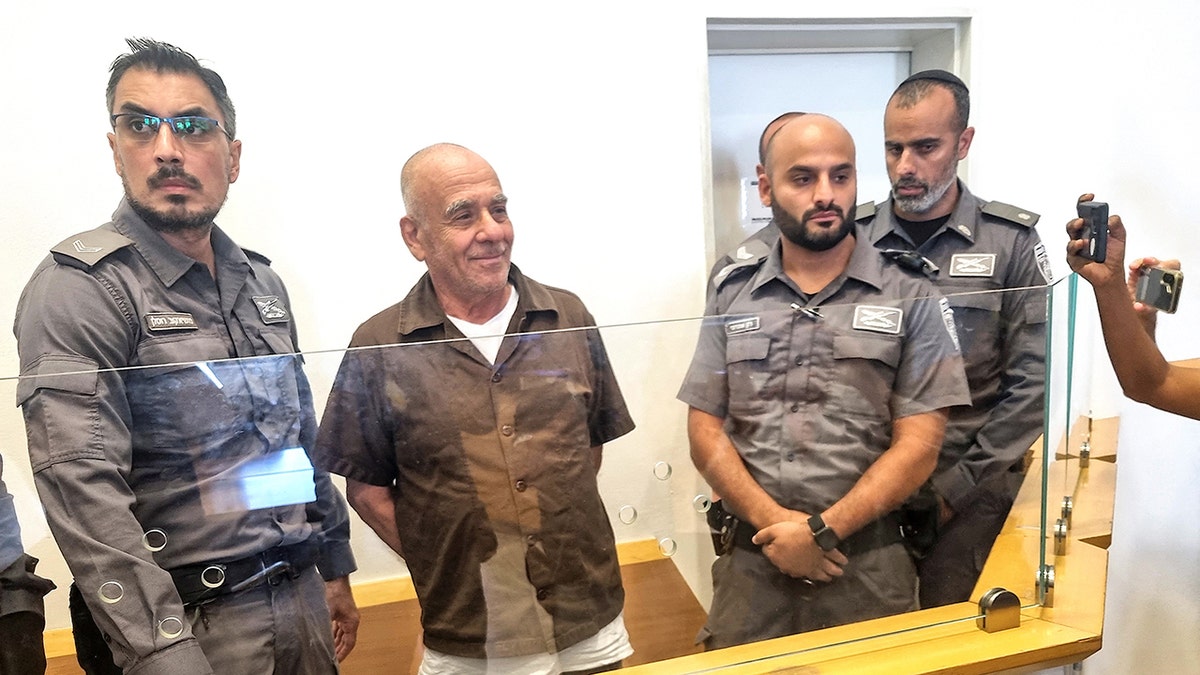
Israeli citizen Moti Maman stands in a courtroom after he was accused by Israeli security services of involvement in an Iranian-backed assassination plot targeting prominent people including Israeli Prime Minister Benjamin Netanyahu, in Beersheba District Court in southern Israel, Sept. 19, 2024. (Reuters/Stringer )
While most suspects remain in custody awaiting trial, some cases are advancing through the courts.
One concluded case involved 70-year-old Moti Maman, who was convicted and sentenced to 10 years in prison after twice entering Iran, where he met with intelligence agents to discuss carrying out terrorist activity in Israel. He also discussed the possibility of assassinating Prime Minister Benjamin Netanyahu.
Former Mossad operative Gad Shimron told Fox News Digital that while the espionage efforts have caused damage, their impact appears tactical rather than strategic. However, he cautioned against complacency.
“The electronic Iron Dome is trying to catch Israelis willing to work for the Iranians, and I believe it is quite efficient,” he said. “But one should never underestimate the enemy. I am sure they are investing a lot of effort and that they have some successes we don’t yet know of.”