
Share this @internewscast.com

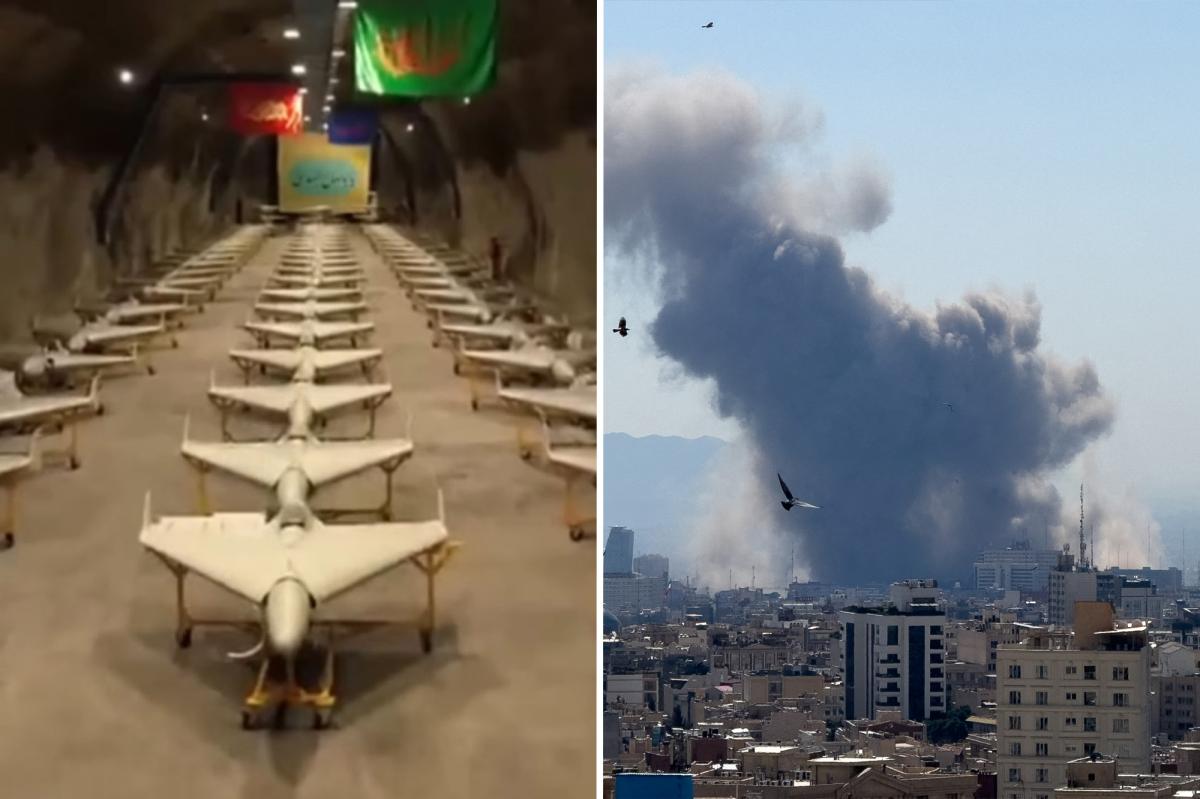
In a striking display of military might, Iran has unveiled a vast array of naval suicide drones intended to fortify its blockade of the vital Strait of Hormuz. The chilling footage, captured within Iran’s underground “missile city,” offers a rare glimpse into the country’s formidable arsenal.
The video, broadcast by Iranian state media, showcases extensive underground tunnels brimming with naval drones, anti-ship missiles, and sea mines. The dramatic visuals even include scenes of these weapons being launched, underscoring the military capabilities Iran is ready to deploy.
Experts who have reviewed the footage, which was released through the Iranian state media outlet Fars, provided insights to CNN on the strategic implications of the showcased weaponry.
The full terrifying array of armory on display includes:
- Abadil-2/3 “kamikaze” drones: Shown on rail-launchers inside the tunnels, these are designed for deadly one-way strikes on ship sensors and superstructures.
- Shahed-136 drones: Primarily a land-attack drone, but naval versions shown inside the tunnels can be mounted on fast-attack craft or hidden launch racks to target coastal infrastructure and tankers.
- Zolfaqar drones: Small, explosive-laden autonomous boats designed to swarm larger naval vessels.
- Ghadir anti-ship cruise missiles (ASCM): Long-range cruise missiles with a 190-mile range, shown on mobile truck launchers inside the tunnels.
- Nasr-1 (ASCM): Shorter-range, high-precision missiles designed for coastal defense, capable of being launched from speedboats or hidden bunkers.
- Khalij Fars (ASCM): Quasi-ballistic anti-ship missiles that Iran claims can hit moving targets at sea using an electro-optical seeker.
- Maham sea mines: Acoustic/magnetic influence mines, often seabed-mounted, that can detonate without direct contact, just by detecting the physical signatures of passing ships.
- Sadaf-02 sea mines: Contact mines that are often shown being loaded onto civilian-style dhow sailing vessels, or fast boats.
“We possess missiles capable of underwater launch, reaching speeds of 100 meters per second, and their deployment may be imminent,” stated Brigadier General Ali Fadavi, Deputy Commander of the Islamic Revolutionary Guard Corps (IRGC), during a broadcast on state television.
The Iranian government has issued stern warnings, hinting at the potential use of this fearsome arsenal to disrupt the global economy and potentially drive oil prices to $200 per barrel.
Furthermore, Iran has issued grave threats to spill the “blood of invaders” across the Persian Gulf if the United States and Israel do not cease their aerial attacks on Iranian soil.
“Any aggression against soil of Iranian islands will shatter all restraint. We will abandon all restraint and make the Persian Gulf run with the blood of invaders,” Iran’s parliament speaker Mohammad Bagher Ghalibaf said.
This is not the first time the Islamist regime has highlighted its underground “missile city.”
In January and February 2025, the IRGC also held a series of major “unveilings,” including its “strategic missile base” on the Gulf Coast, independent Kurdish outlet Channel 8 reported at the time.
The footage also highlighted large bays for suicide drone boats, hundreds of cruise and ballistic missiles—including the Ghadr-380—primed on mobile launchers, and stacks of sophisticated naval mines ready for deployment in the Strait of Hormuz.
The earliest mention of Iran’s “missile city” was in March 2021, when the IRC released footage showing rows upon rows of anti-ship missiles and electronic warfare equipment, as reported by the Jerusalem Post at the time.
The IRGC claimed it had built the base deep underground to protect it from naval bombardment.
With Post wires.