
A federal judge on Friday blocked President Trump’s campaign to recast historical narratives at museums, national parks, and other public landmarks, ruling that the administration must reverse changes already made at sites across the country.
In a preliminary injunction issued in Massachusetts, U.S. District Judge Angel Kelley also directed the administration to halt any further revisions. She said the challengers had demonstrated that the effort was intended “to rewrite the Nation’s history with a white-out pen.”
“Under the guise of promoting American dignity, this Administration seeks to share a limited history by ordering the removal of all signs, displays, and interpretive exhibits at National Parks that do not align with its preferred narrative, thereby telling half-truths,” Kelley wrote.
The dispute centers on a March 2025 executive order from the Trump administration titled “Restoring Truth and Sanity to American History,” which instructed national parks to avoid presenting material that “inappropriately disparage Americans past or living.”
But Kelley said the directive functioned as a vehicle for removing accurate and essential parts of the nation’s past.
“History cannot be faithfully told while excluding the experiences of communities whose contributions, struggles, and achievements form an important part of our Nation’s story,” Kelley wrote.
The Trump administration must also provide a status report every week describing the progress they’ve made with these changes, the judge wrote. The administration has 21 days to “restore and reinstall all interpretive materials at park sites managed by the NPS that, pursuant to the Secretary’s Order, have been altered, removed, or damaged in the process of such removal since May 20, 2025,” according to the order.
Joe Lamberti/AP, FILE 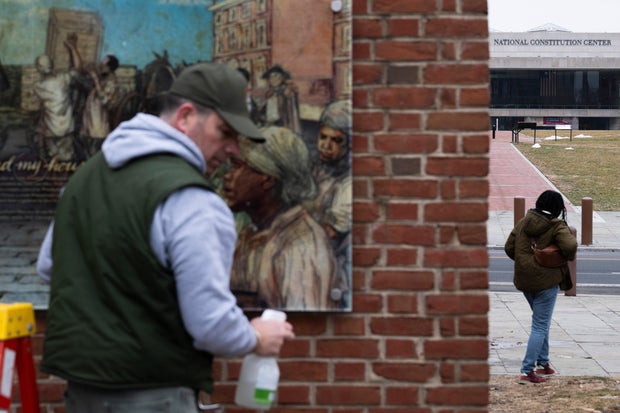
The order comes in response to a February lawsuit filed by conservation and historical organizations over National Park Service policies that the groups say have forced park service staff to remove or censor dozens of exhibits that share factually accurate and relevant U.S. history and scientific knowledge, including about slavery and climate change.
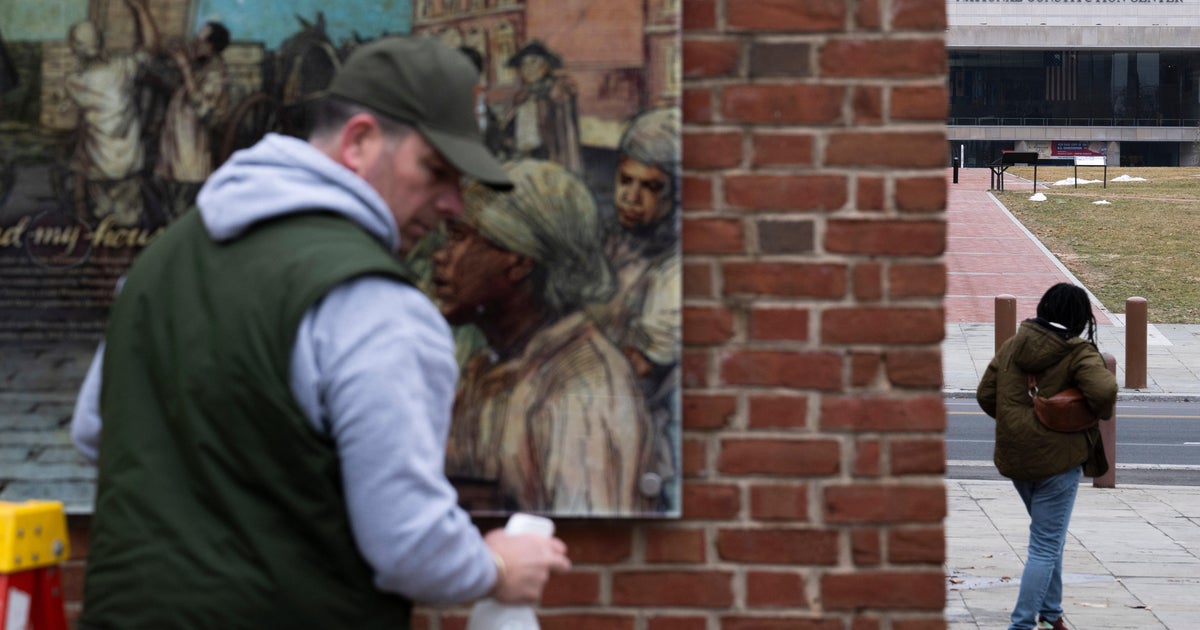
Many of the changes were at Philadelphia’s Independence National Historical Park, where the administration removed exhibits on the lives of nine people enslaved at the site in the 1790s under George Washington, the first U.S. president. Other changes included removing a sign at Sunset Crater Volcano National Monument in Arizona describing basalt bubbles because it had an image of a visitor holding a Pride flag while films on labor history were removed from the Lowell National Historical Park in Massachusetts.
Mr. Trump signed the executive order last year and Interior Secretary Doug Burgum later directed removal of “improper partisan ideology” from museums, monuments, landmarks and other public exhibits under federal control.
An email seeking comment from the Interior Department was sent Saturday.
Alan Spears, senior director for cultural resources for the National Parks Conservation Association, one of the organizations that brought the lawsuit, said the ruling will help protect national parks from the administration’s effort “to erase history and science at these one-of-a-kind places.”
“National parks belong to the American people and censorship of any kind goes against the values these places represent,” he said.
Bill Wade, executive director for the Association of National Park Rangers, another organization that brought the lawsuit, said this is especially good news for National Parks employees who “have prided themselves for being able to provide truthful, accurate and unbiased information.”