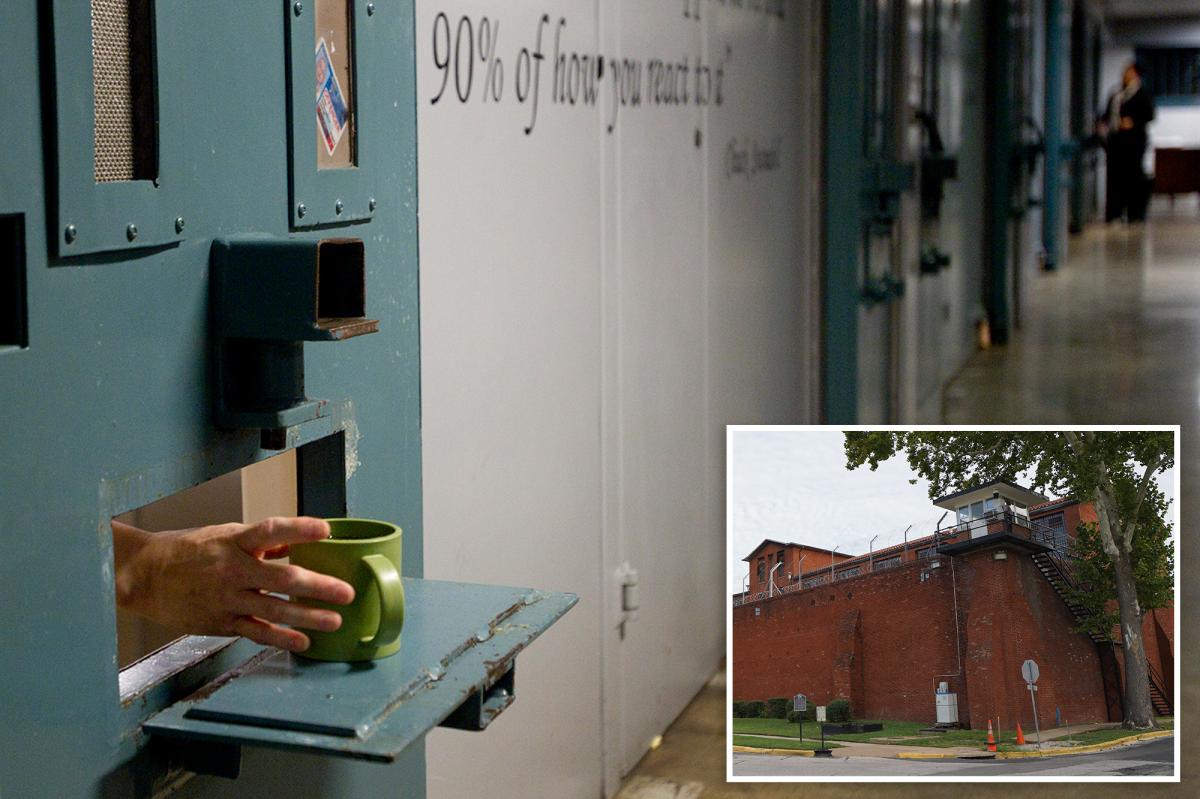

A federal judge on Tuesday ordered Texas to air-condition every state prison, ruling that exposing incarcerated people to extreme heat amounts to a violation of their constitutional protections.
In a 150-page decision, U.S. District Judge Robert Pitman directed the Texas Department of Criminal Justice to develop a plan to install air conditioning by the end of 2029 at every prison where summer temperatures regularly climb above 100 degrees Fahrenheit (38 degrees Celsius).
Pitman concluded that housing prisoners without air conditioning in those conditions violates the Eighth Amendment’s ban on “cruel and unusual punishments.”
People who testified about their time in Texas prisons without air conditioning described inmates becoming ill, fainting and desperately trying to cool themselves, including by splashing toilet water on their bodies, Pitman wrote.
“These are not humane conditions,” the judge said.
According to the ruling, the Texas Department of Criminal Justice has estimated that installing air conditioning throughout the prison system would cost roughly $1.5 billion.
The agency did not immediately respond to a request for comment Tuesday.
In the past, however, the department has said it remains committed to expanding the number of air-conditioned beds at its facilities.
The lawsuit began in 2023, when Bernie Tiede, a former mortician serving a life sentence, filed the case. Tiede’s murder conviction was the inspiration for the film “Bernie.”
Multiple prisoner advocacy organizations later joined the legal challenge, broadening its scope.
Pitman ruled in 2025 that the extreme heat inside Texas prisons was “plainly unconstitutional,” but stopped short of immediately requiring the state to begin installing air conditioning.
The case proceeded to trial earlier this year.
At the time, roughly 52,000 prison beds had either full or partial air conditioning, covering about 37% of the incarcerated population, the ruling said.
About 89,000 people therefore remained in units without air conditioning as summer approached, according to the decision.
The department has acknowledged that 23 people died from heat-related causes in its facilities between 1998 and 2012. It also recognized three additional heat-related deaths in 2023, the ruling said.
Pitman added that the plaintiffs presented “credible evidence” indicating that other deaths between 2023 and 2025 were caused, at least partly, by excessive heat.
Amite Dominick, founder and president of Texas Prisons Community Advocates and a plaintiff in the case, said the decision demonstrated that Texas could no longer treat people’s lives as a financial calculation.
“We will be watching every deadline in this order,” Dominick said.