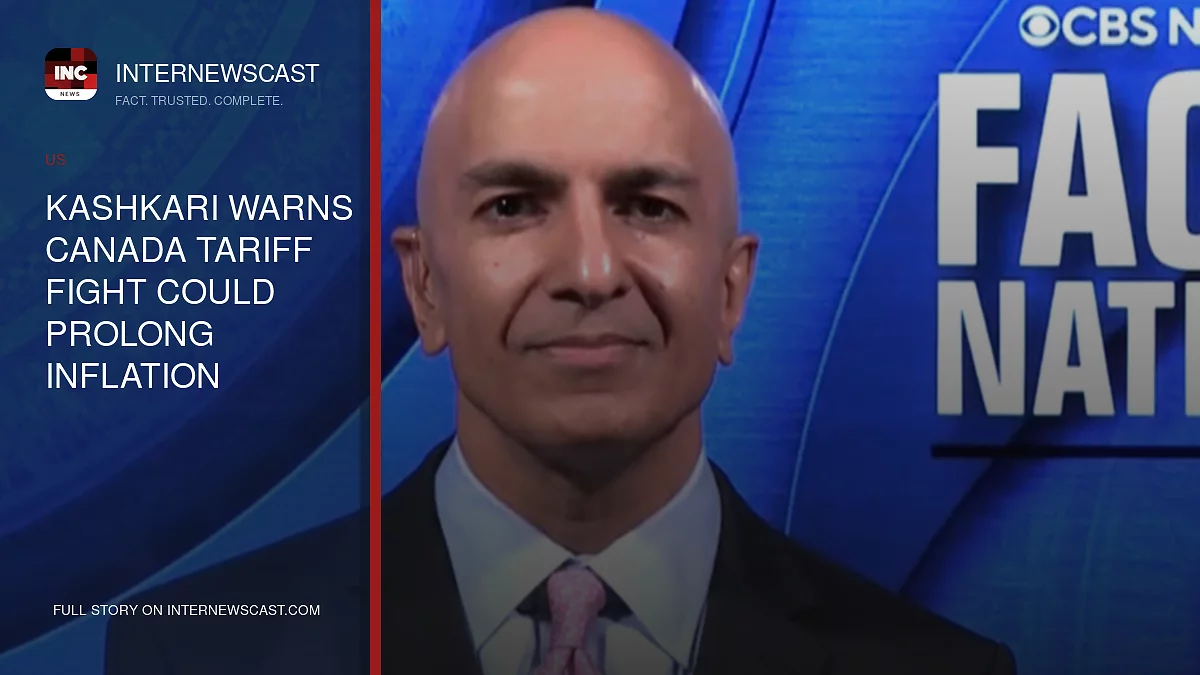

Washington — Minneapolis Federal Reserve President Neel Kashkari warned Sunday that the escalating tariff dispute between the United States and Canada could keep inflation pressures alive for longer if the trade standoff between the longtime allies continues to intensify.
“The longer there’s back and forth on the trade front, just like the longer there’s back and forth in the conflict of Iran, the imprint and inflation end up being extended and delayed,” Kashkari said on “Face the Nation with Margaret Brennan.”
The warning came after the U.S. on Saturday started applying 50% tariffs to Canadian goods, following unsuccessful negotiations aimed at ending the growing trade dispute between the two major economic partners. U.S. Trade Representative Jamieson Greer said Saturday that no additional talks with Canadian officials were currently scheduled.
Canada, in turn, is preparing its own response. Prime Minister Mark Carney said his government will announce new retaliatory tariffs on U.S. products this week, before they are set to take effect on Sept. 8. The countermeasures are expected to cover industries including steel, dairy, appliances, farm equipment, pulp, paper and electronics.
The latest clash adds to a broader period of strain between Mr. Trump and Canada, with tensions flaring over trade, NATO, a disagreement involving a Detroit-area bridge, and Mr. Trump’s repeated threats about making Canada the 51st U.S. state.
Kashkari emphasized that Canada remains “an important trading partner for America.” In 2025, the two nations exchanged $880 billion in goods and services, making Canada the United States’ second-largest trading partner after Mexico.
Discussing the broader U.S. economy, Kashkari pointed to a five-year stretch of stubbornly high inflation, which he said has been driven in large part by a series of supply shocks.
“One of those supply shocks is the trade and tariff conflicts,” Kashkari said.
The Minneapolis Federal Reserve Bank president said along with issues like the war with Iran, which he called “a big driver of what’s happening on inflation” due to energy’s broad impact on the U.S. economy, the trade dynamic is “another factor to pay close attention to.”
“And so to the extent that we can get to a new normal, a level of whatever the trade dynamic is going to be, once we can get to that steady state, then businesses can adjust, and the inflationary impact can fade into the background,” Kashkari said.