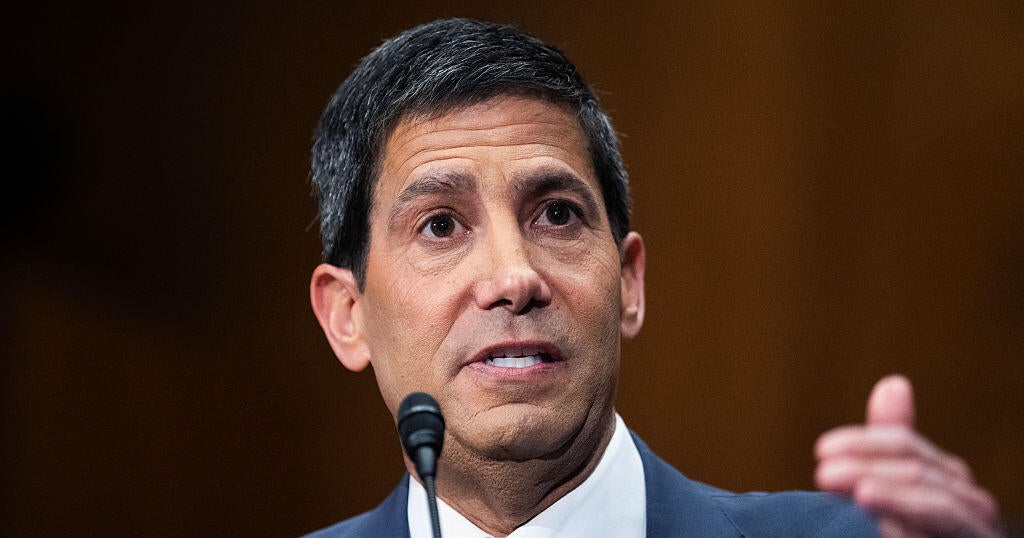

Washington— In a key development for President Trump’s administration, the Senate on Tuesday confirmed Kevin Warsh to the Federal Reserve’s Board of Governors. This decision paves the way for Warsh to potentially lead the central bank, following a period of uncertainty due to a criminal investigation involving the outgoing chairman, Jerome Powell.
The Senate approved Warsh in a 51-45 vote to assume a 14-year term as one of the seven governors of the Fed. However, a separate vote is required to confirm him as the chair of the Board of Governors, a position Powell will vacate when his four-year term concludes this Friday. The Senate is expected to address this vote later in the week.
Warsh will fill the board seat previously occupied by Stephen Miran, who joined the Fed last September as a Trump adviser to fill a vacancy. Although Miran’s term ended in January, he continued to serve until his successor’s confirmation. Before his time on the Fed, Miran led the White House’s Council of Economic Advisers and had taken an unusual leave of absence to serve temporarily at the Fed.
Warsh’s upcoming term as a Fed governor is slated to run until 2040. He brings with him a rich educational background, holding degrees from Stanford University and Harvard Law School. Warsh is no stranger to the Fed, having served as a governor during the tumultuous period of the global financial crisis until 2011. Since then, he has been a fellow at the Hoover Institution and an advisor to billionaire investor Stanley Druckenmiller. Warsh also boasts significant wealth, with a net worth surpassing $100 million, and is married to Jane Lauder, granddaughter of the famed cosmetics mogul Estée Lauder.
A vocal critic of the Fed, Warsh has openly questioned various aspects of its operations. He has scrutinized the size of its balance sheet, regulatory approaches for banks, data usage, and public communication strategies. While Warsh has occasionally suggested a willingness to consider lowering interest rates in recent months, his previous tenure as a Fed governor marked him as a hawk, primarily concerned with inflation risks and cautious of excessively loose monetary policies.
Chen Mengtong/China News Service/VCG via Getty Images 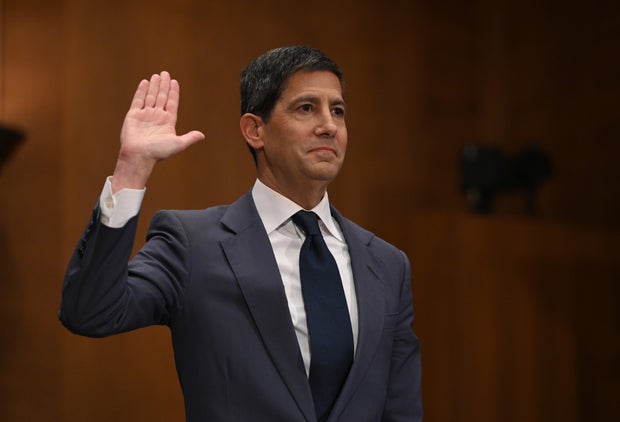
Warsh has been a frequent critic of the Fed, questioning everything from the size of its balance sheet and its approach to regulating banks, to the ways it uses data and communicates to the public. Warsh has also signaled at times over the last year that he’s open to lowering interest rates, though in his prior run as a Fed governor, he was known as more of a hawk, focused on inflation risks and wary of overly loose monetary policy.
Mr. Trump has made no secret of his desire for the Fed to lower interest rates, calling Powell a “moron” and a “stubborn mule” for not agreeing to aggressively slash rates. The Fed faces tough trade-offs in its rate-setting decisions: Lowering them can boost economic growth, but sometimes at the cost of causing inflation to heat up.
Since joining the Fed board last fall, Miran has dissented from every decision by the Fed’s interest rate-setting Federal Open Market Committee. When the 12-member panel left rates stable in its three meetings so far this year, Miran called for rate cuts. When the panel had reduced rates for its final three meetings of 2025, Miran argued the cuts should’ve been larger.
In confirmation hearings, Warsh promised to safeguard the Fed’s power to set interest rates independently. He said Mr. Trump “never asked me to predetermine, fix or decide on any interest rate decision, nor would I ever do so.”
“I will be an independent actor if confirmed as chair of the Federal Reserve,” he said last month.
Warsh’s confirmation was thrust into uncertainty earlier this year, after Powell revealed that the Fed had received subpoenas as part of a criminal probe into his testimony to the Senate about a multibillion-dollar renovation to the central bank’s headquarters. Powell argued the investigation was an attempt to intimidate him, which prosecutors deny. A judge quashed the subpoenas, finding they were intended to “harass” Powell into either lowering rates or resigning.
The investigation worried some Senate Republicans, with Sen. Thom Tillis of North Carolina refusing to vote any Fed nominees out of the Senate Banking Committee unless the investigation ended.
Tillis lifted his block on nominees after U.S. Attorney for D.C. Jeanine Pirro said last month her office would close its probe. Pirro said the Fed’s Inspector General will look into the issue, and she will “not hesitate to restart a criminal investigation should the facts warrant doing so.”
As a member of the seven-person Fed board, Warsh will serve with two governors who were nominated during Mr. Trump’s first term, plus three Biden nominees. Mr. Trump’s attempts to fire one of the Biden picks have been blocked in court so far.
And, at least for now, Powell will round out the board. He has said he will remain a rank-and-file member of the Fed’s Board of Governors until he’s confident the investigation is “well and truly over,” making him the first outgoing Fed chair in more than 75 years to stick around after his chairmanship is up.
Powell has not specified how long he will stay on the board. His term ends in January 2028. He has promised to keep what he said would be a “low profile.”