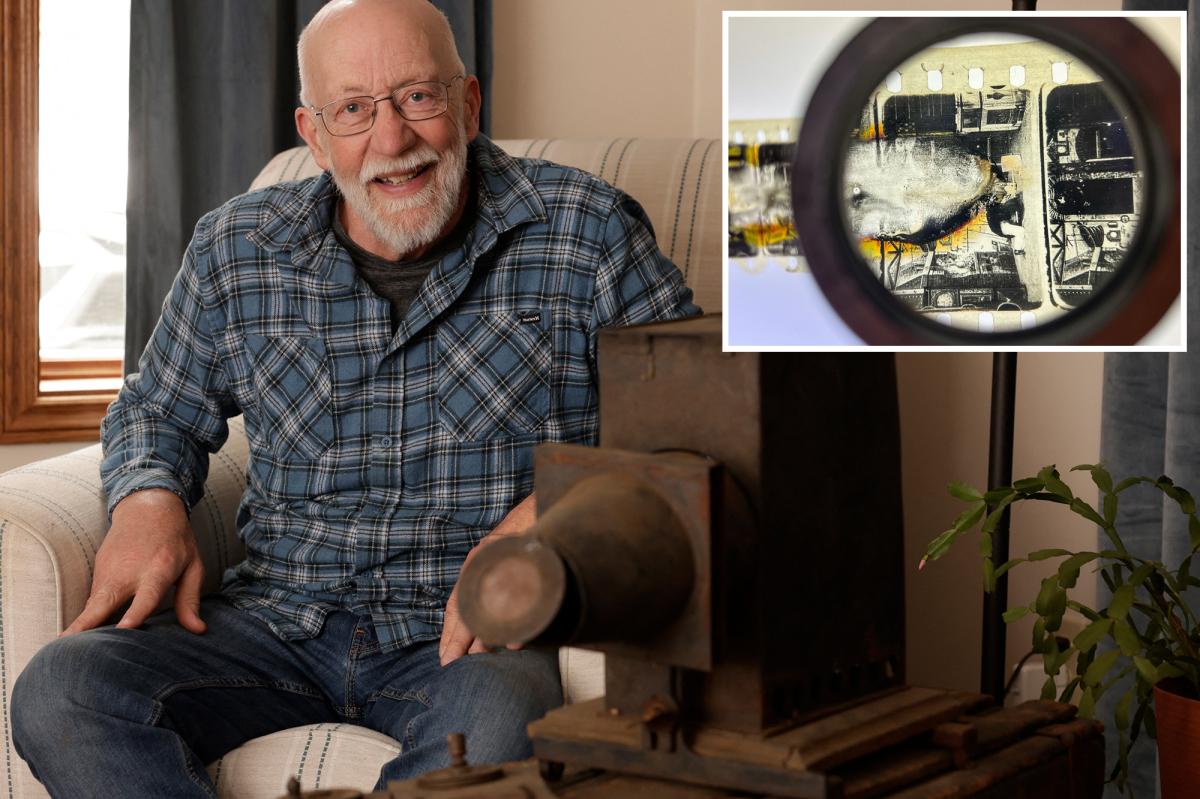


A Pennsylvania resident faced years of frustration trying to find a new home for his great-grandfather’s collection of silent films, until a surprising discovery by the Library of Congress revealed he was in possession of the last known copy of the world’s earliest science fiction film.
Bill McFarland had been hauling two dusty trunks filled with his great-grandfather’s films to antique shops and museums, and even listed them on eBay, but found little interest. It wasn’t until a film digitizing company recognized their historical significance and directed him to the Library of Congress, as reported by the Times Observer, that the true value was uncovered.
Upon receiving the donated collection, archivists at the library made an astonishing find: a 56-second film from 1897 titled “Gugusse et l’Automate” or “The Clown and the Automaton.” This film is believed to be the earliest known science fiction movie ever created, and it was the last surviving original copy.
The collection originally belonged to McFarland’s great-grandfather, William DeLyle Frisbee, affectionately known as “Professor Frisbee.” He was a traveling entertainer who, beginning in the late 1800s, toured rural areas in northwestern Pennsylvania and northeastern Ohio, performing in schoolhouses and churches.
Frisbee’s show included a variety of items such as hand-painted glass magic lantern slides, an Edison phonograph, and eventually silent films on nitrate film—a format McFarland learned was so volatile it could ignite even underwater.
After the trunks had languished in storage for many years, McFarland embarked on a mission to find them a fitting home, he shared with the outlet.
McFarland’s friend Dan Sorensen helped shopped the collection to antique stores, museums and online film forums, but nobody wanted them until the Library of Congress recognized for the first time how unique the collection was, reports said.
The William DeLyle Frisbee Collection, which contains 42 films, now rests in a climate-controlled vault at the Packard Campus in Virginia — a Cold War-era bunker once built for the Federal Reserve Bank and later refurbished into a state-of-the-art film preservation facility before being donated back to the government.


