
Share this @internewscast.com
In a renewed legal battle, the defense team for Luigi Mangione, accused of assassinating a CEO, is once again challenging the admissibility of incriminating evidence found in his backpack, this time in a New York state court. This comes despite a prior defeat on the same issue in federal court earlier this year.
Prosecutors argue that the search, which uncovered what is believed to be the murder weapon and a manifesto critical of the health insurance industry, was conducted lawfully and appropriately.
Mangione, aged 27, faces charges of murdering UnitedHealthcare CEO Brian Thompson, who was 50, on December 4, 2024. The assassination allegedly took place as Thompson was shot in the back near a Manhattan hotel, where a shareholder meeting was scheduled to take place later that day.
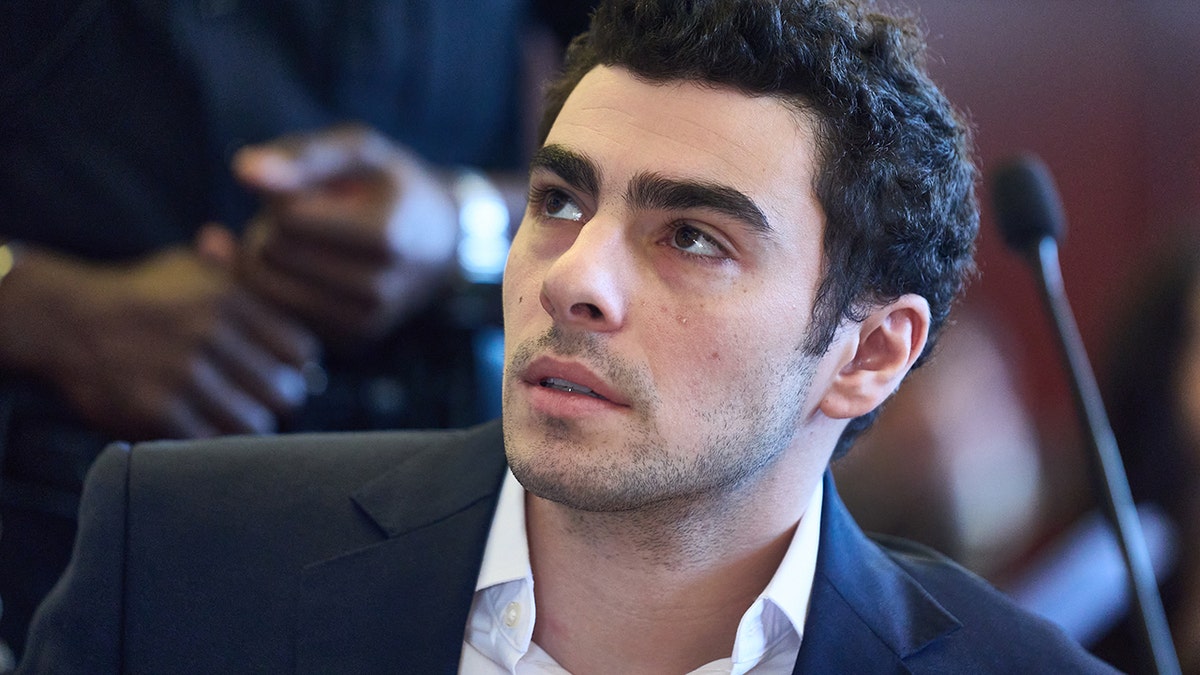
Luigi Mangione made an appearance in Manhattan Supreme Court for a hearing on the suppression motion, as both the prosecution and defense near the conclusion of their arguments on Thursday, December 18, 2025. (Photo by Curtis Means for Daily Mail via Pool)
Prosecutors state that Mangione fled to Altoona, Pennsylvania, where he was apprehended after patrons at a McDonald’s recognized him from a wanted poster and alerted authorities.
The crux of the defense’s argument is the legality of the search conducted on Mangione’s backpack at the time of his arrest. They contend that New York’s laws on search and seizure should govern the case, as the trial is set to take place there.
Read the filing:
Authorities searched the bag multiple times after Mangione’s arrest in the eight hours before obtaining a search warrant, defense lawyers wrote in a letter to Manhattan Judge Gregory Carro.
They have claimed that the bag search was inappropriate because it was no longer in Mangione’s “possession” once he was arrested and that the claim that they were looking for potentially dangerous material, like a bomb, was a false pretext.

The suspected gunman in UnitedHealthcare CEO Brian Thompson’s murder, believed to be Luigi Mangione, is seen flirting with a hostel employee on surveillance footage before the Dec. 4 shooting. (NYPD)
“The totality of the circumstances demonstrates that the officers’ claim about a bomb was a blatantly false and pretextual justification for conducting an evidentiary search,” wrote defense lawyer Karen Friedman Agnifilo.
And they argued that police did not write down non-evidentiary items in the bag when filling out an inventory and alleged that police improperly read Mangione’s journals before they obtained a search warrant.
“[Altoona Police] Sergeant Heuston did not happen to ‘notice’ Mr. Mangione’s writings; he purposefully read through the journal looking for incriminating writings, photographed what he deemed to be incriminating writings and forwarded them to the NYPD,” the filing reads.

UnitedHealthcare CEO Brian Thompson pictured in an undated portrait provided by UnitedHealth. The executive was shot from behind and killed on his way to an investor conference in New York City in what prosecutors have described as a politically motivated assassination. (AP Photo/UnitedHealth Group via AP)
Since the first responding officer testified that he recognized Mangione from the NYPD’s highly publicized wanted poster and Altoona police soon were in contact with their NYPD counterparts, Mangione’s defense argued that police should have known their handling of the case would be subject to New York law.
They have also argued that additional searches at the police precinct building were also improper.
The defense alleges that one officer was motivated “to get credit for finding the alleged murder weapon in a case that had captivated the country for nearly five days” and made sure her body camera audio was working before opening the compartment where she found a gun.
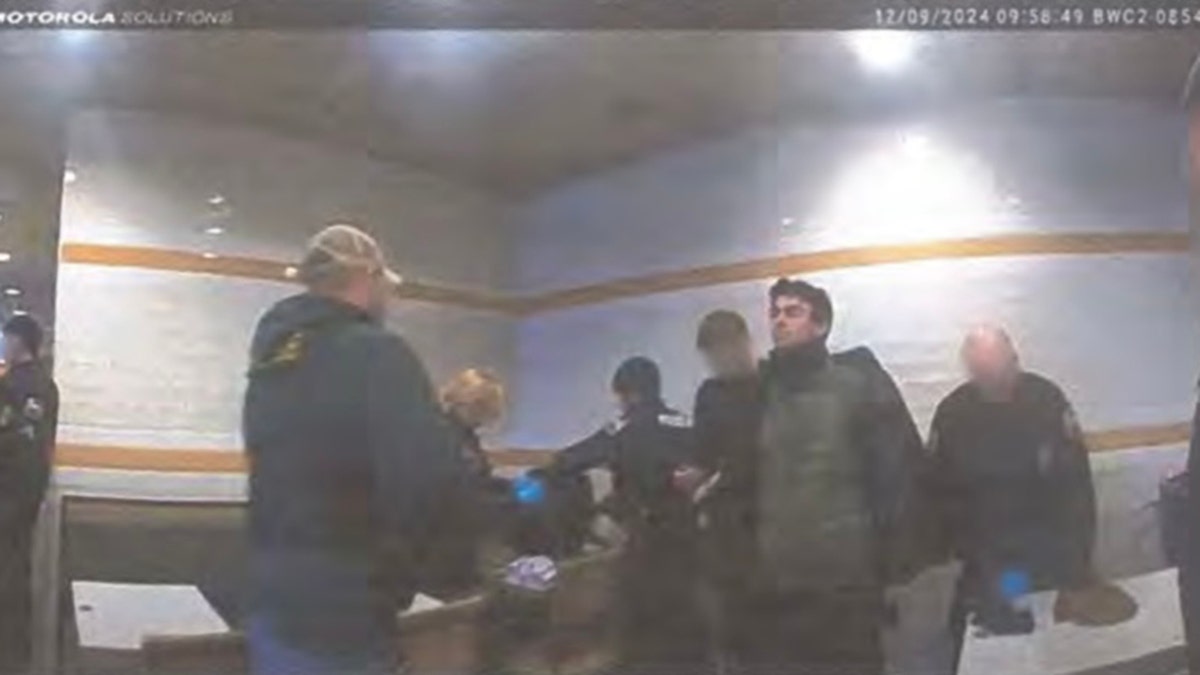
Luigi Mangione is confronted by Altoona, Pennsylvania police in a McDonald’s shortly before his arrest for allegedly murdering UnitedHealthcare CEO Brian Thompson. (Altoona Police Department)
Although Mangione faces serious charges in the alleged assassination, his legal team has won a string of victories in both state and federal courts — having the top charges in each case thrown out. As a result, if convicted of the top remaining charges, he would not face the potential death penalty federally or life in prison without the possibility of parole in New York.
In Mangione’s federal case, which is a separate legal proceeding, U.S. District Judge Margaret Garnett ruled that the backpack evidence could stand in his federal trial in a Jan. 30 order, while also dealing a blow to the prosecution and taking the death penalty off the table.
He may lose one of his high-powered lawyers in that case after the victory. Garnett has asked whether taxpayer funding for attorney Avi Moskowitz, an expert death penalty defense lawyer, is still necessary. Federal prosecutors declined to take a position on the issue, and the defense filed an ex parte letter under seal.
Both trials are slated to begin later this year, but it’s not clear whether the scheduling is realistic.
Thompson, a father of two from Minnesota, had come to New York City to meet with Wall Street investors. Surveillance video shows the last moments of his life — when a gunman approached him from behind on the sidewalk and opened fire.
Carro is expected to announce his ruling on the motion to suppress on May 18, which is also the date of Mangione’s next scheduled hearing at the state level.
<!–>
–>