
Zelenskyy: War initiative no longer in Putin’s hands
Ukrainian President Volodymyr Zelenskyy said Ukraine’s armed forces have undergone a sweeping transformation and are now backed by more than 500 defense companies. He also claimed Russia is losing about 30,000 troops a month, arguing that the momentum in the war is no longer controlled by Russian President Vladimir Putin.
Poland, the NATO country closest to the Ukraine-Russia battlefield, scrambled fighter jets and put its air defenses on high alert early Thursday after Russia fired more than 70 missiles and about 280 drones at targets across Ukraine. The attacks killed at least eight people and injured dozens, striking areas from Kyiv to the western city of Lviv.
Zelenskyy, who had just returned from a U.S. trip that included a meeting with President Donald Trump and attendance at the funeral of the late Sen. Lindsey Graham, R-S.C., said the assault underscored Ukraine’s urgent need for more Western-supplied interceptors, especially systems capable of stopping ballistic missiles.
“The protection of people’s lives depends directly on their willingness” to send Ukraine air-defense missiles, Zelenskyy said, directing the appeal at Kyiv’s allies.
Later Thursday morning, the European Union released $4 billion in funding for Ukraine to support the purchase of additional drones, missiles, air-defense systems and fighter jets, the European Commission said.
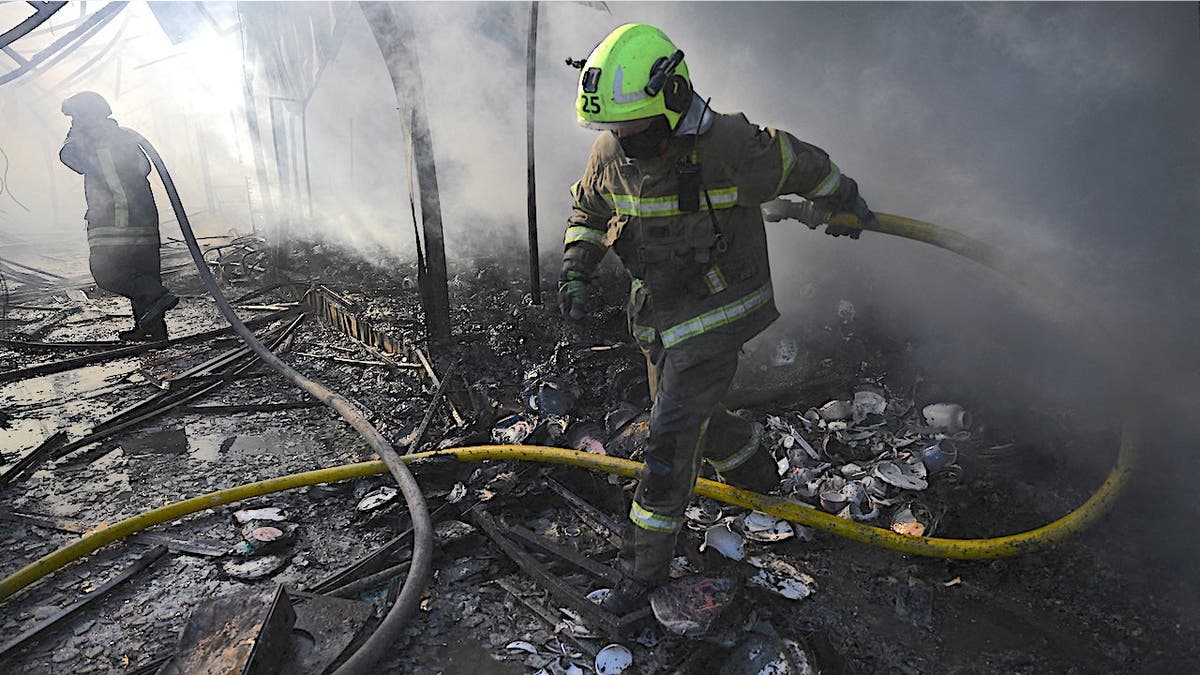
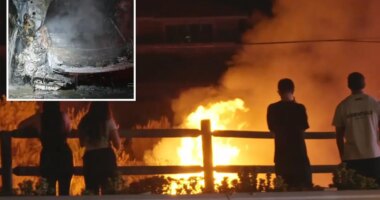
Ukrainian firefighters battled a blaze at a market after a Russian missile strike hit Kyiv overnight into Thursday morning. Authorities said Russian attacks killed at least eight people and wounded more than a dozen across Ukraine, prompting renewed calls from Kyiv for allies to provide more air-defense support. (AFP)
The latest payment comes from a loan package of more than $100 billion approved by the EU earlier this year. It follows earlier installments of roughly $3.5 billion on June 25 and $4.5 billion on June 30.
Polish forces reported detecting an unidentified object traveling west through the country’s airspace shortly before 4 a.m. An F-16 was sent to intercept it, but the object vanished from radar minutes later. Officials later discovered a crater about 33 feet wide and debris scattered across farmland near Tarnawa-Kolonia, roughly 1.2 miles from the nearest buildings.
Polish Prime Minister Donald Tusk said initial evidence indicated the object was a Russian Kh-101 missile, although investigators were still working to confirm its type and origin.
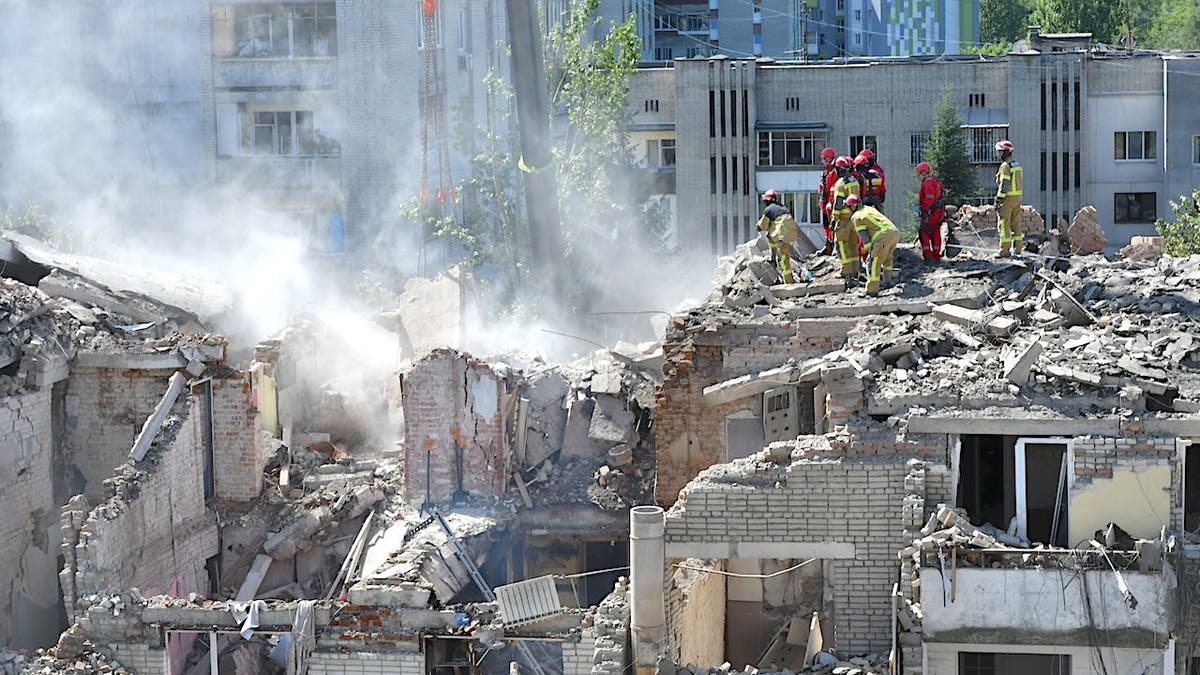
Emergency workers use heavy equipment to clear rubble from apartment buildings in Lviv, the westernmost city in Ukraine and the closest to NATO ally Poland, after a Russian missile attack Thursday, July 30, 2026. (Anadolu)
“All the indications are that it was a Russian Kh-101,” Tusk said, adding that Polish forces were prepared to shoot it down if it had continued flying toward a populated area.
He added the U.S. is interested in joining the investigation, which has initially determined the missile was not intended for Poland territory. The fate of the Ukraine-Russian war might be decided within the next 100 days, Tusk told reporters.
The threat to a NATO ally is a new frontier in the long-running war and comes after Zelenskyy pressed senators to advance Graham’s sweeping sanctions package. Also, Trump and Zelenskyy discussed U.S. licenses allowing Ukraine to produce Patriot interceptors, along with other defense cooperation and efforts to revive stalled diplomacy with Moscow.
Six people, including two girls ages 5 and 12, were killed when a Russian Iskander-M ballistic missile struck a private home housing a large family near Kryvyi Rih, according to local officials. Seven others were reported killed in Kyiv and elsewhere in the Dnipropetrovsk and Poltava regions as the casualty count rose during rescue operations.
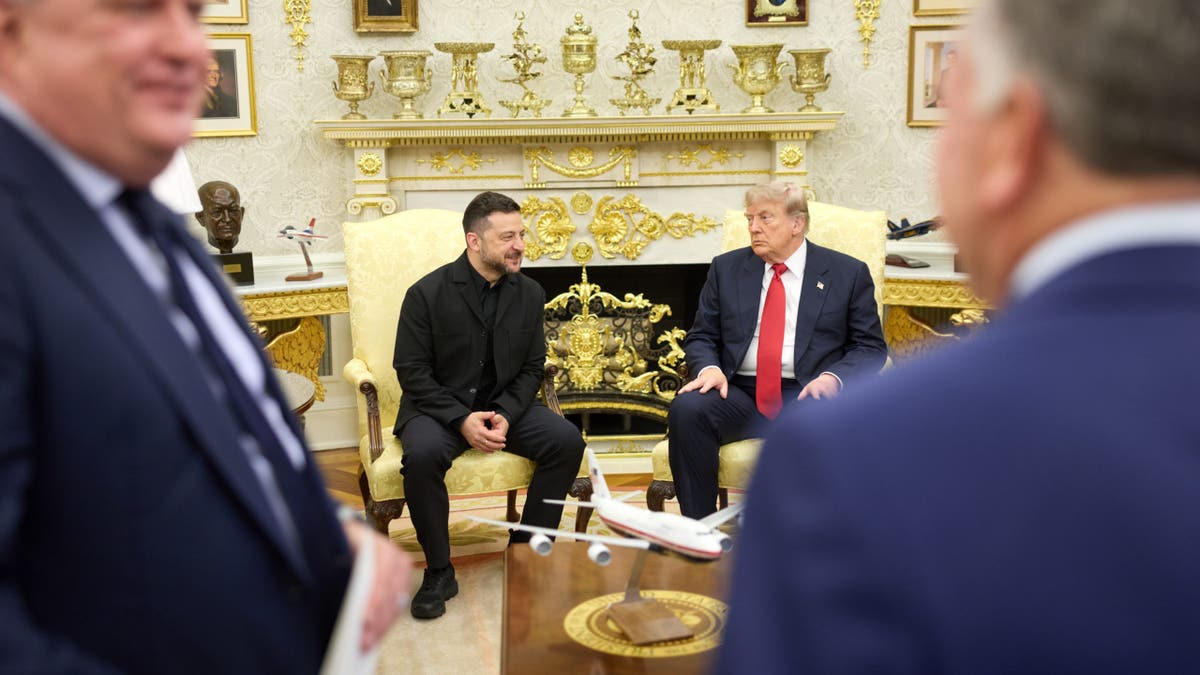
Ukrainian President Volodymyr Zelenskyy met with President Donald Trump at the White House during his Tuesday visit to Washington, D.C.
“A dark night,” Oleksandr Vilkul, the head of Kryvyi Rih’s defense council, wrote on Telegram. Eight people were wounded in the strike on the home.
The person killed in Kyiv was a 31-year-old man, while two others were wounded, according to Ukrainian police. Russian strikes damaged residential buildings, vehicles, storage facilities, a market and a garage complex in the capital, where air raid warnings lasted more than five hours and thousands of residents sheltered in subway stations.
In Lviv, about 40 miles from the Polish border, emergency crews searched damaged apartment buildings for people trapped beneath concrete and debris. Thirty people, including children, were reported injured. More than 20 residential buildings, a school and two kindergartens were damaged, officials said.
“I was terrified watching the rescuers go beneath those concrete slabs,” one Lviv resident told Reuters as crews pulled a boy from a damaged building.
Ukraine’s air force said its defenses intercepted 55 missiles and 265 drones. But only one of nine ballistic missiles was shot down, while 11 missiles and 17 drones struck targets at 20 locations.
The U.S.-made Patriot is the only system currently in Ukraine’s arsenal capable of reliably intercepting Russian ballistic missiles, which travel at several times the speed of sound. Zelenskyy has repeatedly warned that Patriot interceptors are arriving too slowly and in insufficient numbers.
During his Tuesday meeting with Trump, Zelenskyy said the leaders discussed licenses for Patriot interceptor production in Ukraine. He also met with Lockheed Martin executives and told senators that domestic production would be a long-term solution but would not address Ukraine’s immediate shortage of missiles. European countries have offered to pay for additional U.S.-made interceptors.
Zelenskyy’s Washington visit coincided with Senate consideration of the Lindsey O. Graham Sanctioning Russia and Iran Act of 2026, named for the longtime defense hawk and outspoken Ukraine supporter who died unexpectedly earlier this month.
The Senate voted 86-12 Tuesday to clear an initial procedural hurdle and voted 84-12 Wednesday to formally proceed with the legislation. Additional votes were still required before final passage.
The package would impose sanctions on Russian officials, oligarchs, financial institutions, energy projects and vessels accused of helping Moscow evade existing restrictions. It would also authorize tariffs of up to 100% on goods from the five largest purchasers of Russian oil and natural gas and the leading countries facilitating sanctions evasion.
Graham negotiated the revised package with the White House shortly before his death. The legislation also includes an extension of sanctions targeting Iran’s energy and weapons sectors, a provision sought by the Trump administration.
Zelenskyy met with a bipartisan group of senators before the procedural votes and called the legislation an important signal to Russia, Europe and the Ukrainian people. He watched the Senate vote from the chamber’s gallery after attending Graham’s funeral at Washington National Cathedral.