
Share this @internewscast.com
In a recent exclusive interview with Fox News Digital, U.S. Ambassador to NATO, Matthew Whitaker, addressed rising European concerns regarding the United States’ focus on Greenland. This follows France’s announcement of new military exercises with Denmark. Whitaker emphasized that Arctic security is a fundamental American defense interest, suggesting that Europe often “overreacts” in such matters.
When questioned about whether the discord stems from American influence or European inactivity, Whitaker clarified, “This issue is primarily between the United States, Denmark, and Greenland.”
He further explained that Greenland’s strategic importance has been evident for years, especially as climate change causes ice melting, altering the Arctic landscape and opening new maritime routes. “The security of the high north, which I’ve long discussed, is paramount,” he stated. “As ice recedes and new passages emerge in the Arctic, ensuring the security of Greenland—America’s northern frontier—is vital.”
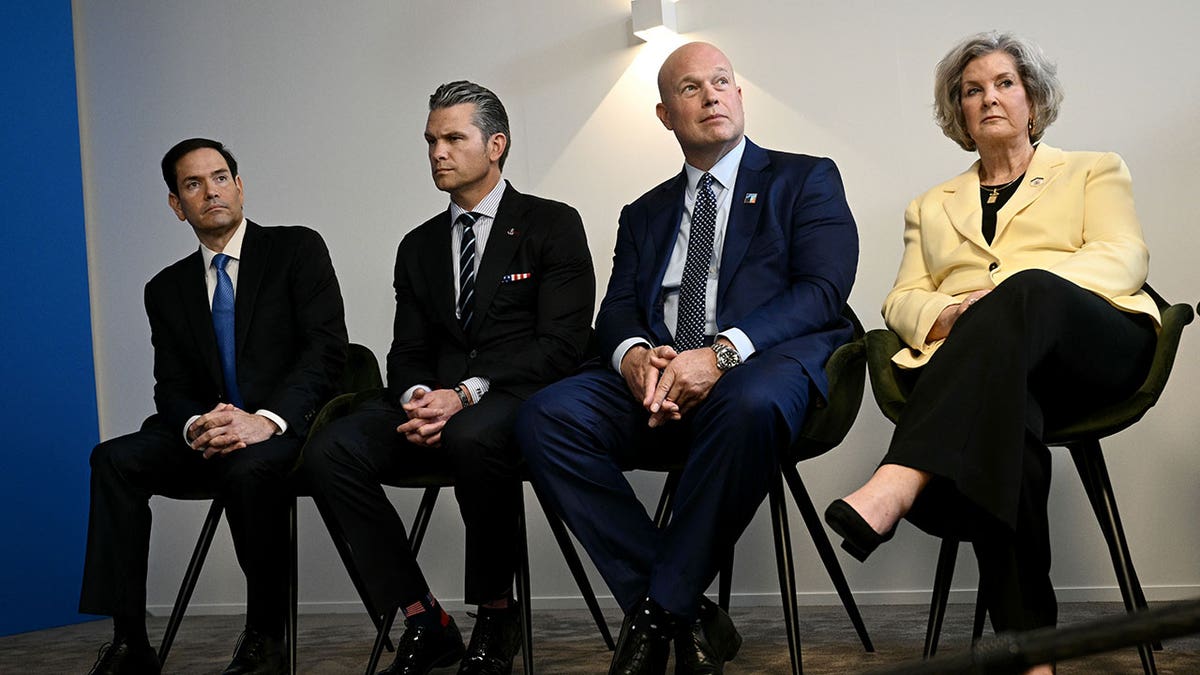
Pictured from left to right are Secretary of State Marco Rubio, Secretary of War Pete Hegseth, U.S. Ambassador to NATO Matthew Whitaker, and White House Chief of Staff Susie Wiles during the NATO summit on June 25, 2025, in The Hague, Netherlands. (Photo by Brendan Smialowski – Pool/Getty Images)
Whitaker emphasized Greenland’s strategic location as pivotal to U.S. defense strategies. “Considering Greenland as a gateway to naval resources, maintaining vigilance and strengthening this region is essential for the long-term security of the United States,” Whitaker noted.
He highlighted recent diplomatic efforts as a means to address the issue without escalating tensions. “There was a very effective meeting between Danish and Greenlandic officials, Vice President Vance, and Secretary of State Rubio, which I believe will lead to a constructive outcome,” he concluded.
Still, he cautioned European allies against inflaming tensions. “Europe sometimes has a tendency to overreact anytime that an issue is put out on the table,” Whitaker said. “This is one of those things where cooler heads need to prevail.”
US COMMANDER SAYS RUSSIA AND CHINA’S ARCTIC PATROLS ARE ‘NOT FOR PEACEFUL PURPOSES’
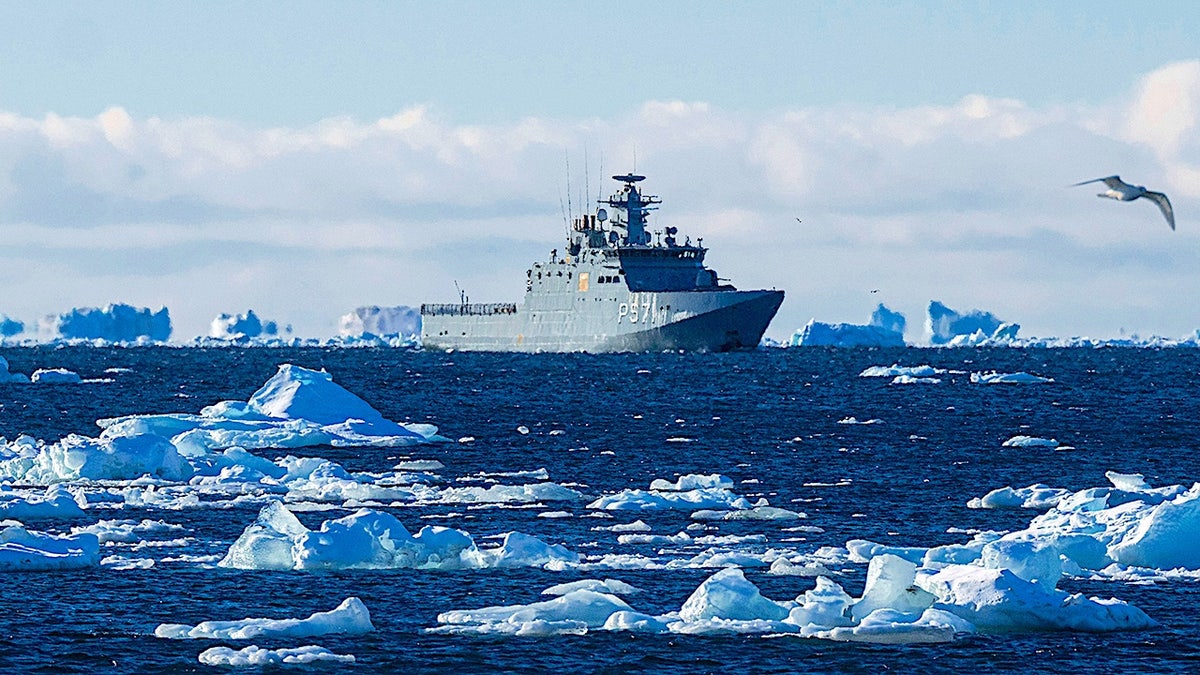
Military vessel HDMS Ejnar Mikkelsen of the Royal Danish Navy patrols near Nuuk, Greenland, Wednesday, March 5, 2025. (Evgeniy Maloletka/AP Photo)
NATO, deterrence and the “Reagan spirit”
Speaking from the Ronald Reagan Presidential Library, Whitaker used Reagan’s “peace through strength” doctrine as justification for pushing NATO allies to spend more and move faster.
“The most important thing that we’re doing at NATO is, one, the United States is strong. Nobody denies that. We have demonstrated through Midnight Hammer, through what we did in Venezuela and elsewhere, that the United States is capable and can project power. We want all of our allies inside of NATO to be equally as strong, and they’re not at this point in time,” he said.
He added, “Some of them have certainly become more capable, and that’s why you can’t just paint with a broad brush when it comes to all of our NATO allies. But there are some that are not.”
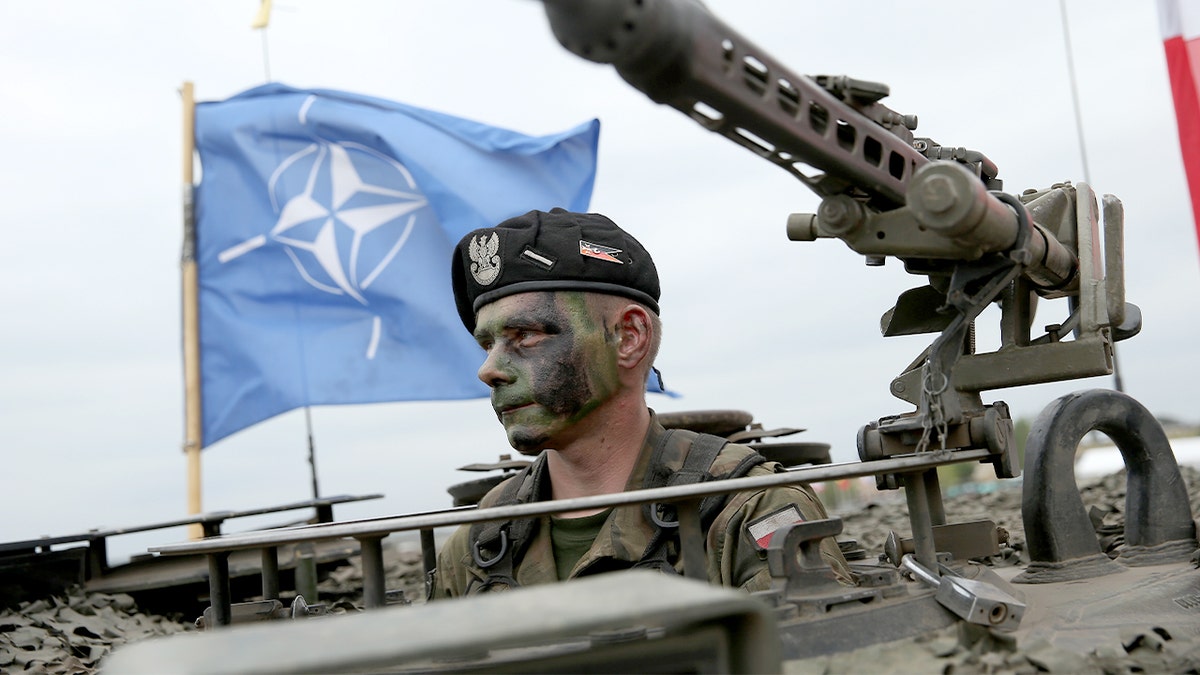
A Polish Army soldier sits in a tank as a NATO flag flies behind during the NATO Noble Jump VJTF exercises on June 18, 2015, in Zagan, Poland. (Sean Gallup/Getty Images)
“Europe and the EU are going to have to untie their hands from behind their back,” he continued. “They’re going to have to deregulate, they are going to have to find more capital and economic growth, because at the end of the day, that’s what’s going to allow them to live up to the promises they’ve made to increase their defense spending and therefore their defense capabilities.”
He said, “One of the things that I’m talking about constantly with our friends downtown in the EU,” Whitaker added, “is that they have to get their economy going, and there are proven, tried-and-true ways to do it.”
Whitaker said his top priority is ensuring NATO allies follow through on the major defense commitments agreed to last year in The Hague.
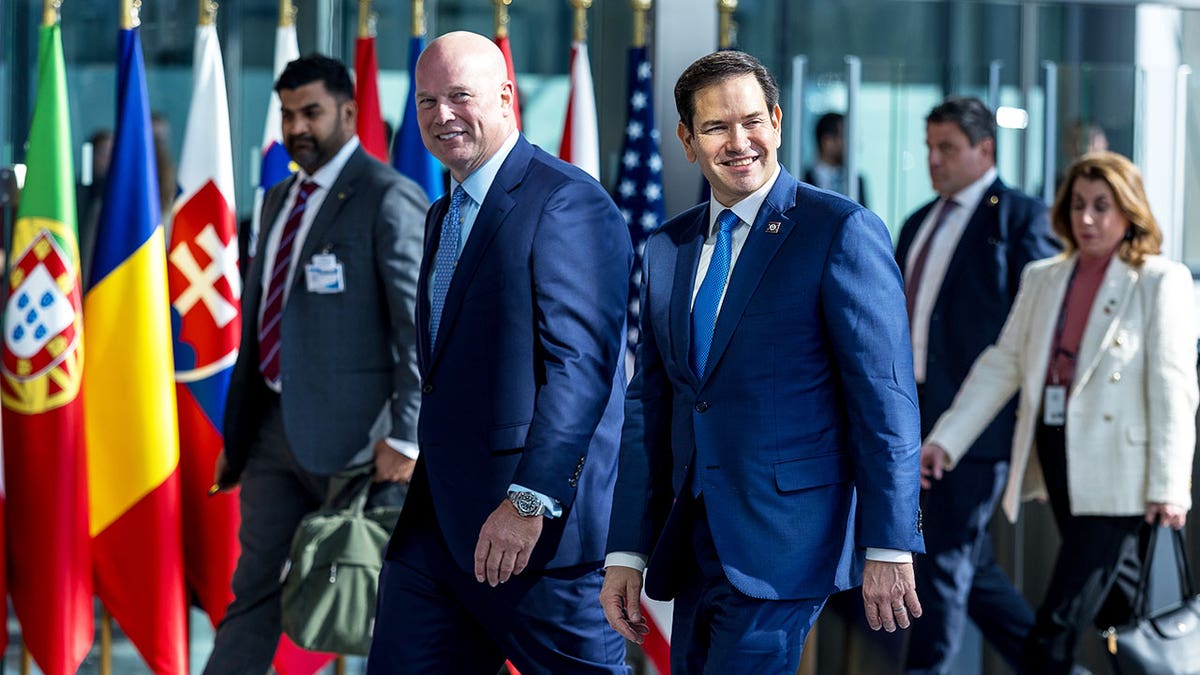
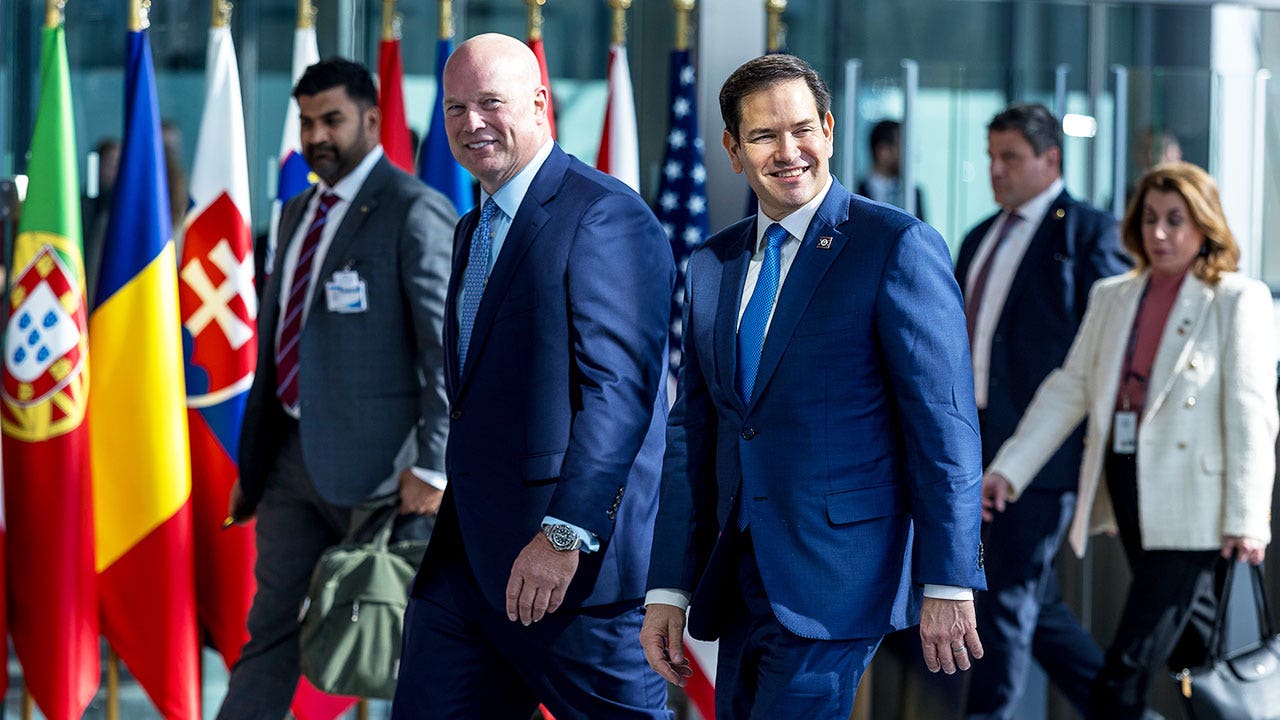
US Secretary of State Marco Rubio (R) and the US Permanent Representative to NATO Matthew Whitaker (L) arrive at NATO Headquarters on the first day of the NATO Foreign Ministers’ Meeting on April 03, 2025 in Brussels, Belgium. (Omar Havana/Getty Images)
“This is number one on my list right now,” he said, “making sure that the political commitments we made in The Hague turn into real military capabilities at NATO.”
He said proximity to Russia has shaped how seriously countries take the threat.
“You look at the Baltic countries like Latvia, Lithuania and Estonia, and you look at the Nordic countries… they’re very aware of the threats that Russia [poses],” Whitaker said, citing Russia’s 2014 annexation of Crimea and its 2022 invasion of Ukraine.
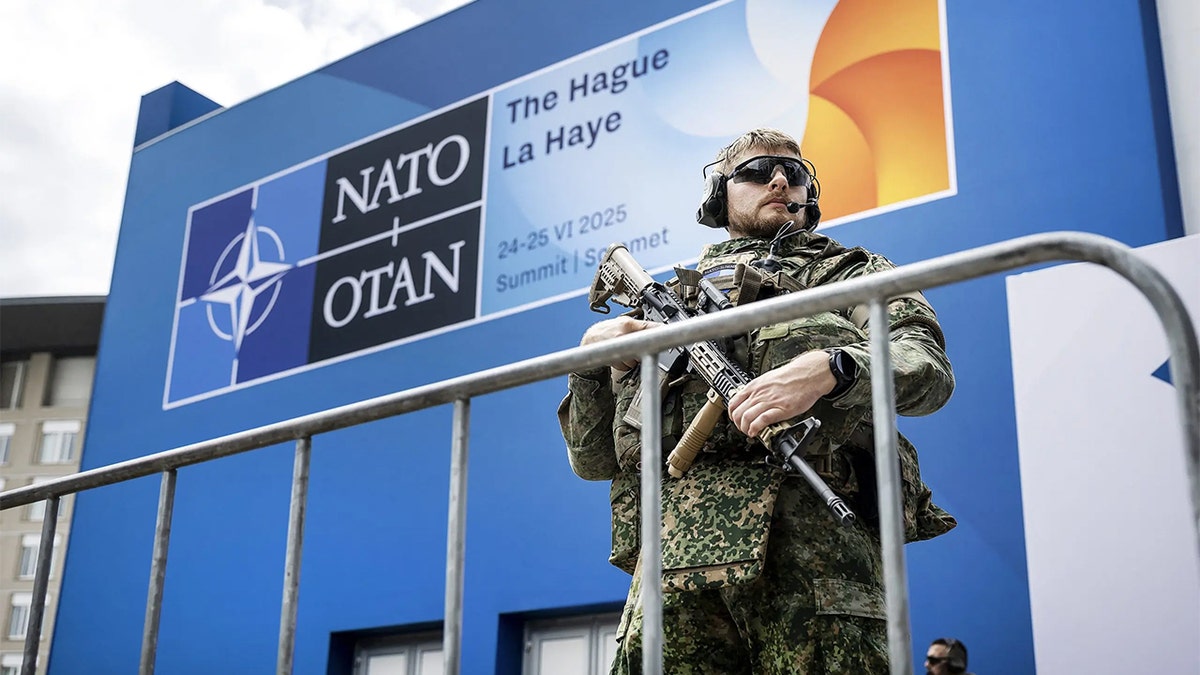
A NATO military force stands guard ahead of the two-day NATO summit at the World Forum, in The Hague, on June 22, 2025. (Remko de Waal /ANP/AFP via Getty Images)
Poland, he added, stands out. “Poland is clear-eyed,” Whitaker said. “They’re gonna spend over 5% on core defense in the coming year or two.”
Others, he said, are still lagging. “I keep a dashboard, a one-page dashboard on my desk that is updated regularly,” Whitaker said. “It’s too soon to tell.” “It has to be on capabilities,” he said. “It has to make them stronger, ready to fight tonight.”
“President Trump announced a $1.5 trillion defense budget,” Whitaker said. “We’ve demonstrated our capabilities that nobody else can match right now.”
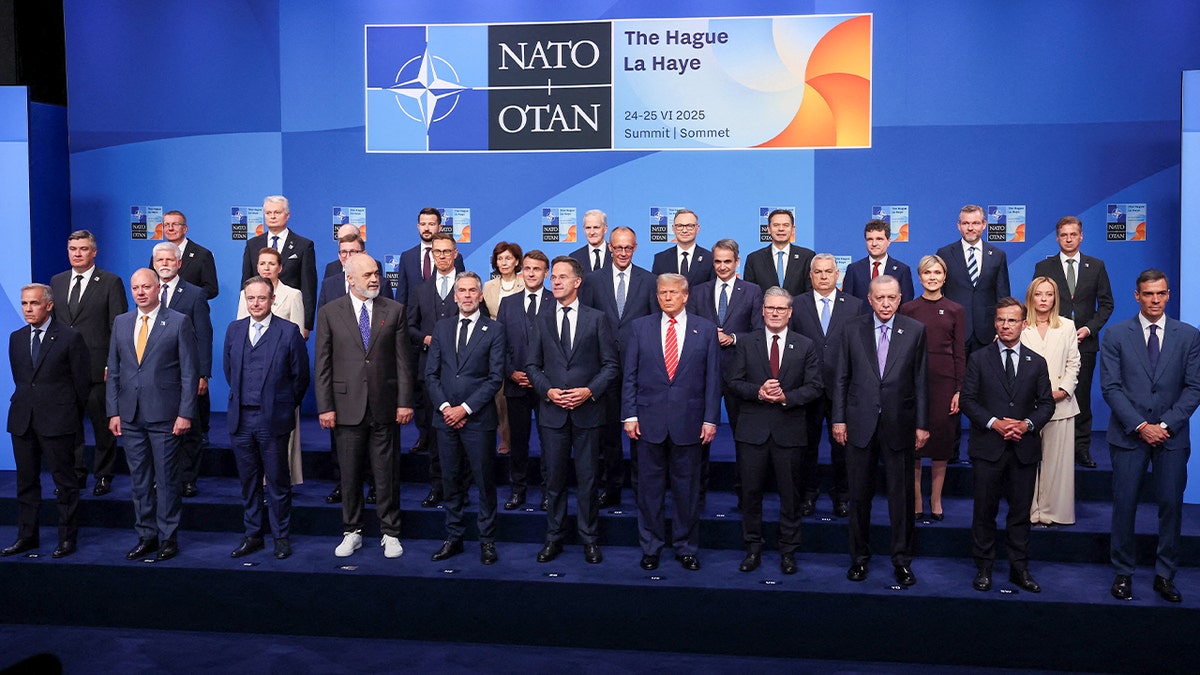
NATO leaders pose in this shot taken in June. Military leaders are meeting in Washington on Tuesday evening to discuss security options for Ukraine. (Claudia Greco/Reuters)
“I’m here at the Reagan Library, and it reminds me, Ronald Reagan really was able to put those policies in place to spur growth,” Whitaker said. “President Trump certainly has followed that same tradition, to unleash the American entrepreneur, unleash American innovation, and get out of the way, get the regulations out of the way so that American companies can grow and prosper.”
As NATO moves forward, Whitaker said pressure on allies will remain. “We’re asking our European and Canadian allies to do more,” he said. “So far, so good.”