
The Founding Fathers left a vast paper trail, but historians are still uncovering new evidence that adds nuance to the public’s understanding of America’s early leaders.
In recent decades, tools such as archaeology, DNA testing and deeper archival research have brought forgotten records, artifacts and long-overlooked details from the nation’s founding era back into view.
These discoveries have reshaped parts of the historical record, offering a more complex picture of the founders’ personal lives, political legacies and contradictions.
Thomas Jefferson & Sally Hemings
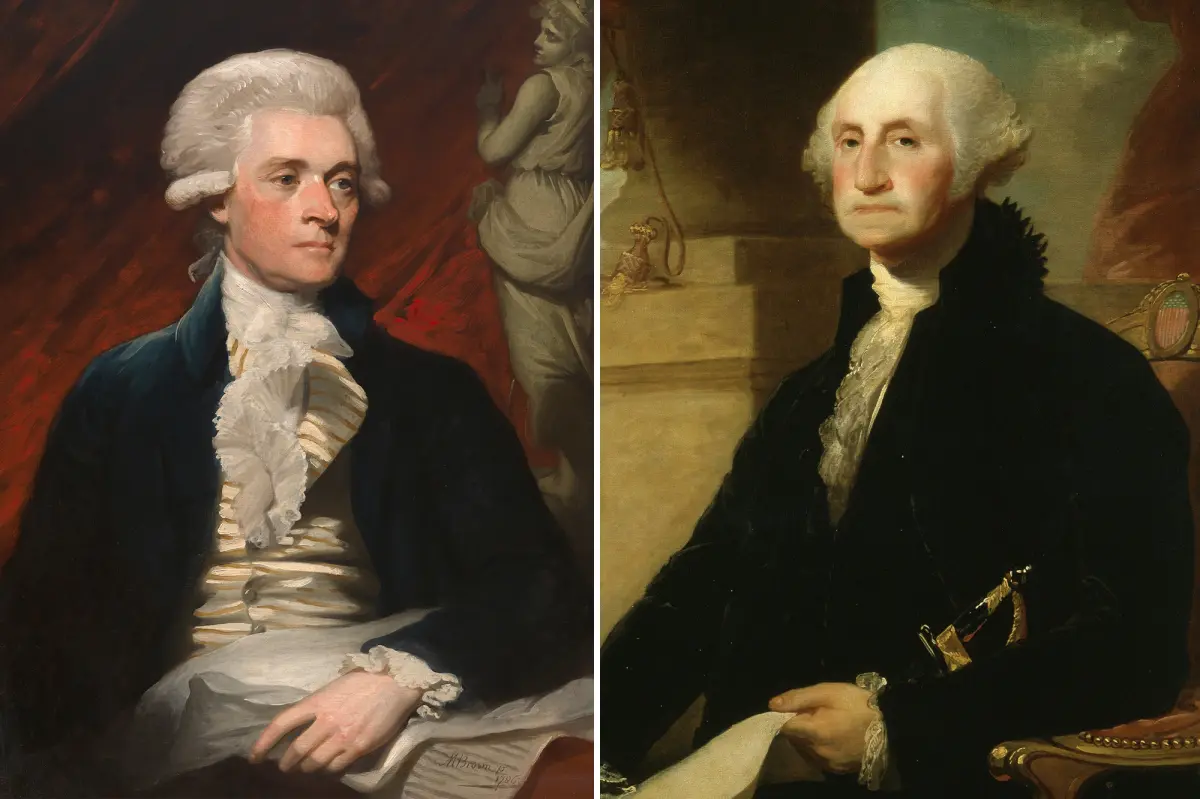
One of the most significant reassessments involves Thomas Jefferson, the principal author of the Declaration of Independence. According to the Thomas Jefferson Foundation (TJF), Jefferson fathered at least six children with Sally Hemings, an enslaved woman at Monticello.
Rumors that Jefferson had children with an enslaved woman circulated during his lifetime, but the claim gained stronger historical footing after a landmark 1998 DNA study provided scientific evidence that appears to support the connection.
Hemings spent time in Paris from 1787 to 1789, where she served in Jefferson’s household as a maid and domestic servant.
“While in Paris, where enslaved people could petition for their freedom, she negotiated with Jefferson to return to enslavement at Monticello in exchange for ‘extraordinary privileges’ for herself and freedom for her unborn children,” the TJF states on its website.
“Decades later, Jefferson freed all of Sally Hemings’s children … [he] did not grant freedom to any other enslaved family unit.”
After reviewing documentary, scientific, statistical and oral history evidence, the Foundation concluded that Jefferson most likely fathered Hemings’ children, a position now widely accepted by mainstream historians.
Not all historians agree with that assessment, however.
After reviewing historical evidence, the Thomas Jefferson Heritage Society concluded that Hemings “was only a minor figure in Thomas Jefferson’s life and that it is very unlikely he fathered any of her children,” according to the TJF website.
“This committee also suggested in its report, issued in April 2001 and revised in 2011, that Jefferson’s younger brother Randolph (1755-1815) was more likely the father of at least some of Sally Hemings’s children,” the website adds.
ALSO READ: Unmasking the Church: Hugh Jackman's Faith and Emily Watson's Chilling Accusations
George Washington’s distillery
In 1999, archaeologists at Mount Vernon uncovered the remains of George Washington’s long-lost whiskey distillery — revealing that the first president operated what had become the largest commercial distillery in the US by the time he died in 1799.
Historians had long known that Washington operated a distillery through surviving records, but the archaeological excavation revealed the scale and sophistication of the operation.
The facility was “one of the largest, highest producing operations in the area,” Mount Vernon’s website says.
“The evidence also highlights the fact that this distillery was operating at an industrial scale, compared to the one or two still farmer-distillers common in the 18th and early 19th centuries,” the site adds.
During the excavation, archaeologists uncovered stone foundations, teacups, drinking glasses and evidence of the distillery’s copper stills and boilers, which helped researchers reconstruct how the massive operation functioned.
“Research suggests that George Washington was one of the most innovative and enterprising farmers in America’s history,” Mount Vernon’s website says.
“This entrepreneurial spirit can be seen in such exhibits as the 16-sided treading barn, the gristmill and the distillery.”
Thomas Jefferson’s Declaration draft
In 1947, historian Julian P. Boyd discovered a previously unknown draft of the Declaration of Independence among Jefferson’s papers.
The Library of Congress’s website describes the draft as “brief, but critically important,” noting that it predated the famous “Rough Draught” Jefferson later produced.
Comparing the older fragment and the “Rough Draught,” the historian found that Jefferson revised his language more extensively than previously documented.
The fragment also gave historians a clearer picture of the drafting process, helping them trace Jefferson’s edits alongside revisions made by John Adams, Benjamin Franklin and Congress before the Declaration’s adoption.
“Heavily edited in Jefferson’s clear, precise hand, the fragment proved to be a key component in unraveling the story of the writing of the Declaration,” the website notes.
“The existence of the fragment confirmed the view of those historians, who had argued that a heavily edited draft must have preceded the copy Jefferson had endorsed as the original rough draft.”