

A diverse coalition comprising over 100 groups, including influential teachers unions and several lawmakers, is advocating for legislation to establish a $25 federal minimum wage.
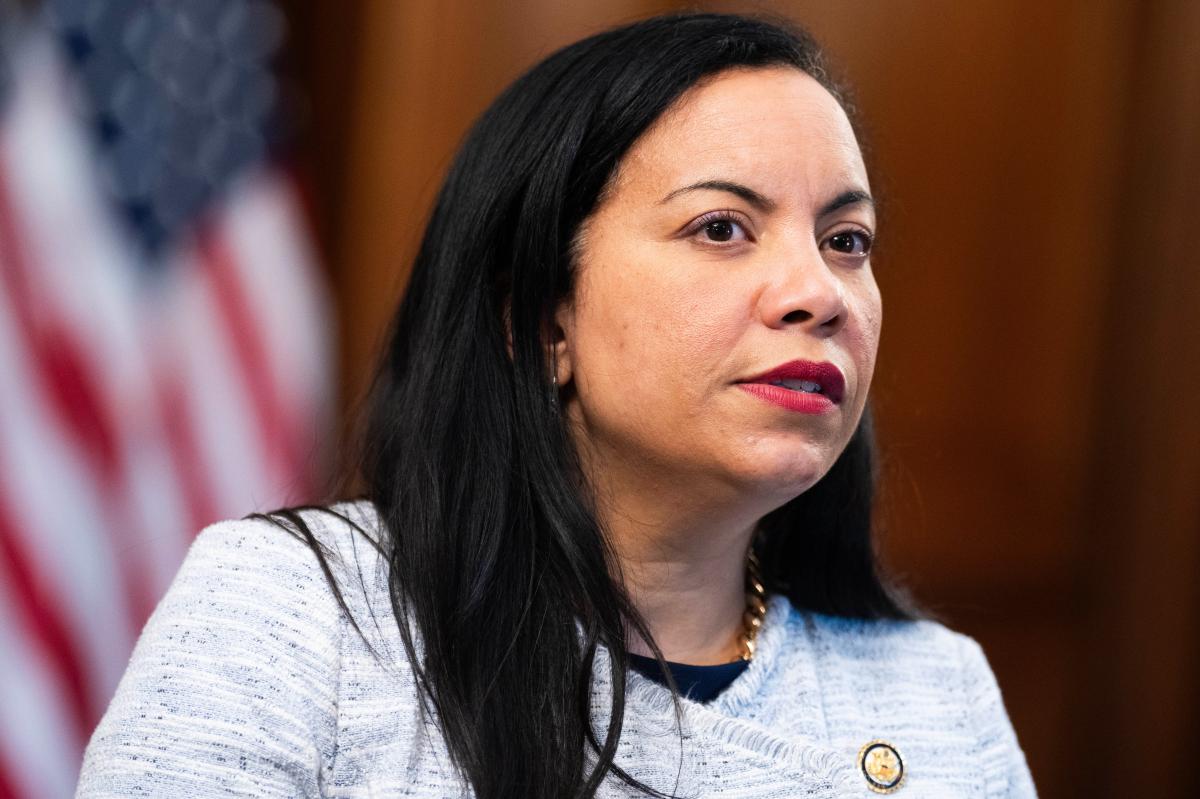
This initiative took a significant step forward as Representatives Delia Ramirez of Illinois and Analilia Mejia of New Jersey unveiled the Living Wage for All Act on Tuesday. This bill aims to elevate the federal minimum wage to $25 per hour while also abolishing subminimum wages.
Rep. Mejia, one of the founding members of the Living Wage for All coalition, is championing this bill as her inaugural legislative endeavor following her decisive victory in a New Jersey House special election, where she triumphed over Republican Joe Hathaway.
Throughout her campaign, Mejia highlighted her commitment to policies such as Medicare for all, instituting a $25 minimum wage, implementing a wealth tax, and dismantling Immigration and Customs Enforcement (ICE).
The Living Wage for All Coalition represents a nationwide movement, uniting over 100 labor, community, civil rights, and economic justice organizations with a shared goal of securing a living wage for every American worker.
Among the key supporters rallying behind Mejia and Ramirez are prominent organizations such as the National Association for the Advancement of Colored People (NAACP), the American Federation of Teachers (AFT), and the National Education Association (NEA), the largest teachers’ union in the country.
Another organization in the coalition, One Fair Wage, advocates for a higher minimum wage across the country.
“This is a worker-led movement that has grown from the groundbreaking Fight for $15 into a nationwide push for a true living wage,” said One Fair Wage president Saru Jayaraman.
“Across the country — from California to the Midwest to the East Coast — workers are organizing for $25 and $30 because that is what it takes to live,” she said. “The polling shows this is not just popular, it is necessary. And ‘for all’ means exactly that: no worker left behind. This is what it looks like when politics begins to catch up to reality — and when democracy delivers real improvements in people’s lives, it becomes tangible. A living wage is how we make that promise real.”
Minimum wage mandate proposals have already made inroads in other major cities.
A minimum wage mandate has gone as high as $30 in Los Angeles through a bill signed by L.A. Mayor Karen Bass, though, planned as a phase-in process with incremental growth until 2030.
On the East Coast, the city council in New York City is weighing a proposal to boost the minimum wage to up to $30, coming after newly elected Mayor Zohran Mamdani’s campaign pledge promoting a “$30 by ’30′” minimum wage message.
One of the members of the Living Wage for All coalition, One Fair Wage, in March launched a ballot initiative in Oakland, California as local officials consider increasing the minimum wage to $30 an hour in partnership with other community organizations, including the United Auto Workers union.
Large businesses with over 100 employees that make $1 billion annually would have until 2030 to raise the minimum wage to $30 an hour.
The initiative is part of a national movement to raise the minimum wage.
Starting in 2024, One Fair Wage advanced ballot measures to raise wages and “end various subminimum wages” in Michigan, Ohio, Arizona and Massachusetts. Including California, the group wants to raise the minimum wage in Illinois, New York, Maryland, Connecticut, Rhode Island, Hawaii, and Puerto Rico.
According to its website, “One Fair Wage is moving legislation and ballot measures in 25 states to raise wages and end subminimum wages for millions of workers — and mobilize millions to vote in the process — by the United States’ 250th Anniversary (2026).”