
The National Oceanic and Atmospheric Administration (NOAA) has announced that this year’s Atlantic hurricane season is expected to experience less tropical activity than usual.
This reduction in storm frequency is attributed to the onset of El Niño, which is anticipated to develop soon and last throughout the hurricane season, as revealed by the agency on Thursday.
The Atlantic hurricane season officially begins on June 1 and runs until November 30.
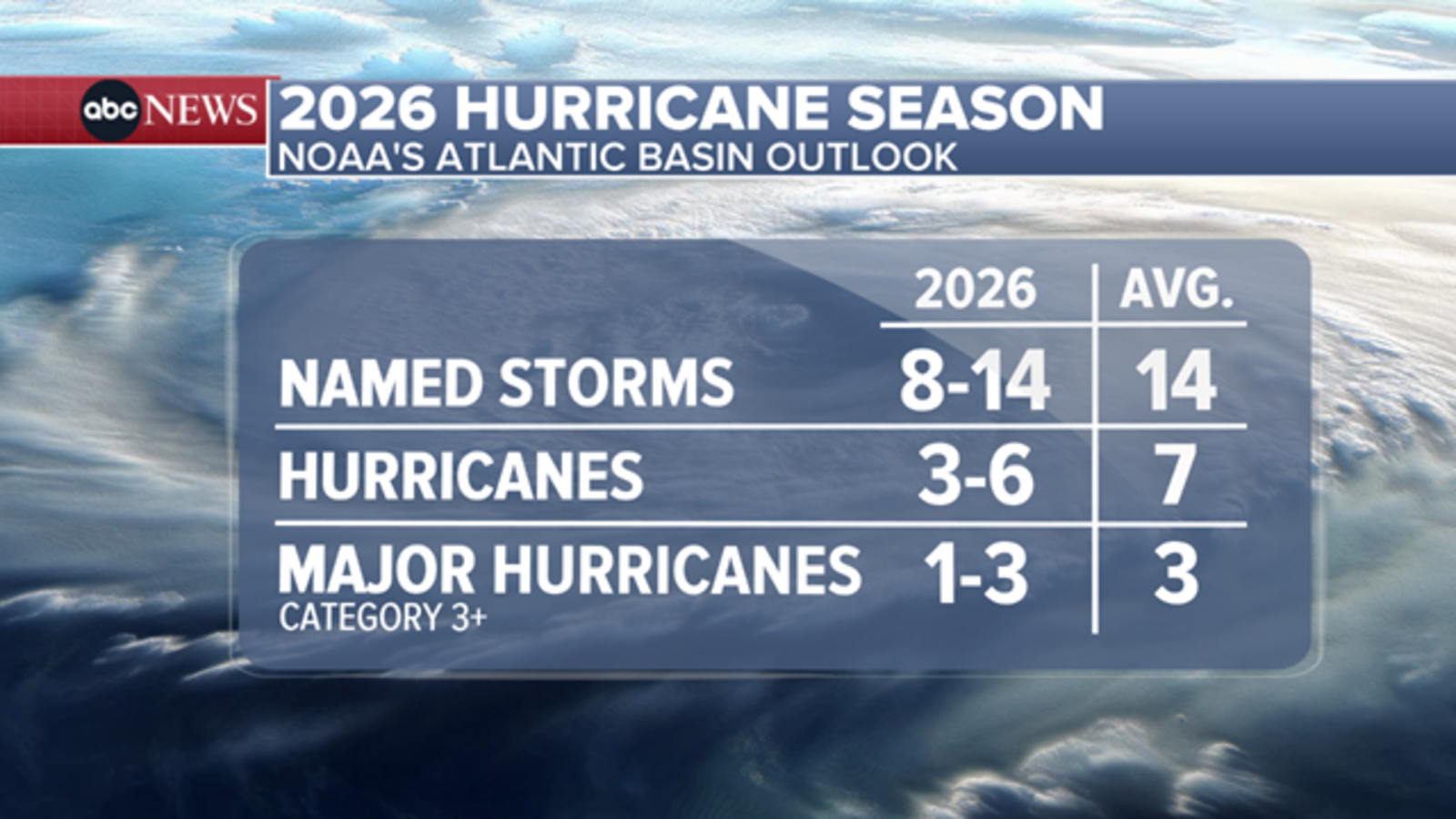
NOAA has estimated a 55% likelihood for a below-average season, projecting between eight and fourteen named storms, including tropical storms and stronger systems.
The forecast also indicates the possibility of three to six hurricanes, with one to three potentially escalating to major storms of Category 3 intensity or higher.
While NOAA’s forecasts provide an overview of expected seasonal activity, they do not specify the number of storms that may make landfall or predict the precise locations of potential landfalls during the six-month period.
An average Atlantic hurricane season has 14 named storms, seven hurricanes and three major hurricanes, according to NOAA.
The 2025 Atlantic hurricane season brought 13 named storms, just below the long-term seasonal average
While there were no landfalling hurricanes in the United States last year for the first time in a decade, the season still proved to be consequential, producing three Category 5 hurricanes, including Melissa, which devastated Jamaica.
Copyright © 2026 ABC News Internet Ventures.