Share this @internewscast.com
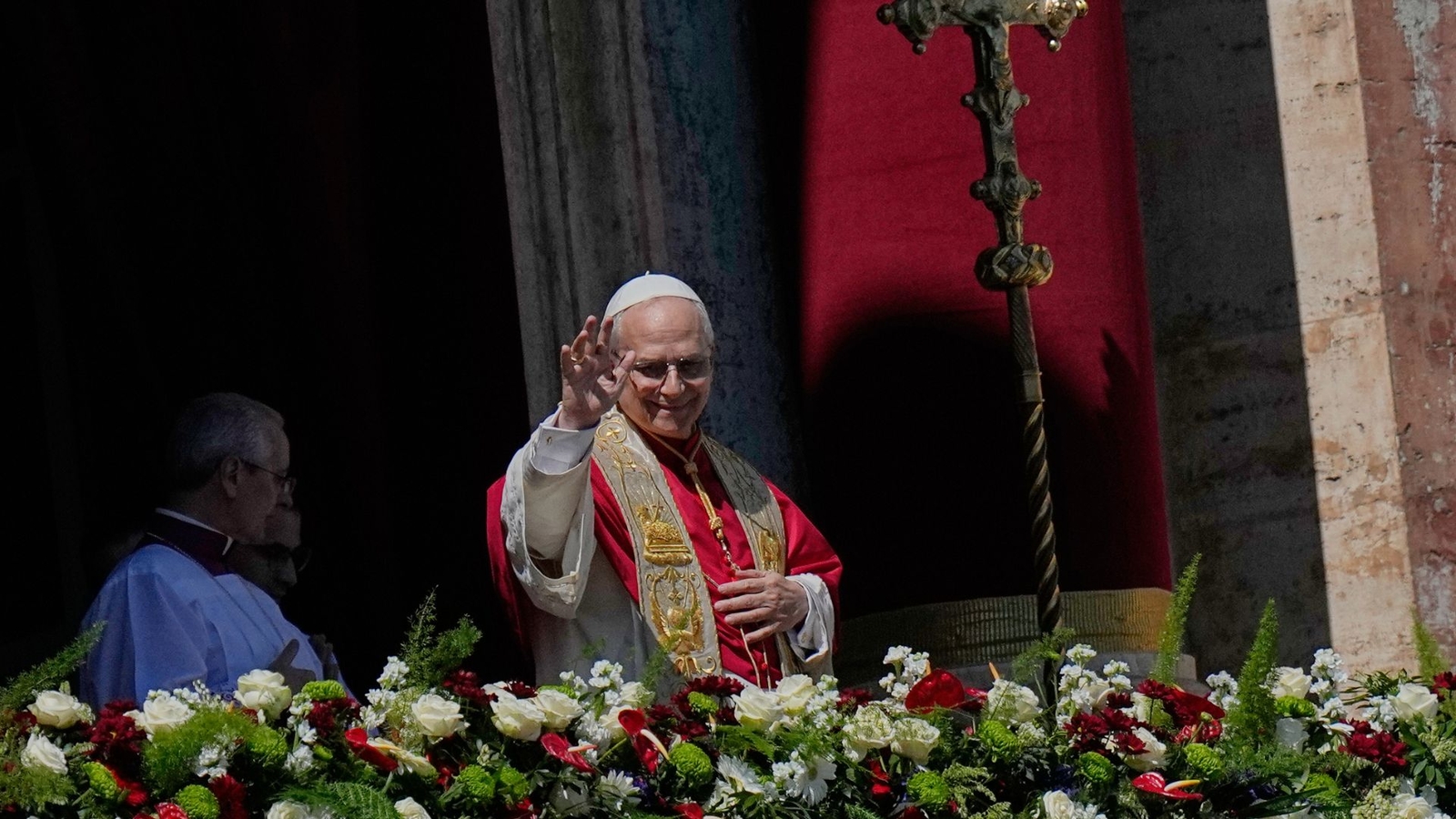
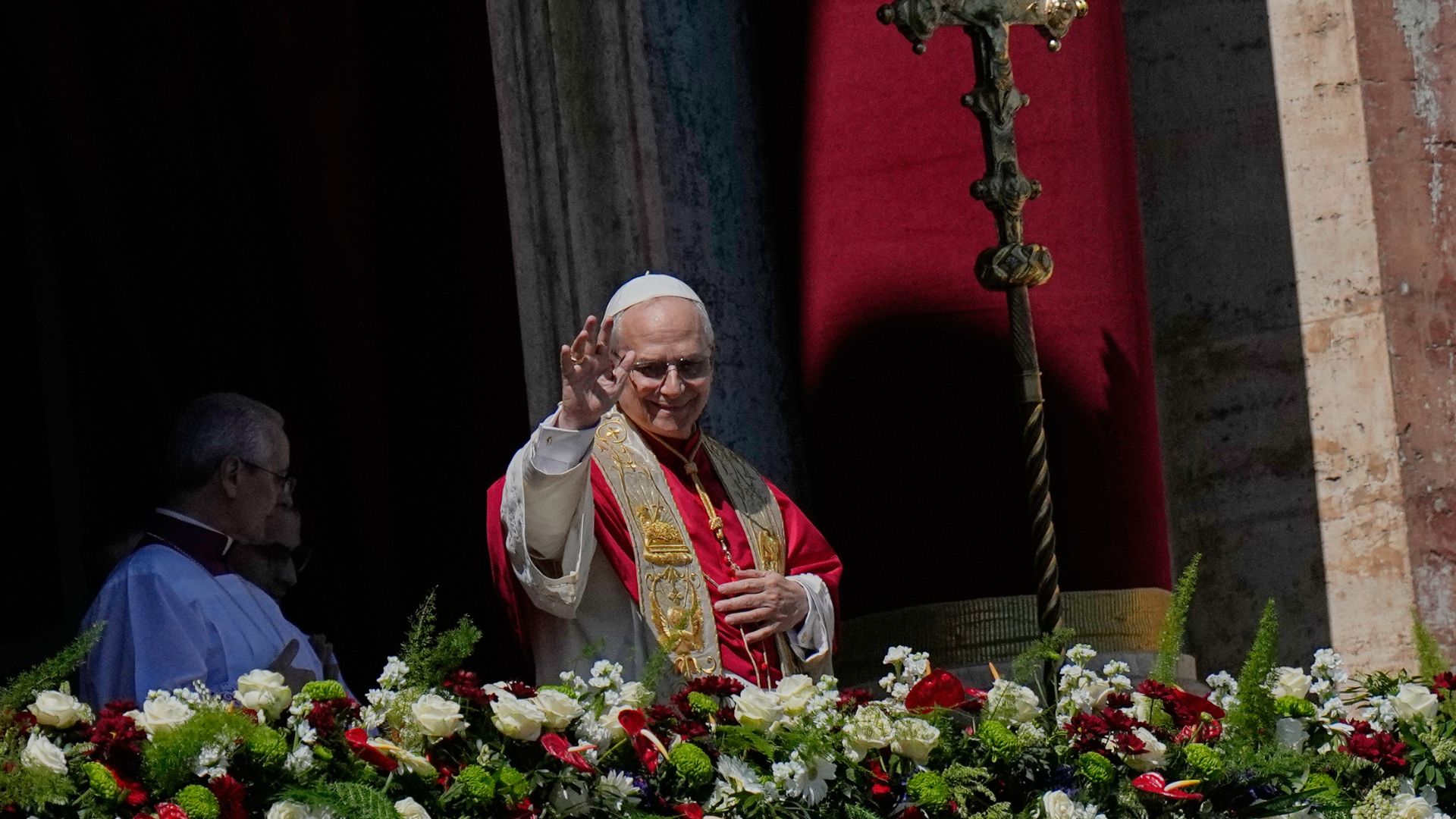
Pope Leo XIV marked his inaugural Easter Mass as the leader of the Catholic Church by urging an end to global conflicts and advocating for peace through dialogue. However, he chose not to follow the customary practice of specifically naming the world’s troubles during his Urbi et Orbi blessing from the balcony of St. Peter’s Basilica in Vatican City.
As the first pope from the United States, Leo centered his message around the theme of hope, reflecting on the resurrection of Jesus Christ following his crucifixion. This message was woven through both his Easter blessing and his homily.
“Let us open our hearts to be changed by his boundless love for us! May those wielding weapons put them down! May those with the power to start wars choose peace instead! Let it be a peace born through dialogue, not enforced by might! Not with the intention of dominating others, but to meet them!” the pope passionately stated.
Amid the ongoing U.S.-Israeli conflict with Iran and Russia’s protracted aggression in Ukraine, Leo highlighted a troubling sense of apathy towards the loss of countless lives and the widespread impact of hatred and division. He also pointed to the economic and social consequences these conflicts bring about.
While refraining from naming the specific wars, Leo drew from the words of his predecessor, Pope Francis, who during his final appearance from the same spot last Easter, lamented the “great thirst for death, for killing, we witness each day.”
Pope Francis, who had been battling a prolonged illness, passed away the day after delivering that poignant message, on Easter Monday.
The Urbi et Orbi blessing, Latin for “to the city and the world,” has traditionally included a litany of the world’s woes. Leo followed that formula during his Christmas blessing. There was no immediate explanation for the shift.
Earlier, Leo addressed some 50,000 faithful from an open-air altar in St. Peter’s Square flanked with white roses, while the steps leading down to the piazza where the faithful gathered were filled with spring perennials, symbolically resonating with the pope’s words.
He implored the faithful to keep their hope in the face of death, which lurks “in the abuses that crush the weakest among us, because the idolatry of profit that plunders the earth’s resources, because of the violence of war that kills and destroys.”
Speaking from the loggia, the pope announced a prayer vigil for peace April 11 in the Basilica.
“On this day of celebration, let us abandon every desire for conflict, domination, and power, and implore the Lord to grant his peace to a world ravaged by wars and marked by a hatred and indifference that makes us feel powerless in the face of evil,” he said.
Small shifts in traditions
Leo greeted the global faithful in 10 languages, including Arabic, Chinese and Latin, reviving a practice that his predecessor Pope Francis had let lapse.
Before retreating into the basilica, Leo stepped forward out of the loggia’s shadow and waved to the cheering crowd below.
During the marathon that is Holy Week, Leo also reclaimed the tradition of washing priests’ feet on Holy Thursday, a gesture of encouragement toward clergy, after Francis had chosen a more inclusive path, traveling to prisons and homes for the disabled to wash the feet of women, non-Christians and prisoners.
The 70-year-old pontiff also became the first pope in decades to carry the light wooden cross for the entire 14 stations during the Way of the Cross on Good Friday.
Christians in the Holy Land were marking a subdued Easter
Traditional ceremonies at the Church of the Holy Sepulchre, revered by Christians as the traditional site of Jesus’ crucifixion and resurrection, were scaled back under an agreement with Israeli police. Authorities have put limits on the sizes of public gatherings due to ongoing missile attacks.
The restrictions also dampened the recent Muslim holy month of Ramadan and Eid al-Fitr holiday, as well as the current weeklong Jewish festival of Passover. On Sunday, the Jewish priestly blessing at the Western Wall – normally attended by tens of thousands – was limited to just 50 people.
The restrictions have strained relations between Israeli authorities and Christian leaders. Police last week prevented two of the church’s top religious leaders, including Latin Patriarch Pierbattista Pizzaballa, from celebrating Palm Sunday at the Church of the Holy Sepulchre.
On Tuesday, the pope had expressed hope that the war could be finished before Easter.
____
Barry reported from Milan. Associated Press writer Josef Federman in Jerusalem contributed to this report
Copyright © 2026 by The Associated Press. All Rights Reserved.