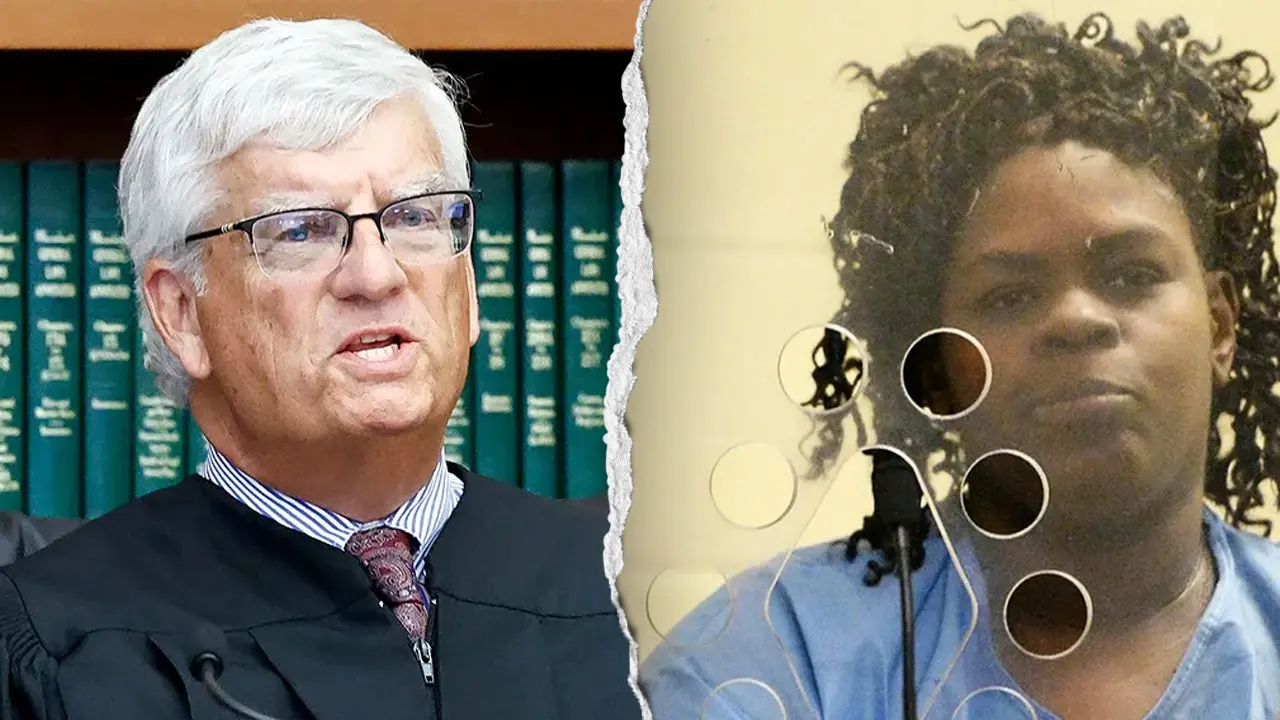
Judge William Sullivan, who gained national attention this month after declaring a mistrial in the Lindsay Clancy murder case, previously oversaw another high-profile child-killing trial that a retired Massachusetts judge says could unfold very differently if it is tried again.
The Massachusetts Supreme Judicial Court last month overturned the murder conviction of Brockton mother Latarsha Sanders. The justices ruled that jurors had been improperly barred from reviewing psychiatric records that were central to her insanity defense and ordered a new trial.
“The new trial will fundamentally change how this case is presented,” retired Massachusetts Superior Court Judge Jack Lu told News Outlet.
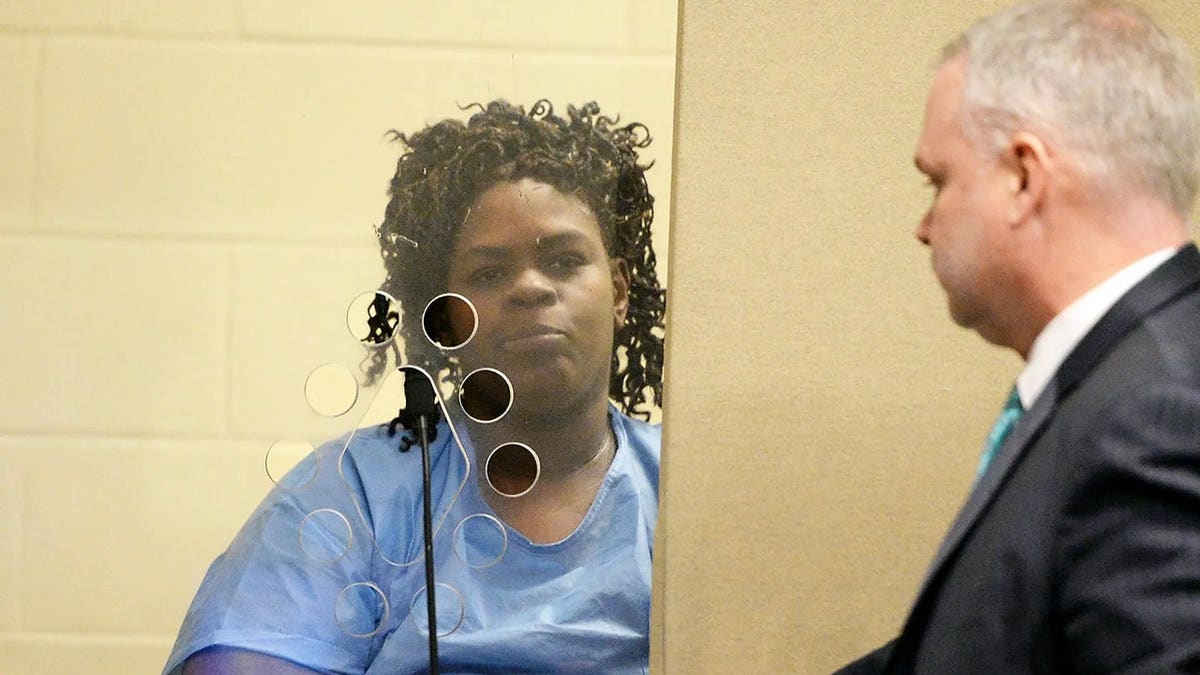
Latarsha Sanders appears in Plymouth Superior Court during her 2018 murder trial in Brockton, Mass. Massachusetts’ highest court later overturned her convictions and ordered a new trial. (Marc Vasconcellos/The Enterprise via AP, Pool)
Sullivan presided over Sanders’ 2022 trial and later sentenced her to two concurrent life terms without parole. He has again drawn national scrutiny after the closely watched Clancy trial ended in a mistrial, with jurors unable to reach a verdict on whether Clancy was criminally responsible for killing her three children. Both Sanders and Clancy acknowledged killing their children but argued that severe mental illness left them unable to bear criminal responsibility.
“There is no doubt the defendant committed these incomprehensible crimes,” Justice David Gaziano wrote in the unanimous Sanders decision. “The sole issue before a Superior Court jury was whether she lacked criminal responsibility.”
The justices determined that Sanders deserved a new trial because jurors never reviewed medical records documenting mental illness diagnoses and treatment relevant to the case’s only disputed question: whether she was criminally responsible for the killings.
Lu said the ruling’s impact extends well beyond simply requiring prosecutors to retry the case.
“Thousands of pages of mental health records will be admitted … and the jury’s gonna get it all,” he said.
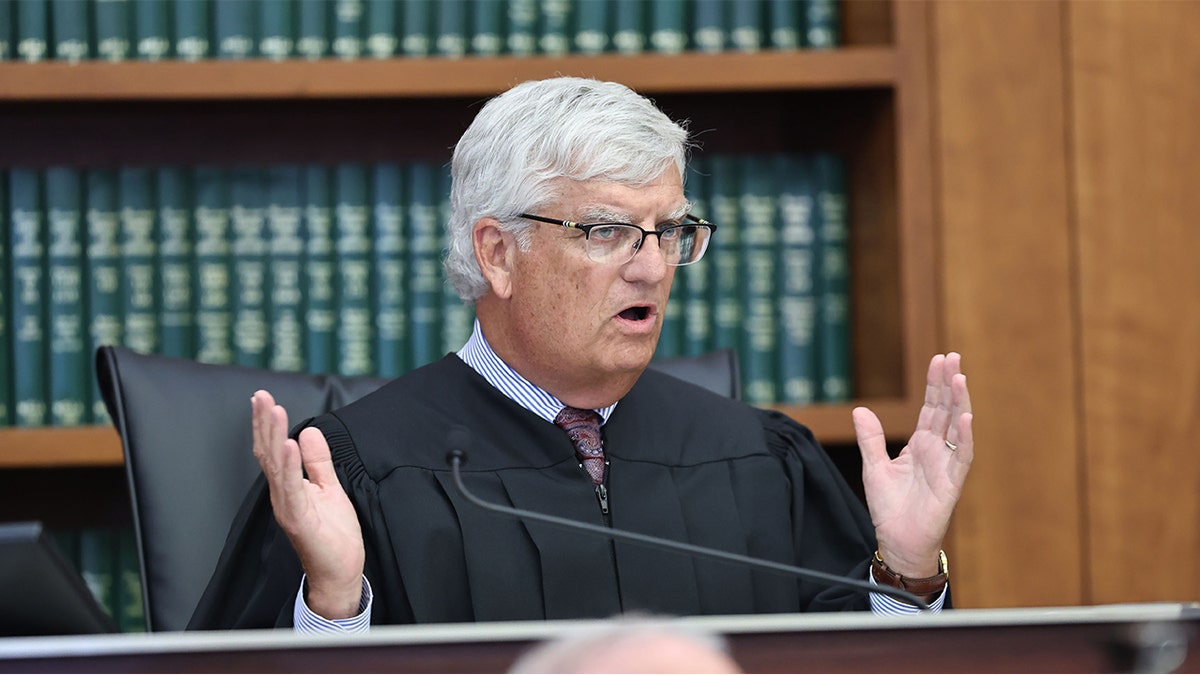
Judge William Sullivan speaks during Lindsay Clancy’s trial on Friday, Sept. 4, 2026, in Plymouth, Mass. (Greg Derr/The Patriot Ledger via AP, Pool)
Lu also warned against evaluating Sullivan’s rulings solely with the benefit of hindsight.
“The trial judge did an excellent job … but now I’m a great Monday morning quarterback just like everybody else,” Lu said. He noted that the evidentiary question was particularly challenging before the Supreme Judicial Court clarified the applicable law.
Sanders admitted killing her sons, 8-year-old Edson “Marlon” Brito and 5-year-old La’Son Brito, but maintained that she was legally insane when the attacks occurred.
Her defense attorneys said she was experiencing severe mental illness and psychosis. Prosecutors countered that she understood her conduct was wrong, pointing to bizarre statements she made both before and after the killings.
Evidence reviewed by the Supreme Judicial Court showed that Sanders had become fixated on conspiracy theories about the Illuminati and had voiced fears involving voodoo before the killings.
Investigators said Sanders offered police several conflicting explanations after the deaths. She eventually told detectives that the stabbings were part of a “ritual” connected to voodoo and the Illuminati.
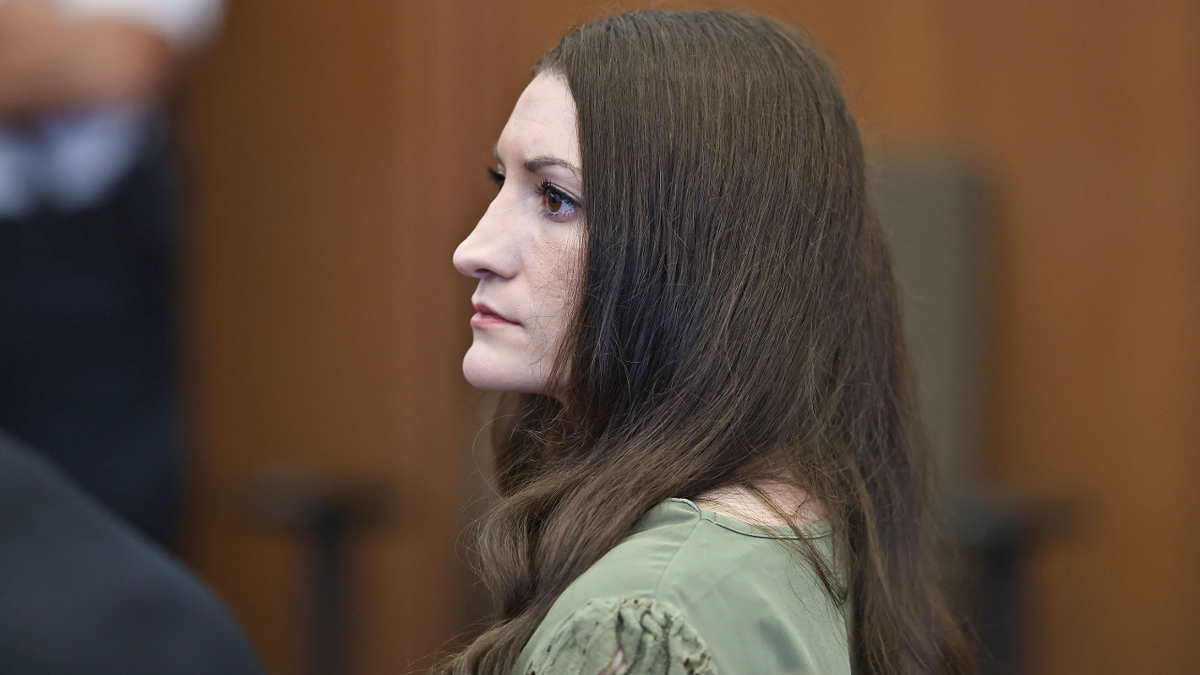
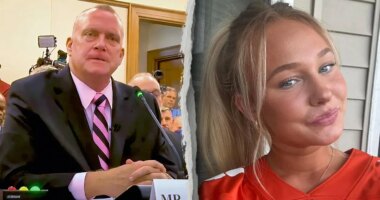
Lindsay Clancy looks on as jurors enter the courtroom during Clancy’s murder trial at the Plymouth County Superior Court in Plymouth, Massachusetts, on Sept. 4, 2026. (Greg Derr/POOL/AFP via Getty Images)
During the trial, a clinical neuropsychologist testified for the defense that Sanders was “grossly psychotic” at the time of the killings and had a schizophrenia-spectrum disorder.
The expert relied in part on thousands of pages of psychiatric treatment records from a prison and a state psychiatric hospital in reaching that conclusion.
Lu said those records are among the evidence a new jury would likely hear if prosecutors decide to pursue another trial.
The Supreme Judicial Court said that was an error, concluding the excluded records documented repeated observations of paranoia, hallucinations, delusional thinking and schizophrenia-spectrum diagnoses that formed the medical foundation of Sanders’ defense.
“We hold that the exclusion of the MCI-Framingham and WRCH medical records documenting the defendant’s post-arrest diagnoses or treatment of mental illness … impermissibly stripped the sole defense ‘of the medical foundation that supported it,'” the court wrote. “The defendant is entitled to a new trial.”
Lu said the opinion should not be interpreted as a determination that Sanders was legally insane or wrongly convicted. Instead, he described it as the resolution of a difficult evidentiary question that changes what evidence jurors would be permitted to consider if the case is retried.
During oral arguments before the Supreme Judicial Court, Sanders’ attorney, Robert Shaw, argued the trial judge’s exclusion of medical evidence deprived his client of “a meaningful opportunity to present a complete defense,” FOX 25 in Boston reported.
Assistant Plymouth County District Attorney Melissa Johnson countered that Sanders showed no documented psychotic behavior for months after the killings and that the records were properly excluded, the station reported.
The justices also addressed two issues that would likely shape any future trial.
First, they said prosecutors could refer to Sanders describing herself as “evil” because the statements were relevant to whether she appreciated the moral wrongfulness of her actions, so long as the argument remained tied to that legal issue rather than serving as a personal attack.
However, the court found prosecutors improperly suggested Sanders may have borrowed elements of her story from episodes of “Law & Order: SVU,” ruling there was no evidence supporting that theory.
The ruling vacates Sanders’ convictions and sends the case back to Plymouth Superior Court for a new trial.
An overturned conviction does not clear Sanders of the charges, Lu said.
“It just means you have to do it all over again,” he said.
News Outlet has reached out to Sullivan, Sanders’ attorney and the Plymouth County District Attorney’s Office for comment.