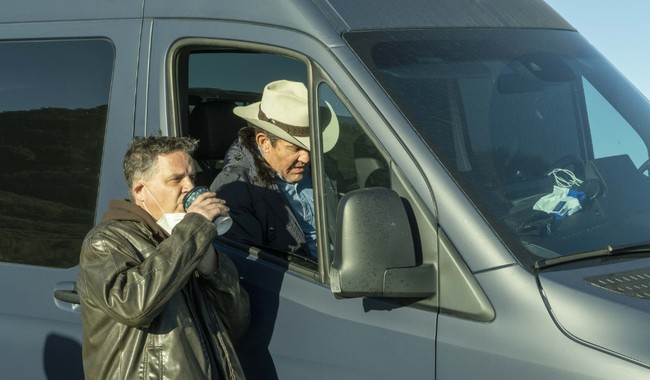

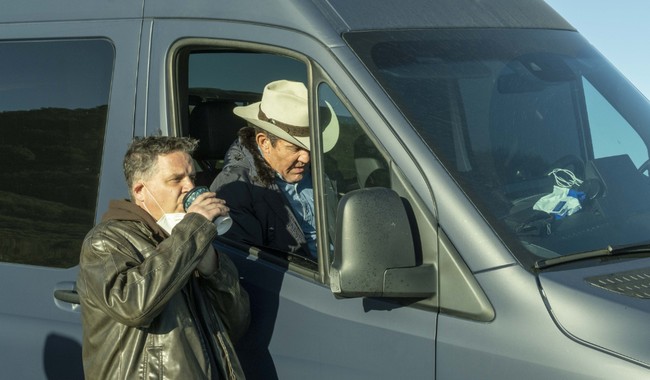
This is the final installment of a three-part conversation with Mark Joseph, producer of “Reagan,” the 2024 Ronald Reagan biopic starring Dennis Quaid. The first part is available here, and the second part can be found here.
What do you hope audiences who did not live through the Reagan years understand after watching the film?
I hope they understand that Ronald Reagan did not simply arrive on the national stage fully formed. The man history remembers was not someone who suddenly appeared at 69 years old and became president. He was built over a lifetime — influenced by Dixon, Illinois, by his mother and father, by his Christian faith, by Hollywood, by the Great Depression, by World War II, by the threat of communism and by his own disappointments and defeats. For younger audiences in particular, my hope is that the movie sparks curiosity. Don’t rely only on our film. Go listen to Reagan’s speeches. Read those who admired him and those who challenged him. History does not move on autopilot. The way the Cold War ended was not guaranteed. People matter. Convictions matter. I also hope viewers rediscover the idea that political disagreement does not require personal hatred. Reagan used to talk about every day having a six o’clock — meaning you could battle over ideas during the day, but at 6 p.m., you could still be friends.
Did studying Reagan’s time in office change the way you look at today’s political landscape?
It reinforced for me that the political atmosphere we are living through now is not healthy, and it is not something we have to accept as permanent. We have seen periods in recent years when a president and the Speaker of the House went an entire year without meeting. In my view, that is not how the system is supposed to work. The 1980s were not some fantasy age of universal harmony. Reagan and Tip O’Neill had deep, serious disagreements, and the political battles of that era could be fierce. But there was still a basic recognition that an opponent did not have to be treated as an enemy to be destroyed. Today, too often, we mistake disagreement for hatred. Reagan had the ability to criticize an idea forcefully without automatically demonizing the person who held it. That is a discipline we seem to have misplaced. There are truly dangerous forces in the world that would be glad to see America weakened or destroyed, and if they can persuade us to tear one another apart, they benefit. We need to keep that perspective. The person across the aisle from you is not remotely comparable to America’s real adversaries. In the end, we are still Americans, and we have a responsibility to defend the extraordinary system of government handed down to us.
The scenes with Reagan and Tip O’Neill stand out because, despite their sharp political differences, they had a genuine personal connection — something that feels rare in politics today. Why do you think that has disappeared, and do you see any hope that the divide might begin to close?
Those moments have become some of the most meaningful scenes in “Reagan” because audiences immediately understand what they are watching — and they also understand what has been lost. Reagan and O’Neill were not staging their disagreements for show. They truly clashed on policy and philosophy. But they also recognized that politics was the field where those fights took place; it was not the whole of their humanity. One of the great examples came after Reagan was shot, when O’Neill visited him in the hospital. In that room, two of the most powerful political rivals in the country were no longer just president and speaker. They were two men sharing a human moment. I think we have drifted away from that because politics has turned into entertainment, identity and, more and more, a round-the-clock business model. Anger generates money, clicks and attention. Do I see signs of improvement? I hope so. The emotional reaction people have had to those scenes tells me they want something better. Many Americans are tired of being told they must despise half the country. You can hold firmly to your beliefs and still treat someone who disagrees with you with dignity. Reagan understood that. Our actors understood it, too. Dennis Quaid is an independent who tends to lean right, while Dan Lauria, who plays Tip O’Neill, is an old-school Democrat. They did interviews together, and those political differences never came between them. They are both terrific actors and, more importantly, great Americans.
A fellow RedState writer asks: what drove you to make this film, and why tell Reagan’s story now?
The funny answer is that when you spend 20 years making a movie, you lose the right to claim you brilliantly timed its release. We certainly didn’t plan for “Reagan” or the Director’s Cut now to arrive at this particular political moment. COVID delayed us, the war in Ukraine delayed us, the actors’ strike complicated things, and the movie took a long and strange road to theaters. My motivation was much simpler: I thought this was one of the great American stories that hadn’t been properly told on film. Reagan’s life has everything you want in a movie — an alcoholic father, a small-town childhood, Hollywood, a failed marriage, political reinvention, an assassination attempt, a love story, the presidency, and a confrontation with a nuclear superpower. If you made all of that up, somebody would tell you the script was unbelievable. But perhaps the timing ultimately worked in our favor. We released a movie about optimism at a fairly pessimistic moment. We released a movie about friendship across political lines when Americans barely speak to one another across political lines. And we released a movie about a president who believed America wasn’t finished. Maybe that’s why the movie connected the way it did. Reagan used to talk about the “DP” — the divine plan. After twenty years trying to make this movie, I’m probably wise enough not to argue with the timing.
Editor’s Note: Do you enjoy RedState’s conservative reporting exposing the radical left and woke media? Support our work so we can keep bringing you the truth.