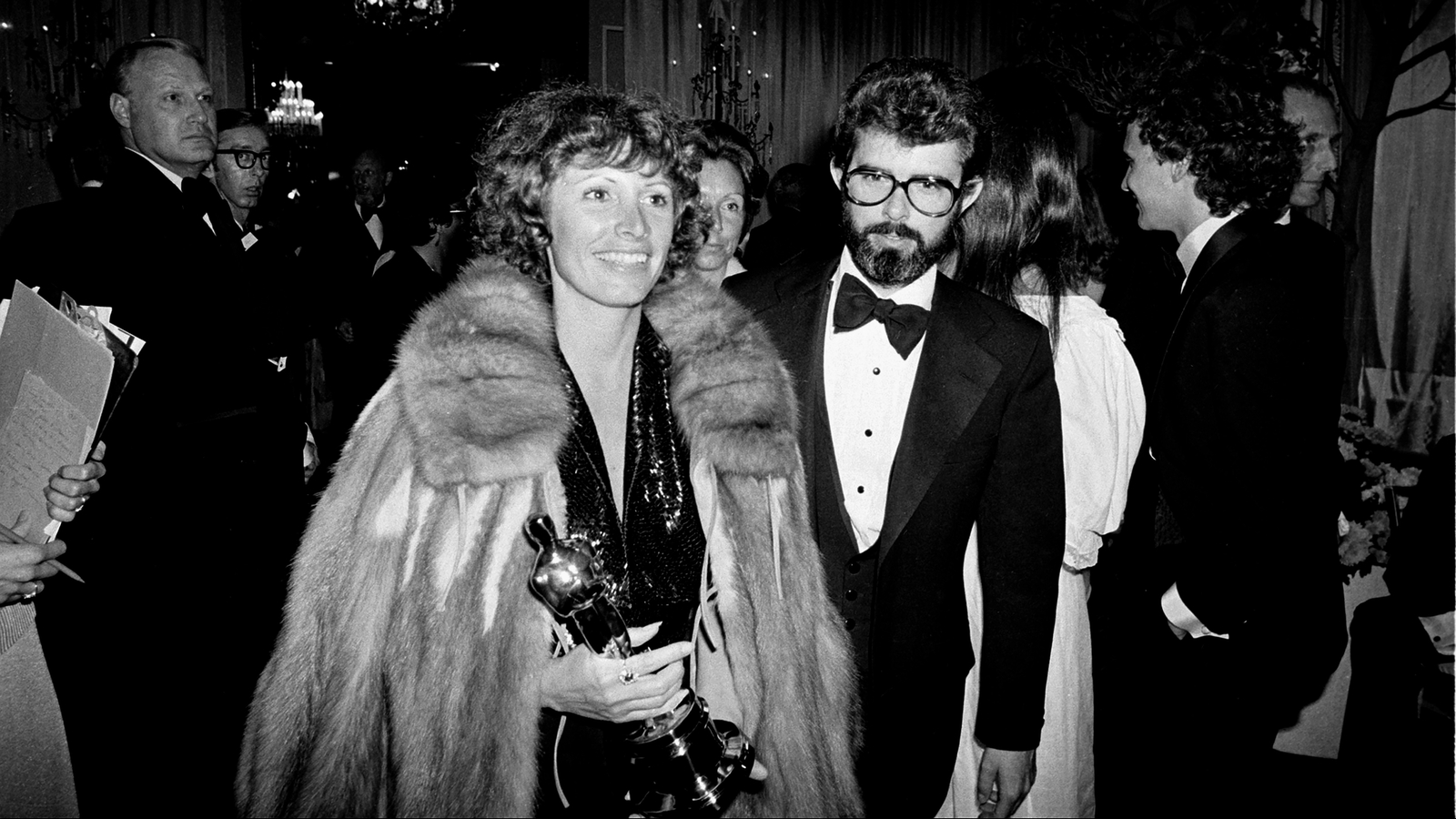

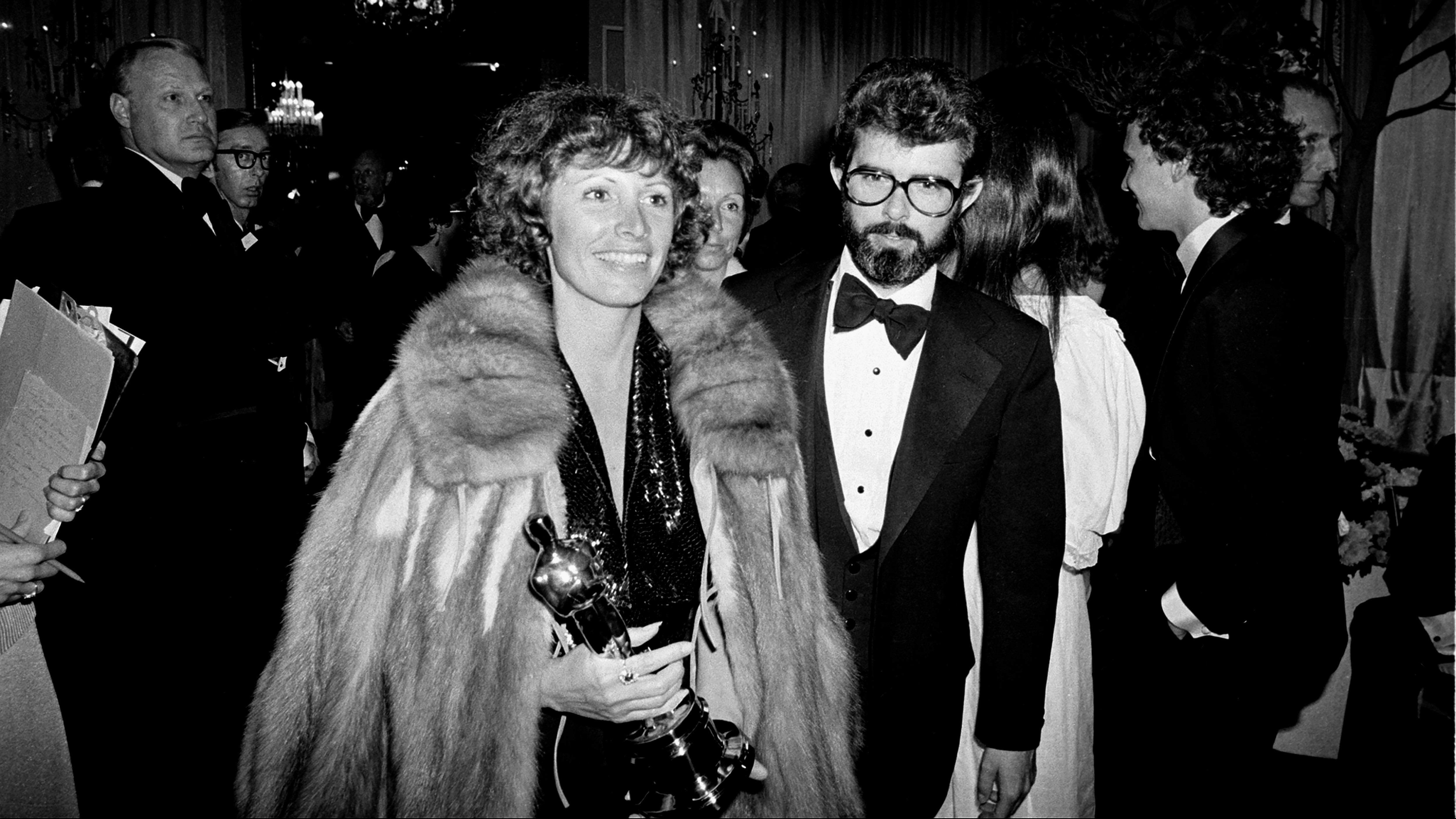
Marcia Lucas, an esteemed editor who played a pivotal role in the creation of the original 1977 “Star Wars” and was integral to the New Hollywood era, has passed away at the age of 80. Her family confirmed her death on Friday through their lawyer. Lucas’s editing prowess not only earned her an Oscar but also cemented her place among a group of trailblazing women who transformed the film industry during this dynamic period.
Lucas, who was the former wife of “Star Wars” creator George Lucas from 1969 to 1983, succumbed to metastatic cancer on Wednesday. According to attorney Deidre Von Rock, she spent her final moments in Rancho Mirage, California, in the presence of her beloved family members.
Her illustrious career included editing credits on several iconic films. Beyond shaping the groundbreaking “Star Wars,” she lent her talents to “Return of the Jedi” in 1983, as well as George Lucas’s earlier works, “THX 1138” and “American Graffiti.”
Marcia Lucas also contributed her expertise to the works of Martin Scorsese, editing landmark films such as “Taxi Driver,” “Alice Doesn’t Live Here Anymore,” and “New York, New York” during the 1970s. Her work stood out in a male-dominated industry, carving out a niche where women could thrive through the power of editing.
In a time when Hollywood was largely a man’s world, editing was one of the few senior creative roles where women could make a significant impact. Lucas was among a distinguished cadre of female editors, including Dede Allen, known for “Bonnie and Clyde” and “Dog Day Afternoon,” Verna Fields of “Paper Moon” and “Jaws” fame, and Thelma Schoonmaker, who became a long-term collaborator with Scorsese starting with “Raging Bull” in 1980.
Often referred to as the unsung hero behind “Star Wars,” Marcia Lucas’s contributions helped shape the original film, which has since evolved into a sprawling franchise known today as “A New Hope.” Her legacy endures as a testament to the transformative power of women in film editing.
She convinced her then-husband that he should have Obi-Wan Kenobi, played by Alec Guinness, die in his lightsaber battle with Darth Vader and become a spirit guide to Mark Hamill’s Luke Skywalker.
And she had to make sense of raw footage that could have been a mess in the wrong hands, including the climactic rebel attack on the Death Star.
“It was extremely complex and we had 40,000 feet of dialogue footage of pilots saying this and that. And she had to cull through all that, and put in all the fighting as well,” George Lucas told Rolling Stone in an interview a few months after the film came out. “Nobody really has ever tried to interweave an actual plot story into a dogfight, and we were trying to do that.”
Lucas was born Marcia Griffin in Modesto, California shortly after the end of World War II. She moved to Los Angeles with her mother after her parents divorced when she was a small child.
She began working as a film librarian and moved into working as an editor on commercials, trailers and promotional films. She was an assistant editor on the documentary “Journey to the Pacific” for Fields, who also hired George Lucas, then a film student at the University of Southern California.
The couple became engaged soon after. Their marriage would essentially end in 1982, but they kept their divorce under wraps until after the release of “Return of the Jedi” in 1983. Marcia Lucas was then married to Tom Rodrigues, a production manager at the Skywalker Ranch production center, from 1983 to 1993.
She is survived by her daughters, Amanda Lucas and Amy Soper, and grandchildren Felix Hallikainen, Aeliana Hallikainen and Knox Soper.
“Her influence on film is indelible, but those who knew her best will remember the way she made life feel more vivid, more beautiful, more fun, and more full of love,” a family statement said. “Her work was known for its emotional intelligence, rhythm, and humanity – a rare ability to find the truth of a scene and bring heart, momentum, and clarity to the screen.”
Copyright © 2026 by The Associated Press. All Rights Reserved.