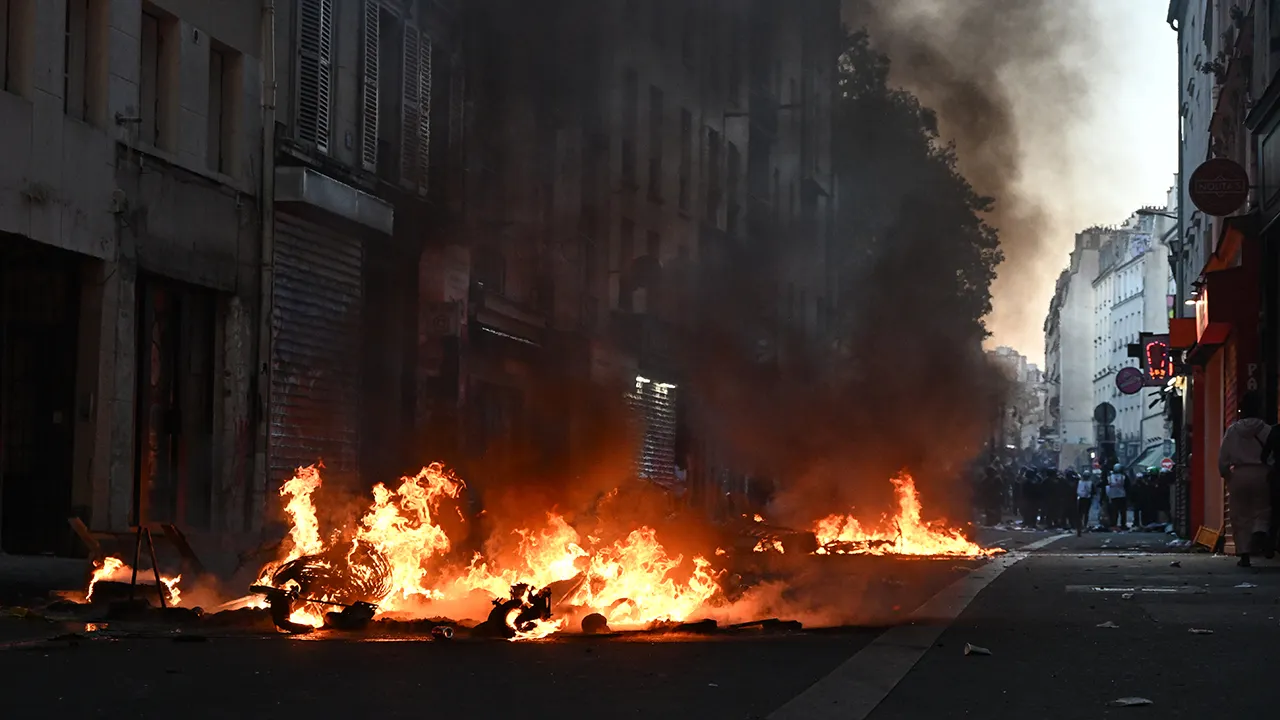

Paris is burning once again. But officials and analysts say this unrest is different—and that its consequences could extend far beyond France.
I have covered French protests for decades and lived in Paris for nine years. The French have long been skilled at taking political grievances to the streets, but the latest upheaval has raised unusually serious concerns.
People I have spoken with on the ground describe the rioting as more violent, more destructive and more deeply rooted than previous unrest. The country’s domestic tensions appear increasingly difficult to contain.
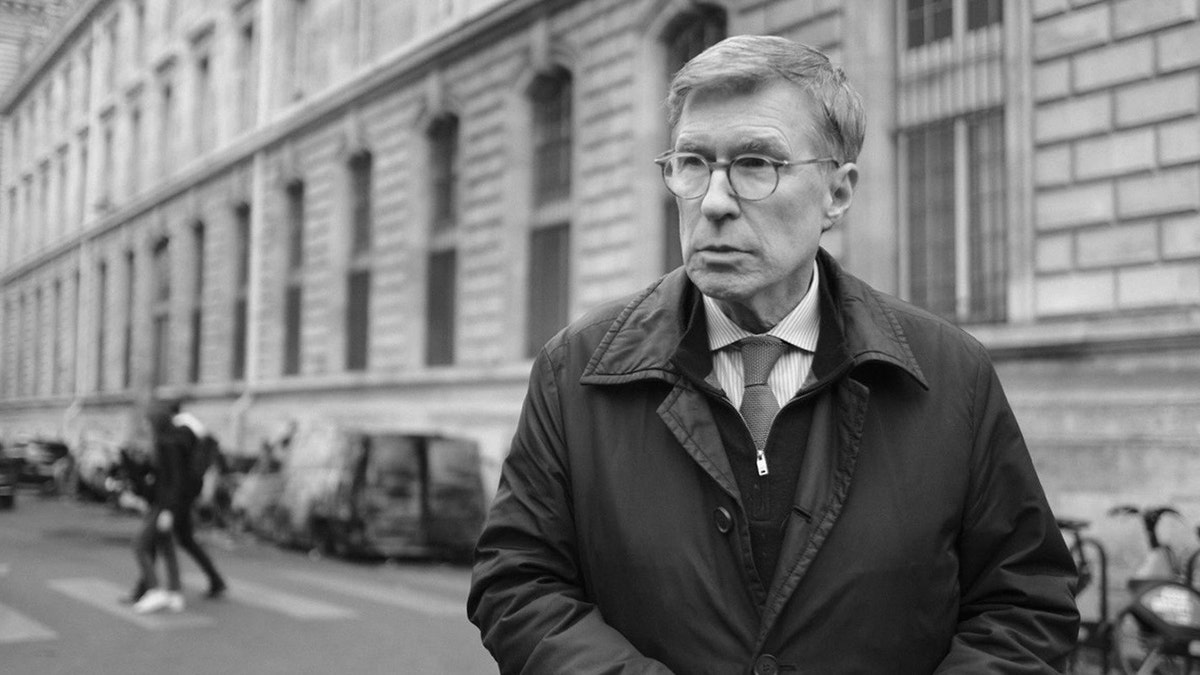
Greg Palkot, senior foreign affairs correspondent for Fox News Channel at the Place de la Republique in Paris. Oct. 19, 2026. (John Templeton/Fox News)
At a brasserie near the Place de la Republique, a server asked whether I was American and a journalist. When I answered yes to both, he replied: “So you’ve come to cover the civil war.”
The figures underscore the scale of the crisis. About 2,500 people were arrested during the latest weekend of clashes between protesters and police, while roughly 1,000 officers were injured. Many activists were also hurt, some seriously. Around 3,000 businesses were damaged, looted or destroyed, with losses estimated at more than $1 billion.
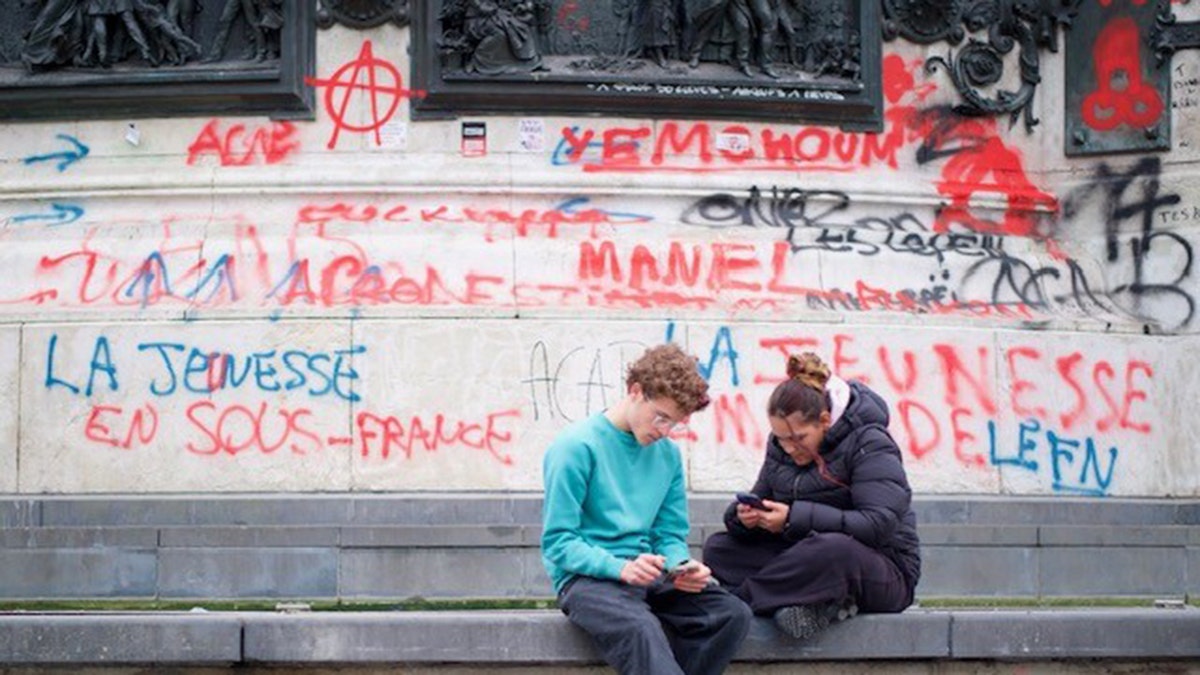
Graffiti covers an historic monument in the Place de la Republique. Paris, France. Oct 20, 2026. (John Templeton/Fox News)
Among the most disturbing developments were attacks on public buildings: a historic city hall in Limoges, a police headquarters in crime-ridden Marseille and a major tourist office in Lyon. Each attack struck at a symbol of government authority.
Protests that began largely peacefully, reflecting student concerns and economic frustration among working- and middle-class people, were overtaken by groups committed to anarchy and by opportunistic young criminals seeking easy thrills.
Immigrants and foreigners are among those involved, as are people reportedly linked to so-called “ultra-left” groups. Still, this remains fundamentally a French uprising—which, in some ways, makes it even more unsettling.
IN CASE YOU MISSED IT: Video: Mayor Allegedly Falsely Accuses Hairdresser of Being ICE Agent
Nearly a decade of President Emmanuel Macron’s rule has left France more polarized, with unfulfilled promises and anger simmering close to the surface. The threat of further violence is real.
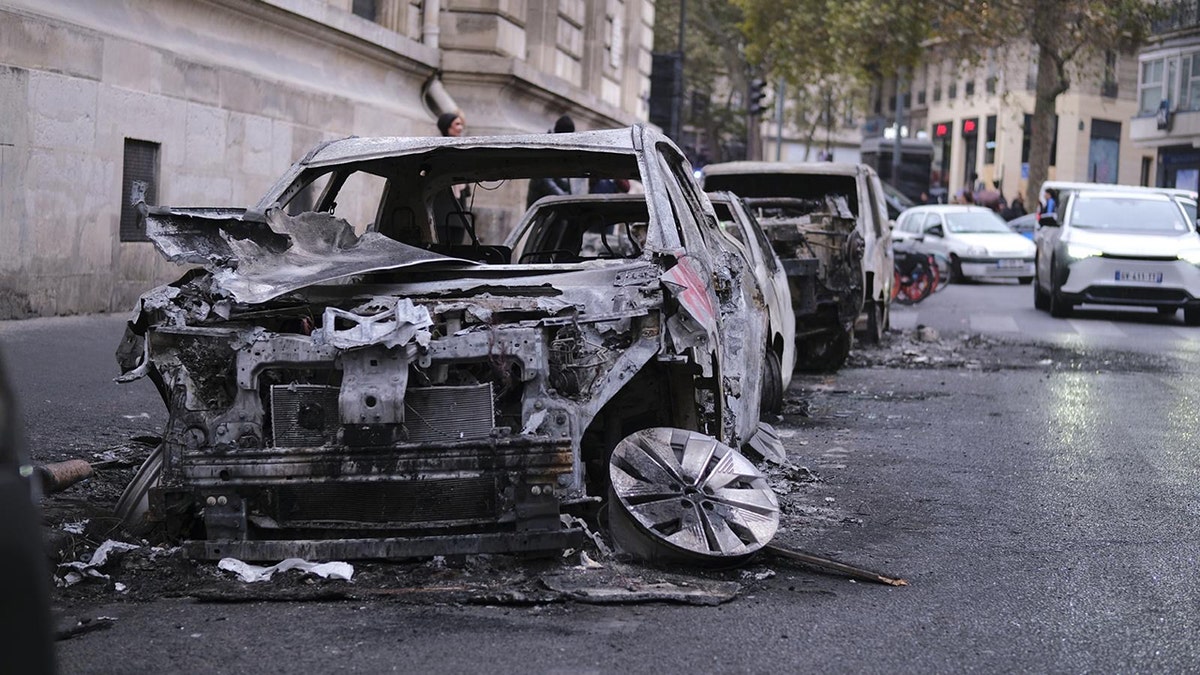
Burned-out cars litter the streets in Paris by the Place de la République (John Templeton/Fox News)
Authorities have acknowledged another troubling feature of the latest violence: for periods of time, parts of Paris and other cities were effectively beyond their control. Business owners were left to protect themselves and their properties.
The unrest offers political opportunities to both the left and the right. Some voices have expressed sympathy for the protesters’ demands, while others have called for tougher law enforcement. Both camps are criticizing those in power—and with presidential elections six months away, the timing matters.
With France’s treasury depleted, the current government may see stronger security measures as the most immediate and politically viable response.
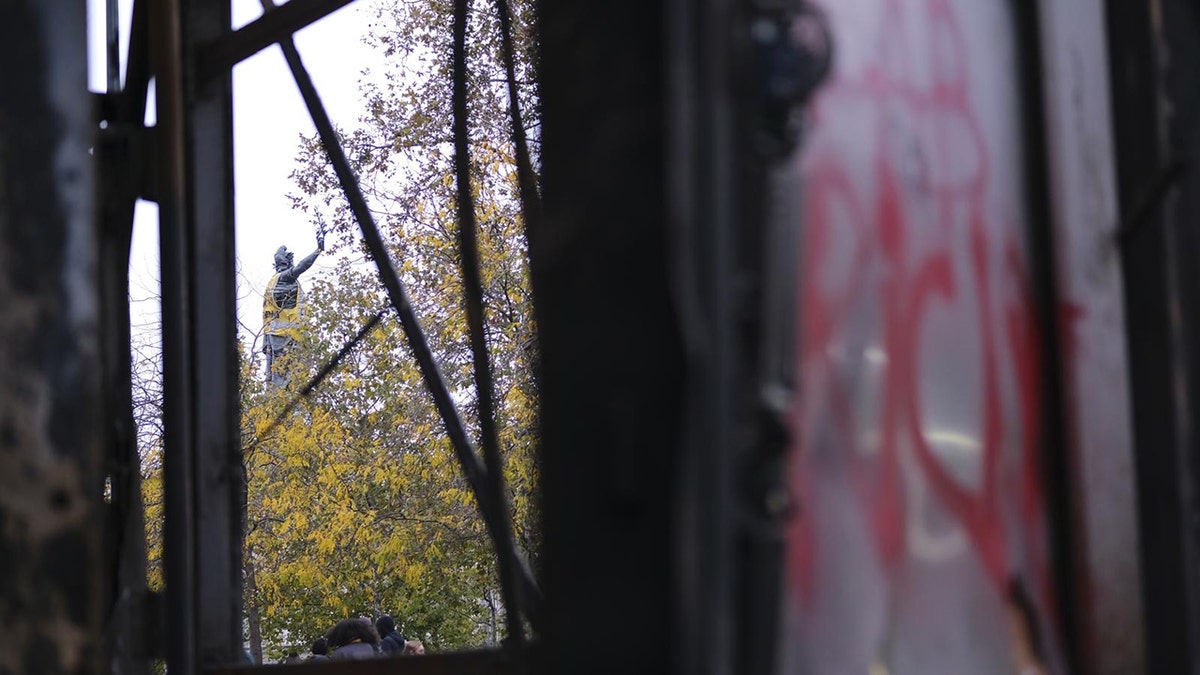
Graffiti on the wall by the Place de la Republique in Paris, France on Oct. 19, 2026. (John Templeton/Fox News)
That helps explain why senior officials are outlining plans for another major protest expected this weekend. French Prime Minister Lecornu says authorities will respond with a “massive police operation” supported by the military. Activists, he added, will have to choose between “violence” and the French “republic.”
Such “do or die” rhetoric does little to resolve the underlying problems—not only in France, but in countries facing similar pressures. Beyond the spectacle of a nation in turmoil, France may offer real-time lessons in how—or how not—to confront a new era of inequality and dwindling resources.
See you at the “barricades.”