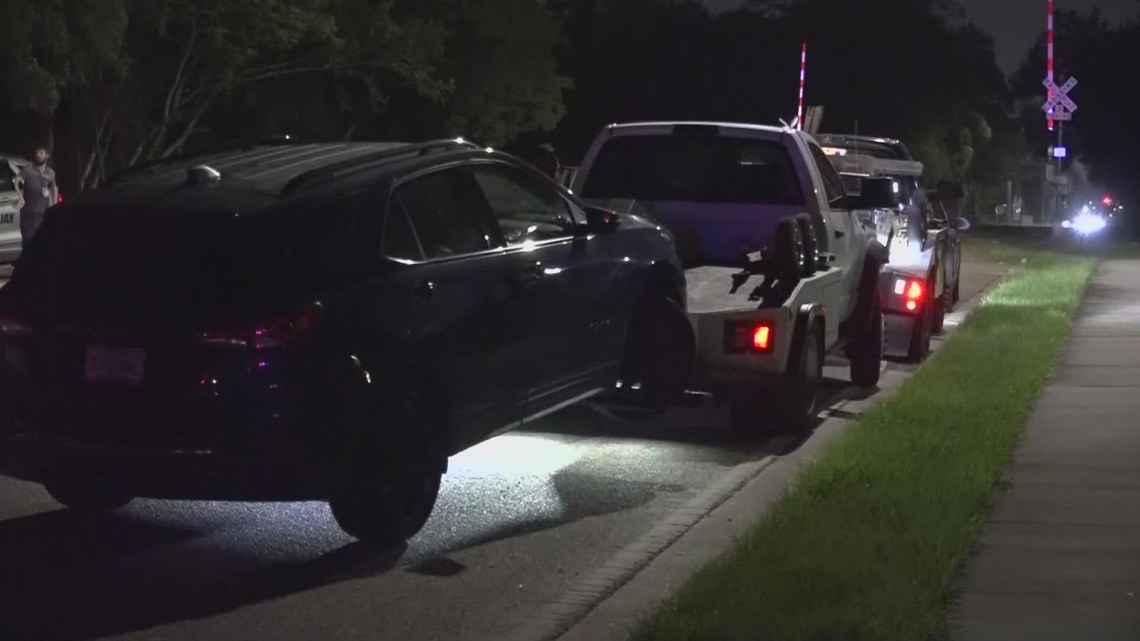

A tragic incident unfolded in Jacksonville when a tow truck driver was fatally shot during a vehicle repossession, highlighting the perilous nature of this line of work. We reached out to another professional in the field to gain insights into these occupational hazards.
JACKSONVILLE, Fla. — A community mourns the loss of a local tow truck operator, allegedly shot dead amid a repossession attempt at an apartment complex on East 21st Street late Tuesday. According to the police, the situation escalated from a dispute between the vehicle’s owner and the repossession agent, culminating in violence.

While authorities have yet to disclose the victim’s identity, MAD DADS, a local advocacy group, identified him as Oliver Lopez, commending him for his dedication as both a driver and business proprietor. His grieving family has requested privacy during this difficult time.
This incident has cast a spotlight on the inherent dangers faced by repossession agents, who frequently operate solo, during late hours, and in unpredictable situations.
“Entering each situation feels akin to an officer responding to a crime scene—you’re never sure what you’ll encounter,” explained “Ghost,” a repossession agent from South Carolina known for documenting his work on social media.
Ghost emphasized that the general public often underestimates how swiftly and unexpectedly repossession tasks can escalate.
“It happens. I’ve had weapons, guns, knives, brandished a lot of times,” he said. “That’s not a rare thing, especially when you have an engagement with a customer who doesn’t want to lose their vehicle.”
He emphasized that even routine recoveries can shift in seconds.
“You think it’s going to be a normal pickup, and then it’s not,” Weber said. “You’re dealing with people in high emotion, high stress, and you’re there taking something they still see as theirs.”
Crime and safety expert Mark Baughman, a former law enforcement officer with 35 years of experience, said repossessions sit in a legal gray area until things escalate.
“That is a civil process,” Baughman said. “Law enforcement doesn’t get engaged unless there is a threat in advance of that.”
He explained that police typically respond only after the situation escalates.
“When a threat is made… then that’s a 911 call,” he said.
But repo workers said those boundaries are not always clear in real time.
“Most of the time when it gets to that intensity level, it’s not a moment to call the police,” he said. “It’s kind of like fight or flight mode, but with a gun, you can’t outrun a bullet, and that’s the hard part about it.”
He said those moments force split-second decisions, often without backup or protection.
“At that point, you’re just trying to get out,” Weber said. “There’s no script for it. There’s no routine.”
Ghost said he sometimes disengages when situations feel unstable.
“Sometimes I do have those that I walk away from if I think it’s going to go left,” he said. “I’ll walk away, and I’ll tell the bank or finance company that they need to pursue this through the court system because this person is not easy to work with.”
He added that the psychological impact builds over time.
“It messes with your mind sometimes,” Ghost said. “People don’t see that side of it.”
Police continue to ask anyone with information to come forward as the investigation continues.