
Secretary of State Marco Rubio and Israeli Prime Minister Benjamin Netanyahu on Friday praised the U.S.-brokered framework agreement between Jerusalem and Lebanon, describing it as a significant opening move toward peace and a clear rebuff of Iranian influence in the region.
The agreement could help create a diplomatic path toward normalization between Lebanon and Israel, two countries that remain formally at war. Analysts say the framework may also constrain Hezbollah, the Iran-backed terrorist group that has entrenched itself within parts of Lebanon’s state apparatus.
Hezbollah and Israel have fought two wars since the terrorist organization joined Hamas’ Oct. 7, 2023, invasion of Israel, and after U.S.-Israeli strikes on Iran in February.
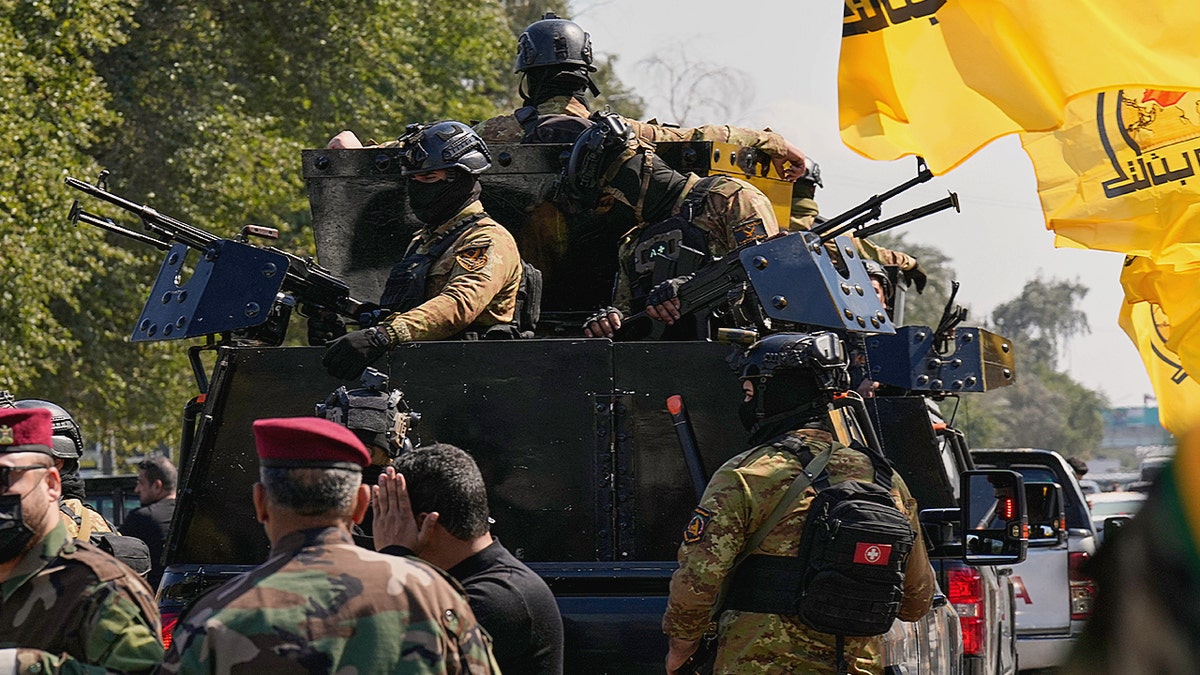
Hezbollah fires long-range missiles from Lebanon into northern Israel within 48 hours of strikes on Iran, intensifying the broader conflict during Operation Epic Fury. (Hadi Mizban/AP)
Rubio said, “Today is a good day in that we are happy to announce a framework agreement between the sovereign government of Lebanon and, of course, the government of Israel, with a mediation and support of the United States of America, that begins to put in place a framework for lasting peace and security.”
He continued, “And that’s what these two nations deserve.”
According to the Press Service of Israel (TPS-IL), Netanyahu called the agreement “a severe blow to Iran.” He said the Islamic Republic is trying to pressure Israel into leaving southern Lebanon, adding that “essentially Israel, Lebanon and the United States are telling them: This is none of your business. You have no role in southern Lebanon — neither you, nor Hezbollah nor any other terrorist organization.”
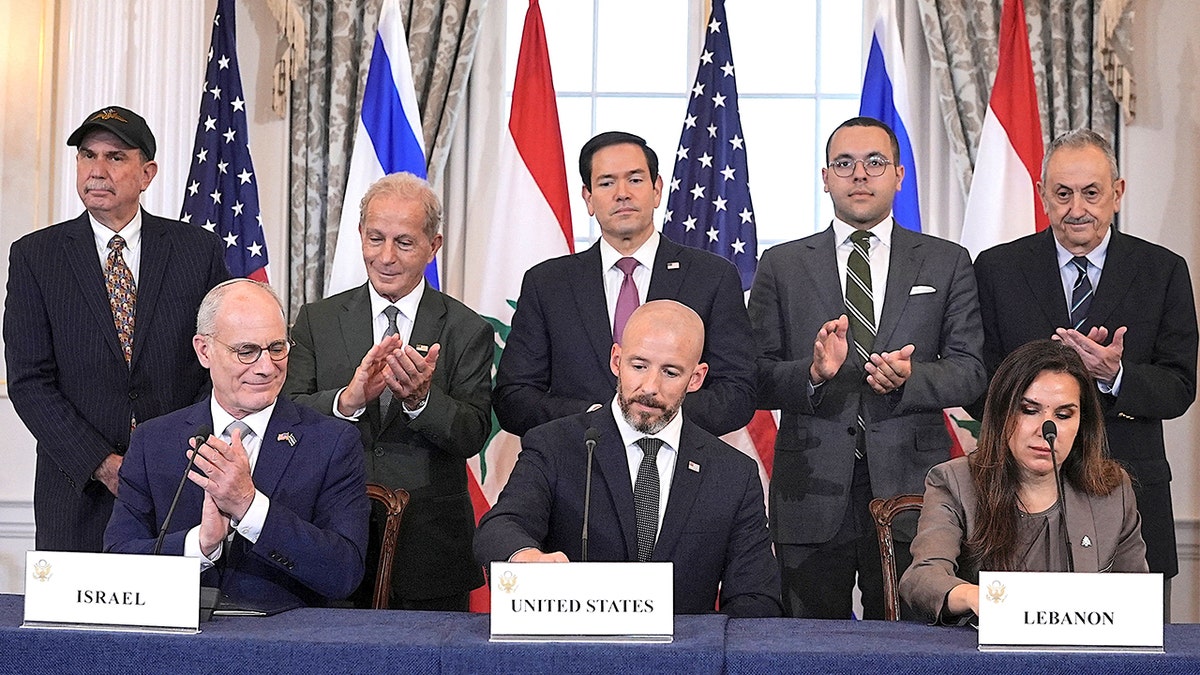
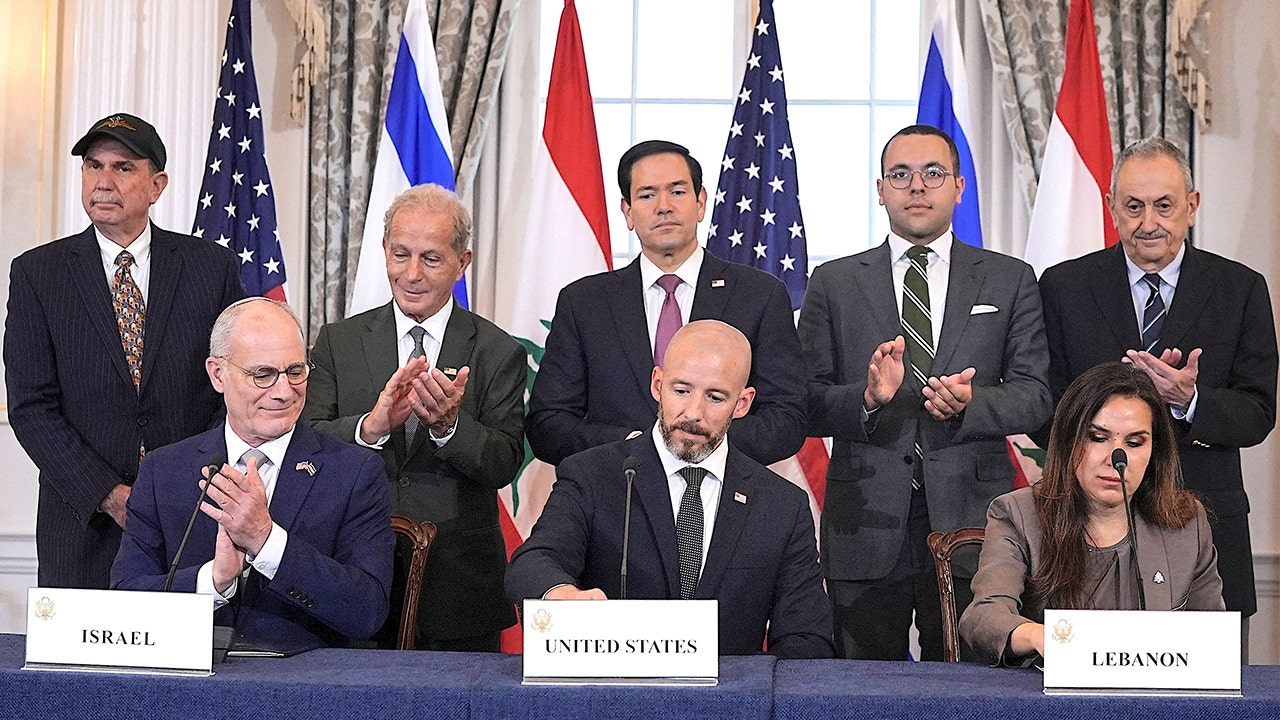
Secretary of State Marco Rubio and Israel’s Ambassador to the U.S. Yechiel Leiter applaud after signing a framework agreement between Israel and Lebanon with State Department Counselor Daniel Holler, and Lebanon’s Ambassador to the U.S. Nada Hamadeh, at the State Department in Washington, D.C., U.S., June 26, 2026. (Ken Cedeno/Reuters)
Lebanon’s President Joseph Aoun, in an Arabic-language X Post, thanked the U.S. administration, led by President Donald Trump, “for its efforts in hosting and facilitating the negotiations and for supporting Lebanon’s position.”
Rubio’s optimistic announcement encouraged some veteran Lebanon experts about a historic opportunity for peace, while others warned about the necessity to proceed with caution.
EXCLUSIVE: Two New Jersey Women Killed in Hit-and-Run While Walking Home From World Cup Watch Party
Guila Fakhoury, whose father, Amer, was kidnapped by Hezbollah in 2019, told Fox News Digital that “Today marks a historic achievement. For the first time since 1983, Lebanon and Israel have reached an agreement through direct negotiations. It also represents a fundamental shift in regional dynamics, demonstrating that Lebanon’s future need not be contingent upon broader regional negotiations or arrangements negotiated through proxy influence. In that sense, this agreement supersedes previous efforts to tie Lebanon’s stability and sovereignty to external agendas.”
Fakhoury, added, “If these commitments are fulfilled, this agreement could become the foundation for long-term cooperation, security, economic opportunity and shared stability that benefits both the Lebanese and Israeli people.”
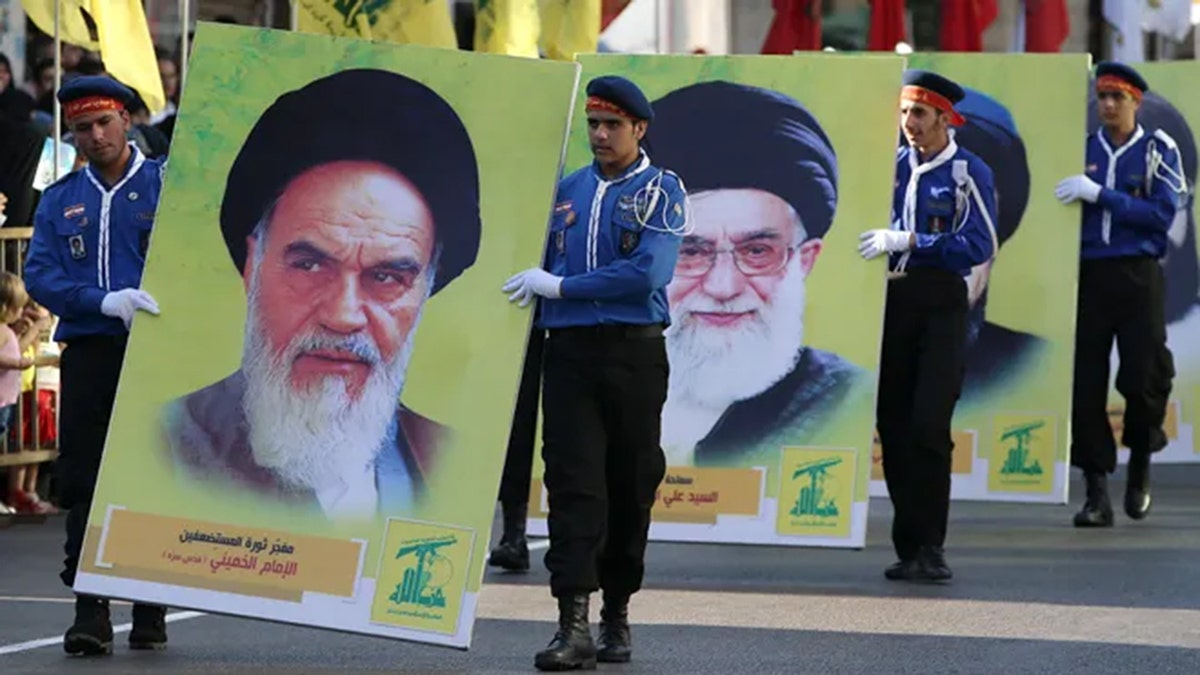
Hezbollah al-Mahdi scouts parade with large portraits of Iran’s late leader Ayatollah Khomeini and Supreme Leader Ayatollah Ali Khamenei during an event for Jerusalem Day in Nabatiyeh, Lebanon, on Aug. 1, 2013. (Hussein Malla/AP Photo)
She continued, “However, whether this agreement brings lasting peace and stability will depend entirely on its implementation. The Lebanese state and its legitimate institutions must be the ones to create stability, not external actors or armed organizations operating outside government authority.”
Walid Phares, a leading U.S. expert on Lebanon and the Mideast, told News Agency, “This agreement is just a ceasefire not a conduit to a larger peace deal. Hezbollah take orders from Iran. It’s clear Tehran will complain about such a deal and pressure the negotiators to get some statement from Washington asserting the Islamic Republic’s say over Lebanon. Hezbollah will attack the deal but will pray Israel won’t strike. The Trump administration will have to calibrate between the Rubio-sponsored agreement on Lebanon and the fragility of the situation in the Gulf.”
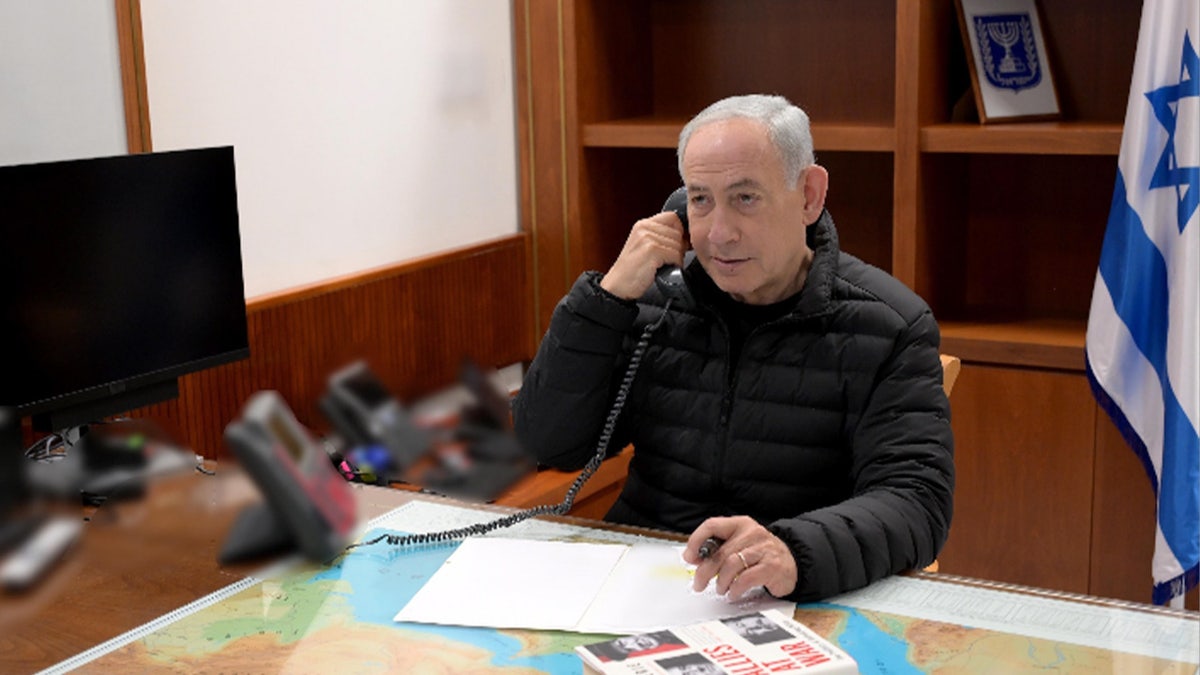
Prime Minister Benjamin Netanyahu during his conversation with U.S. President Donald Trump. (Avi Ohayon / GPO)
He added, “The regime is telling Hezbollah ‘keep the narrative up and radical but let us get the money first.’ Israel is giving its public something and mindful of Trump’s concerns about the deal with Iran. The Lebanese government is hoping their army does not have to engage. The only unknown is the ability of the Lebanese opposition to rise and resist Hezbollah. We are still inside the Lebanese status quo.”
Sen. Tom Cotton, R-Ark., posted on X following the news that, “Hezbollah savages have American blood on their hands. I applaud President Trump and @SecRubio for forging this important agreement that will restrain Iran’s terrorist proxy. Let me be clear: Tehran has no future in Lebanon.”
She added, “But as the 1983 agreement was toppled by the bad guys then (Assad regime), Iran will try everything to make sure this one fails as well. Lebanon and Israel have a responsibility in making sure this agreement is protected, and its implementation is successful. We will probably not have another chance.”