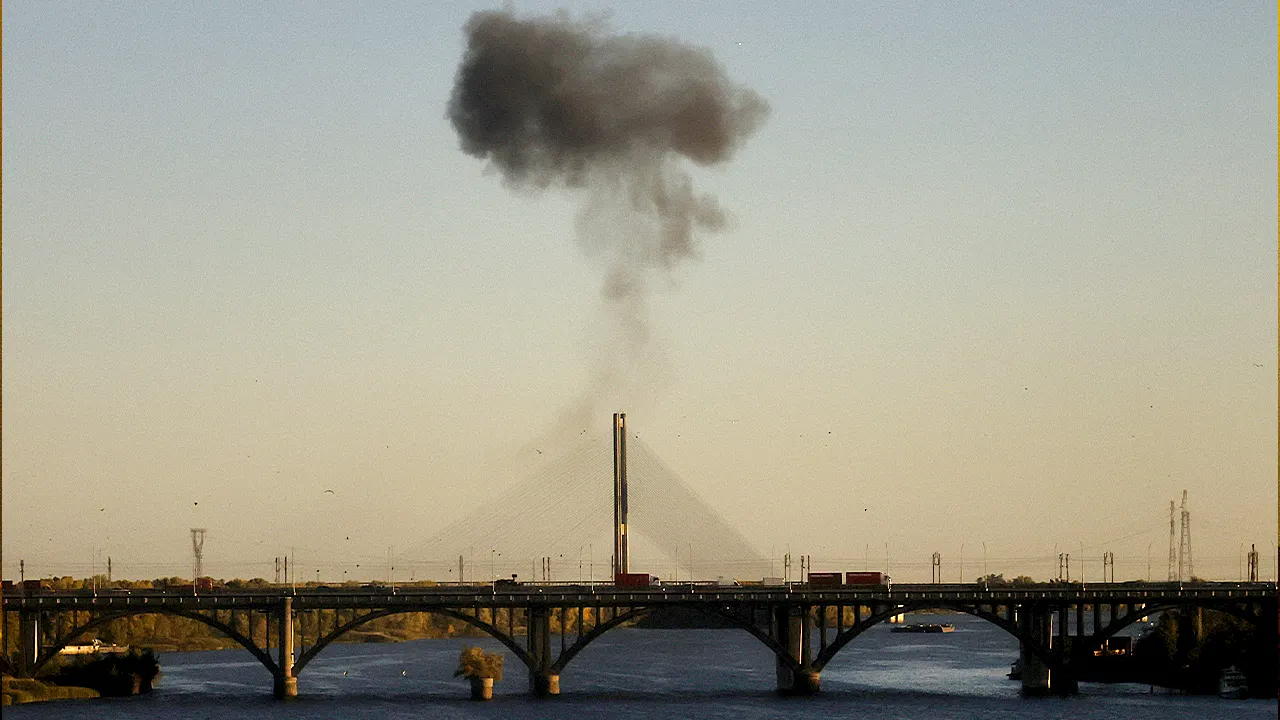

Russia could be placing compact signal repeaters inside Ukrainian urban areas to help long-range drones bypass electronic defenses and hit targets with greater accuracy, according to weapons specialist Cameron Chell, co-founder and CEO of Draganfly, who spoke to News Outlet.
The Kyiv Post previously reported on the suspected deployment of these ground-based devices. Chell said they may be helping Russia build a wider “mesh” communications system, in which drones exchange encrypted signals through several linked connections. That setup could make individual drones—and coordinated swarms—much more difficult for Ukraine to disable with conventional jamming.
His assessment came as security warnings intensified across the region. On Oct. 3, Moscow advised foreign citizens and embassy personnel to leave Kyiv immediately, citing “mortal danger” as Russian forces threatened additional “massive retaliatory strikes.”
Chell said Russia increasingly views battlefield innovation as decisive, arguing that the country’s advantage is emerging not only through new tactics, strategies and technologies, but also through a broader shift in military thinking.
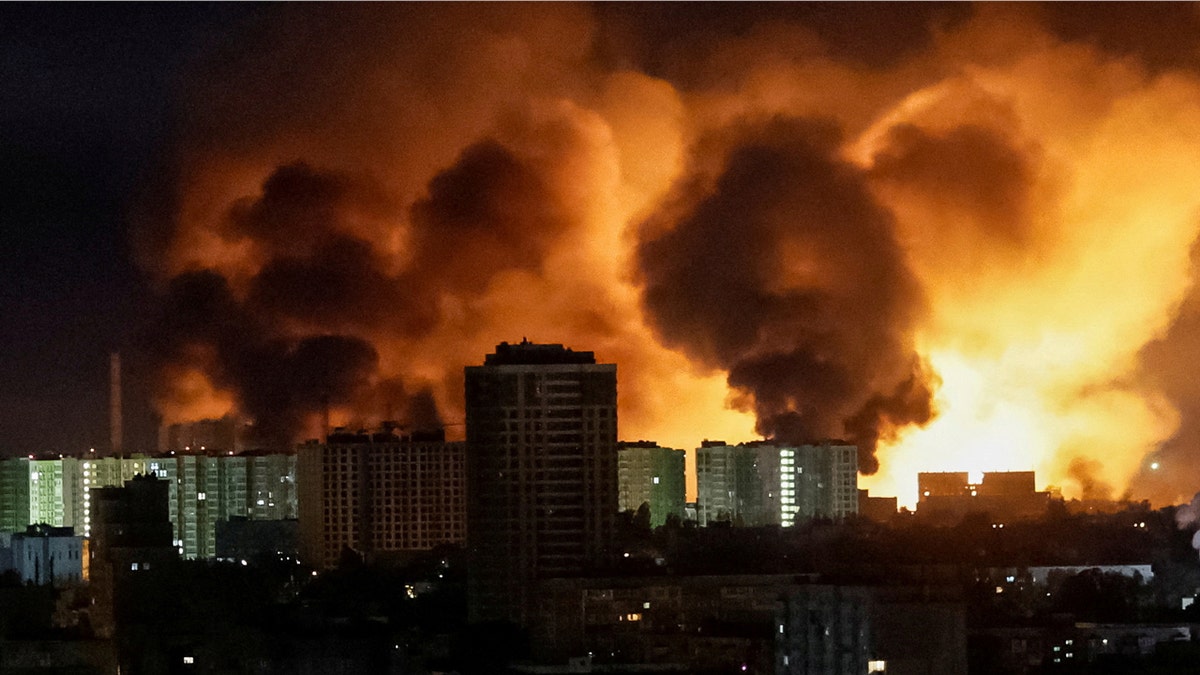
Fires broke out across Kyiv after Russia carried out a major aerial attack on Ukraine on May 25, 2025. (Gleb Garanich/Reuters)
Under a mesh network, drones and strategically positioned repeaters pass encrypted communications from one connection to another. Chell said the arrangement allows Russian aircraft to remain operational even when Ukrainian forces attempt to interfere with their control signals.
He said the technology is making it increasingly difficult for Ukrainian defenses to reliably disrupt or destroy Russian drones.
The system could also give Russian operators the ability to make highly precise, last-second decisions about where a drone should strike, Chell warned.
For example, an operator could redirect a drone toward a specific section of a bridge moments before impact. Multiple network links can provide the added bandwidth and resilience needed to preserve control even while Ukrainian electronic warfare systems attempt to jam the signal.
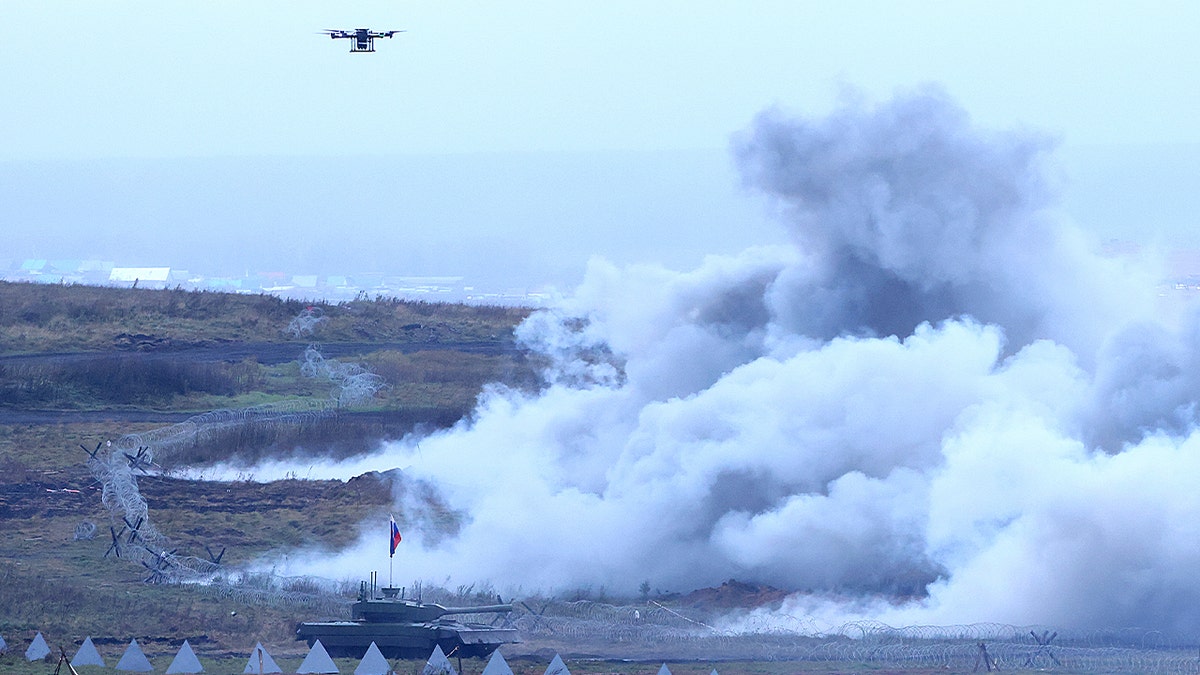
Ukrainian Air Force spokesman Yurii Ihnat said on Sept. 29 that Russia was adding mesh-network technology to its drones while also improving their onboard cameras. (Contributor/Getty Images)
The reported advances come as Russian attacks on Kyiv’s critical infrastructure, including key river crossings, have demonstrated an unusual level of accuracy.
Ihnat confirmed Sept. 29 that Russian forces were incorporating mesh networking into their unmanned aircraft and upgrading the optical systems used to identify targets.
According to Ukrainska Pravda, Ihnat said Russia was using higher-quality components and sharper cameras in its UAVs, enabling operators to study ground conditions in greater detail and deploy the aircraft against a wider range of targets. He also acknowledged that mesh networking was being used to counter Ukraine’s anti-drone operations.
Chell said the system is designed to prevent Ukrainian countermeasures from severing the communications links that guide Russian drones toward their targets.
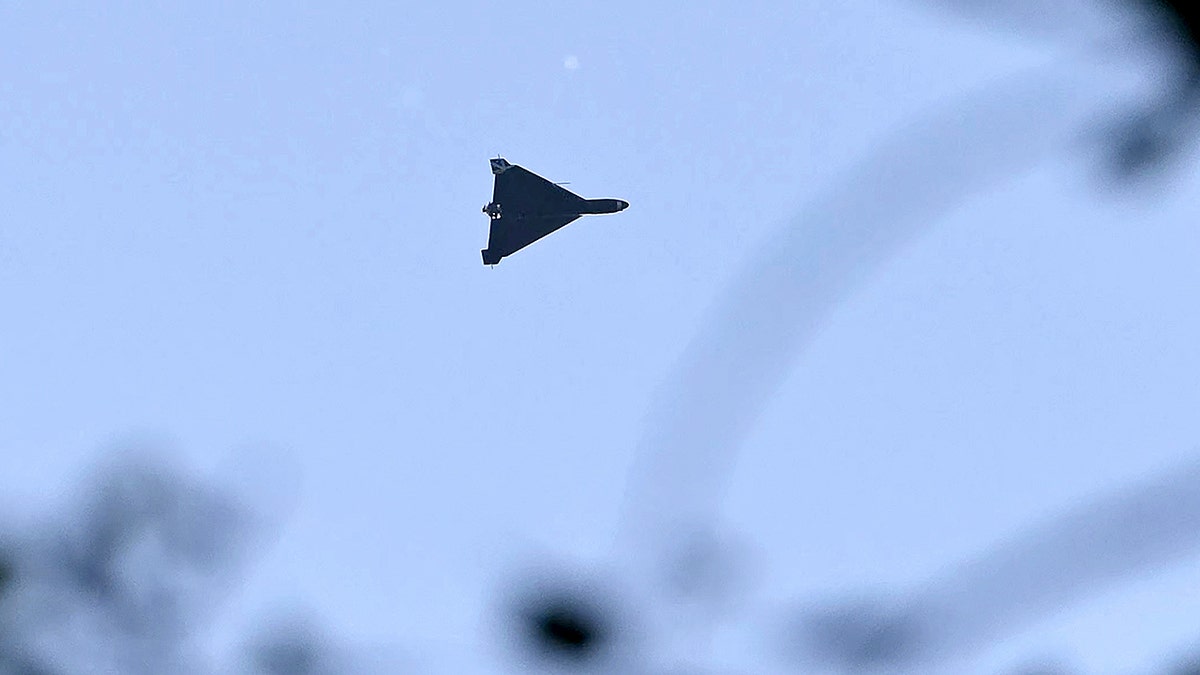
According to Chell, concealed ground units are helping expand a Russian “mesh” network in which drones and repeaters pass encrypted signals through multiple links, making the aircraft more resistant to electronic attack. (Genya Savilov/ AFP via Getty Images)
If several nodes can communicate with the same drone—and with other aircraft operating nearby—Ukraine may have to disrupt dozens or even hundreds of connections at once to bring down a single vehicle, Chell said.
EXPLORE MORE: New Poll Shows Democrats Reaching Key Thresholds in Texas and Alaska
Serhii Beskrestnov, a Ukrainian presidential adviser on defense technology, issued a similar warning on Oct. 3. He said Russian forces may have concealed small signal boosters or relay stations inside Kyiv to extend the range of drone control.
Beskrestnov said the devices are difficult to locate but must be found, warning that citywide electronic shielding will remain ineffective while the repeaters are still operating.
The equipment consists of compact radio relay units that receive and retransmit communications. By extending the reach of drone operators, the devices can help preserve control in locations where direct links or GPS access have been disrupted.
Chell said the repeaters are roughly the size of a large lunchbox, making them easy to hide. Because they do not need to run continuously, he added, detecting them through electronic monitoring can be especially challenging.
“Moving one or two or even three of these into a city the size of Kyiv can be hugely effective.”

Russia strikes Kyiv in a large-scale drone and missile attack. (Chris McGrath/Getty Images)
Technical analysts also pointed to a Sept. 4 strike on the Security Service of Ukraine (SBU) headquarters on Volodymyrska Street in central Kyiv as early evidence of the tactic.
Tracking data reportedly showed no relay drones airborne during the strike, fueling concerns that hidden ground-based repeaters may have been used to maintain communications with the attacking drone.
“They will be doing everything they can to move as many of these things not just into Kyiv, but at any location in the country, even operational battlefields,” Chell said.
“The reality is every time you put another node on a mesh network, you exponentially increase the efficiency, resiliency, and capability of that network.”
Ukrainian President Volodymyr Zelenskyy said Sept. 28 that while Ukraine intercepts about 70% of conventional Russian drones during mass attacks, interception rates fall to 57% against newer, faster jet-powered UAVs.
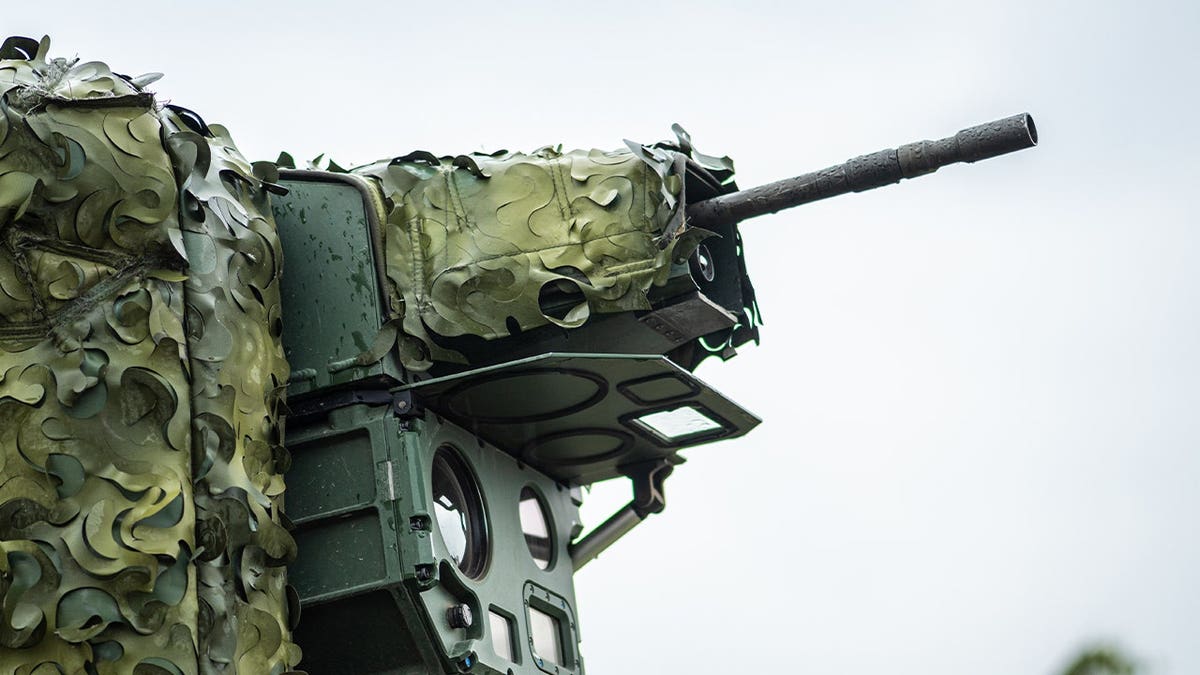
Anti-drone laser system trialed on a Stryker combat military vehicle with a machine gun aimed at the sky in Ukraine during a counteroffensive. (Michelle Ursi/Getty Images)
“It is obvious that the Russians are not preparing to stop the war – at least not at the moment,” Zelenskyy said.
“Next year Russia plans to spend US$12 billion just on producing jet-powered drones and loitering munitions. And that’s only one category of weapons. Of course, this doesn’t only relate to Ukraine,” he added, according to Ukrainska Pravda.
“Russia probably has the intention of, if needed, expanding this war,” Chell warned, arguing that drones themselves are becoming secondary to the communications architecture that guides them.
“The network is now the weapon, and the drone is what executes the desired result,” he said.
“This is an unbelievable moment in the tactics of what’s unfolding here with the future of warfare,” Chell concluded.