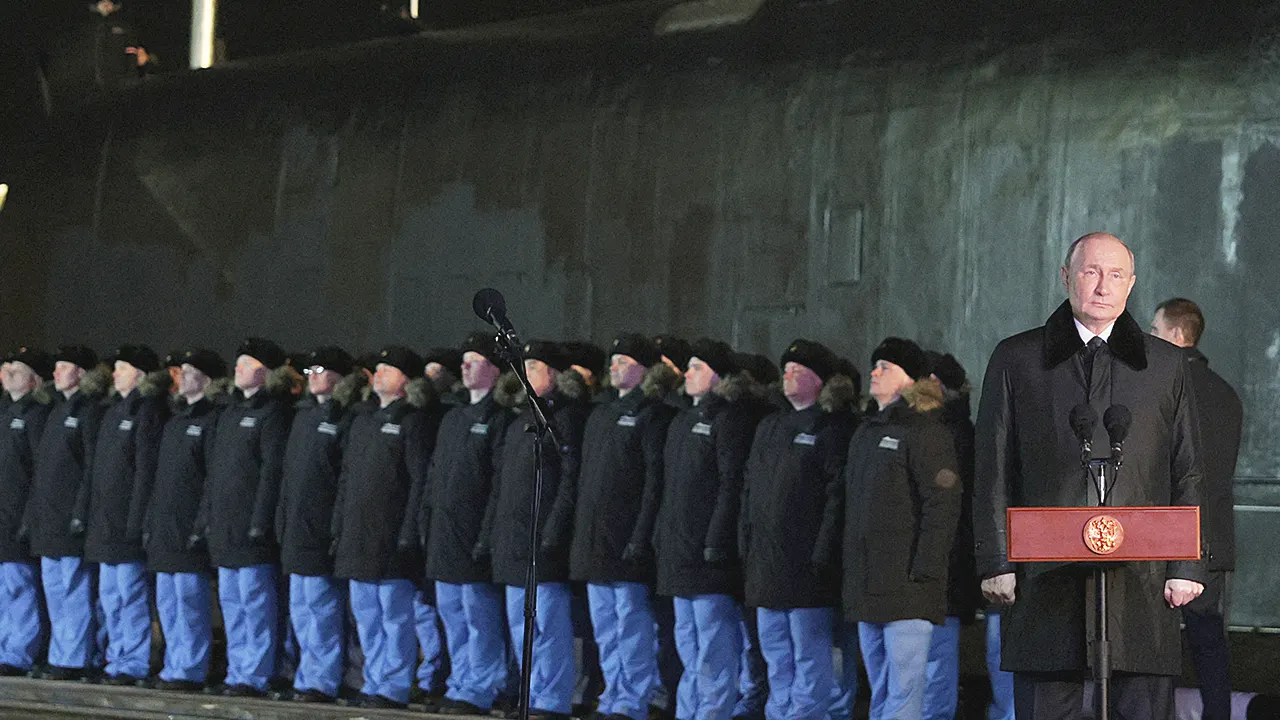
Russia’s increasingly quiet, next-generation nuclear submarines are putting fresh strain on NATO’s northern flank, as the alliance works to reinforce the Arctic and North Atlantic routes leading toward North America, a former NATO commander has cautioned. He pointed to what President Vladimir Putin has described as emerging “new super weapons and super capabilities” that are being concentrated in the region.
The concern extends beyond submarines. According to the former commander, Russia’s heavily fortified Kola Peninsula remains central to Moscow’s strategy, with expanded military facilities such as airfields and ports supporting its push for greater control along the Northern Sea Route and the waters approaching the Greenland-Iceland-United Kingdom Gap, widely known as the GIUK Gap.
NATO’s Allied Joint Force Command Brunssum underscored the issue on Sept. 2, describing the growing Russian submarine presence in the area as a “serious” security challenge.
“Something is moving beneath the surface,” NATO Allied Joint Force Command Brunssum wrote in a post on X.
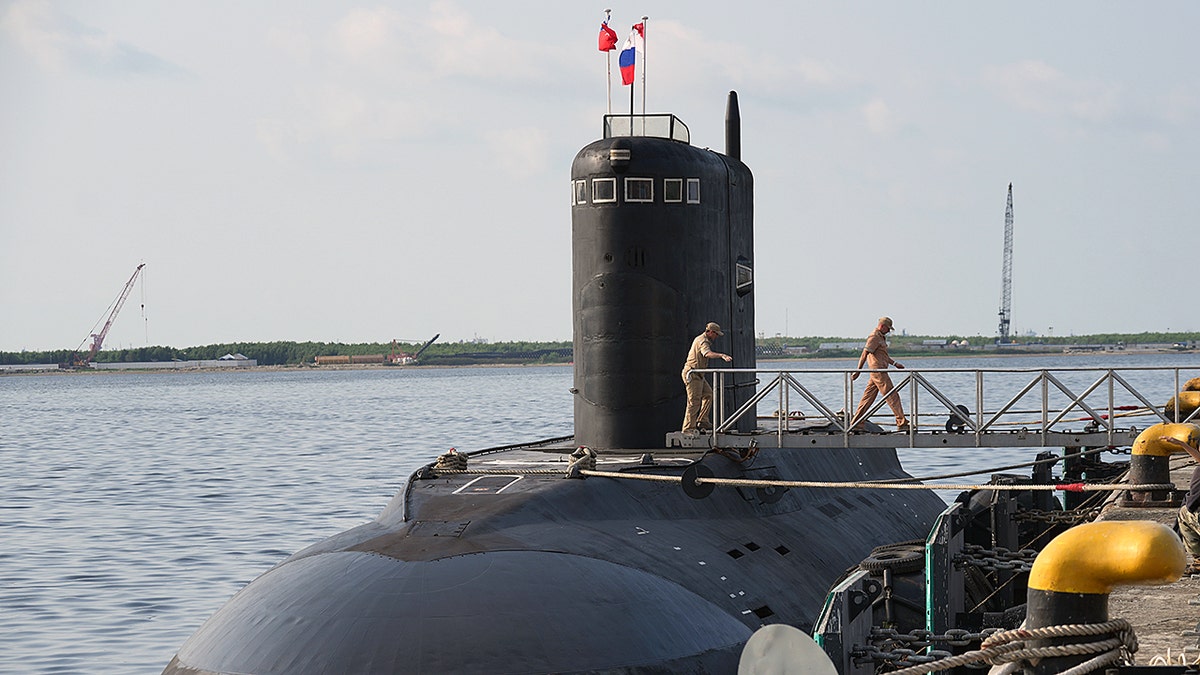
Russian personnel walk on the gangway to Russian Navy submarine RFS Petropavlosvsk- Kamchatskiy which is currently on a port visit at Tanjung Priok Port in Jakarta, Indonesia, Tuesday, March 31, 2026 (Tatan Syuflana/AP Photo)
“Russia is expanding and modernising its submarine force, with the Kola Peninsula remaining a key hub for the Northern Fleet. Among them: new-generation nuclear-powered SSGNs, bringing serious long-range strike and sea-denial capabilities into the High North,” NATO Allied Joint Force Command Brunssum said.
“They may be invisible beneath the waves. But not for us. We see them, we watch the developments closely and yes, we take these developments seriously,” the command added, signaling that NATO is closely tracking Russian undersea activity in the High North.
Retired Gen. Philip Breedlove told News Outlet that the mix of stealthier nuclear-powered submarines and Russia’s expanding Arctic military infrastructure is creating a far more complex undersea monitoring problem for NATO across the North Atlantic and Arctic approaches.
“Submarines are one of the toughest threats that we have to deal with — they’re very hard to find and track,” he explained.
“Submarines can get well within striking distance of any nation in the Atlantic. From the United States to our NATO allies, submarines can get close enough to the shore to fire submarine-launched ballistic missiles and cruise missiles, which are a major problem,” the former supreme allied commander Europe for NATO and commander of U.S. European Command added.
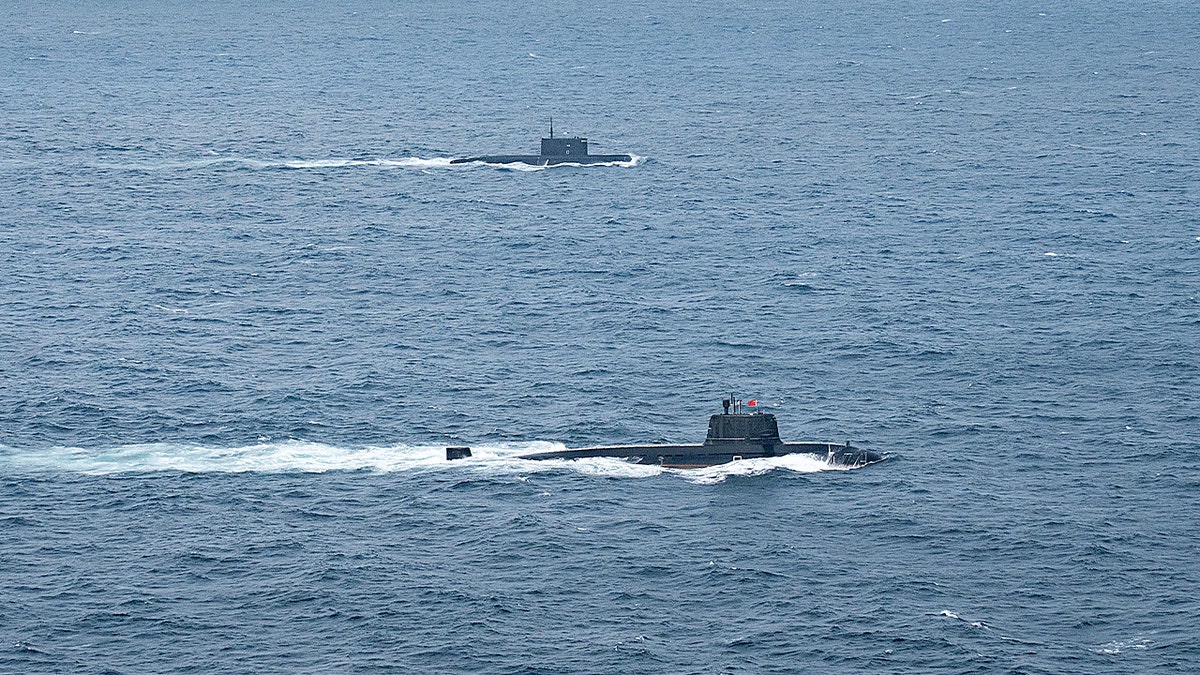
NATO has recently been strengthening its northern posture amid renewed Russian military activity and the growing strategic importance of the Arctic. (Cheng Jiahao/Xinhua via Getty Images)
Today, countries such as Russia and China are developing similar fleets, posing a growing threat to any nation with a significant coastline, Breedlove said.
“We’ve taken very capable measures in the past to understand what Russia is doing in those waters, and we will now be adapting to the possibility of a quieter submarine,” he said. “Any increase in stealthiness or noise suppression by a Russian submarine is, of course, a problem for NATO.”
Russia’s Yasen-M-class nuclear-powered submarines include advanced acoustic-quieting and sonar technology, according to Military Watch and Russian news agency, TASS.
According to the U.S. Naval Institute, the 13,800-ton submarines can carry 1,000-mile-range cruise missiles, anti-ship missiles and hypersonic anti-ship cruise missiles, with Russian officials stating they remain “invisible.”
“Yasen-M-class nuclear-powered submarines are capable of accomplishing all of the Navy’s objectives in any part of the World Ocean while remaining invisible,” Russian Navy Commander-in-Chief Fleet Adm. Alexander Moiseyev said in a June 17 statement, according to TASS, after Russia’s Sevmash shipyard started building the ninth Yasen-M submarine.
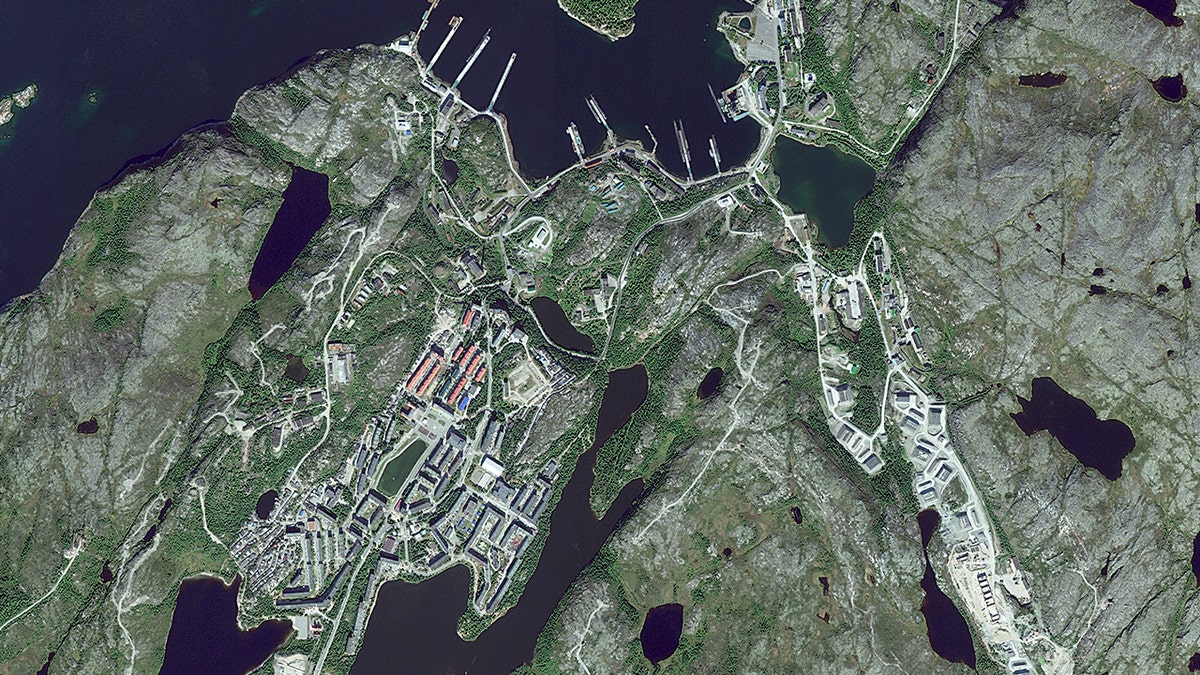
Russia is expanding and modernizing its submarine force, with the Kola Peninsula remaining a key hub for the Northern Fleet. Among them: new-generation nuclear-powered SSGNs, bringing serious long-range strike and sea-denial capabilities into the High North,” NATO Allied Joint Force Command Brunssum said on X. (Satellite image (c) 2024 Maxar Technologies.)
“As is often the case when Putin is in trouble — and he’s in trouble now in his war in Ukraine — one of the ways he diverts attention is to start announcing new super weapons and super capabilities that NATO and the West can’t contend with,” Breedlove warned.
“Putin is creating a stir about a new class of submarines that he wants to deploy from what we call the bastion waters in the Far North,” he said before stating that NATO would “have to adapt our measures and our ability to see and track them.”
“We’ve taken excellent measures in the past.”
Breedlove characterized the GIUK Gap as a critical gateway for Russian naval forces moving from their northern bases toward the Atlantic.
“All the Russian ships have to come out through the GIUK Gap to make it into the Atlantic,” Breedlove said, warning that the seven other Arctic nations, including the United States, are concerned about what Russia is doing.
NATO has also been strengthening its northern posture amid the renewed Russian military activity and the growing strategic importance of the Arctic.
In February 2026, the alliance launched Arctic Sentry, a multidomain military initiative led by Joint Force Command Norfolk and designed to better coordinate allied land, air and maritime activity across the Arctic and High North.
NATO further strengthened its northern flank in June with Forward Land Forces Finland, a Swedish-led multinational force designed to bolster deterrence and defense along the alliance’s northeastern flank, with Finland serving as the host nation, according to a release.
“The Arctic region has been a concern for some years now as ice in the area is receding in the north, and what that has done is created the Northern Passage that allows European trade to happen with Asia much faster,” Breedlove said, stating that for most types of ships, the trips are up to 14 days quicker.
“This is a tremendous economic opportunity, but Russia sees this as an economic opportunity in that they want to control those northern waters.
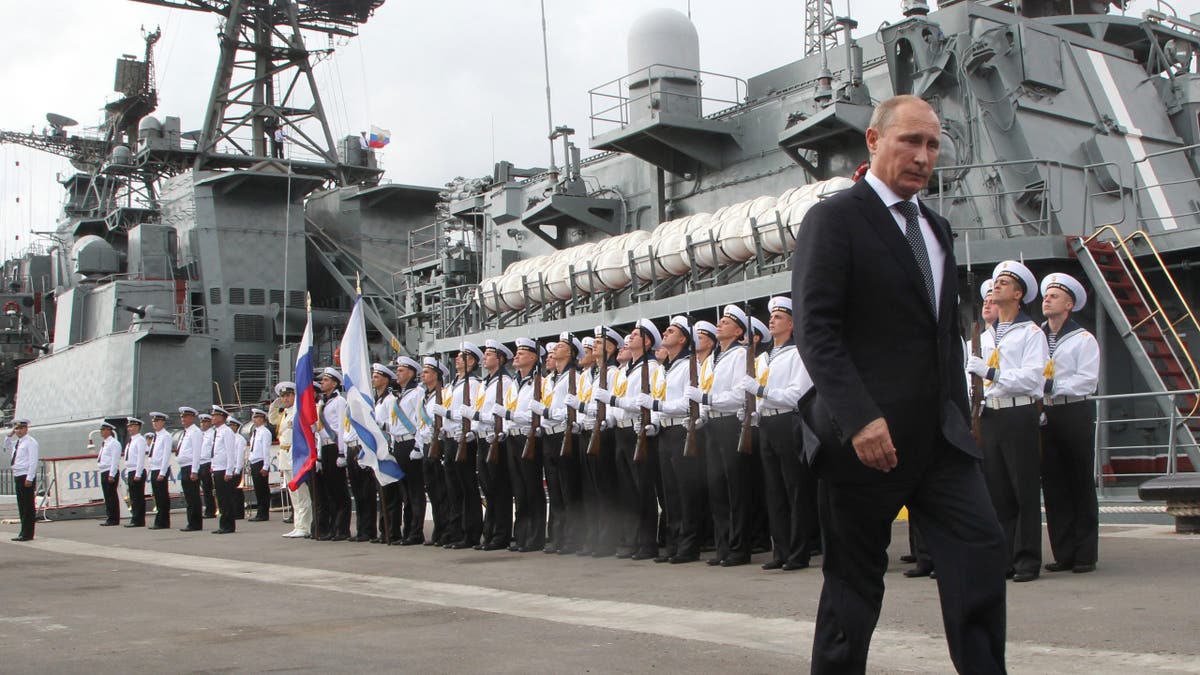
Russian President Vladimir Putin visits the destroyer Vice-Admiral Kulakov at the Naval Base of Black Sea Fleet on September 23, 2014 in Novorossiysk, Russia. (Sasha Mordovets/Getty Images)
Russia has been upgrading airfields, ports and radar systems along the Arctic coast as Moscow seeks greater control over the Northern Sea Route and its commercial traffic, Breedlove said.
The recent NATO buildup however, has drawn strong pushback from Moscow, with Russian Foreign Minister Sergei Lavrov warning Aug. 30 that increased Western military activity risks destabilizing the Arctic region.
“Such military activity in the Far North poses a direct threat to Russia’s security,” Lavrov wrote in a public essay.
“It also increases the risk of incidents that could trigger an armed confrontation with potentially disastrous consequences,” he said, according to Reuters.